
What is the single most important decision you will make when designing or renovating your backyard pool area? For most homeowners, choosing the best pavers for pool deck surfaces is exactly that decision — and getting it right makes the difference between a stunning, safe outdoor space and one that cracks, fades, or becomes dangerously slippery within just a few seasons.
The best pavers for pool deck projects are not simply the most expensive or the most attractive options on the market. They are the materials that balance slip resistance, heat tolerance, durability, and visual appeal in a way that fits your specific climate, lifestyle, and budget. In the San Francisco Bay Area, where soil movement, moisture, and intense summer sun all play a role, that balance matters more than ever.
This guide was built to give you a complete, honest answer to the question of which best pavers for pool deck installations actually deliver long-term results. You will find a breakdown of the top seven paver materials, a full cost comparison, a step-by-step installation overview, real client experiences, and expert advice from the team at Cicarelli Contractors — a trusted contractor serving Richmond, CA and the greater Bay Area.
Whether you are starting from scratch with a new pool or replacing a worn-out concrete deck that has seen better days, this article gives you everything you need to move forward with confidence.
Ready to install the best pavers for your pool deck in Richmond, CA? Request a free estimate from Cicarelli Contractors today.
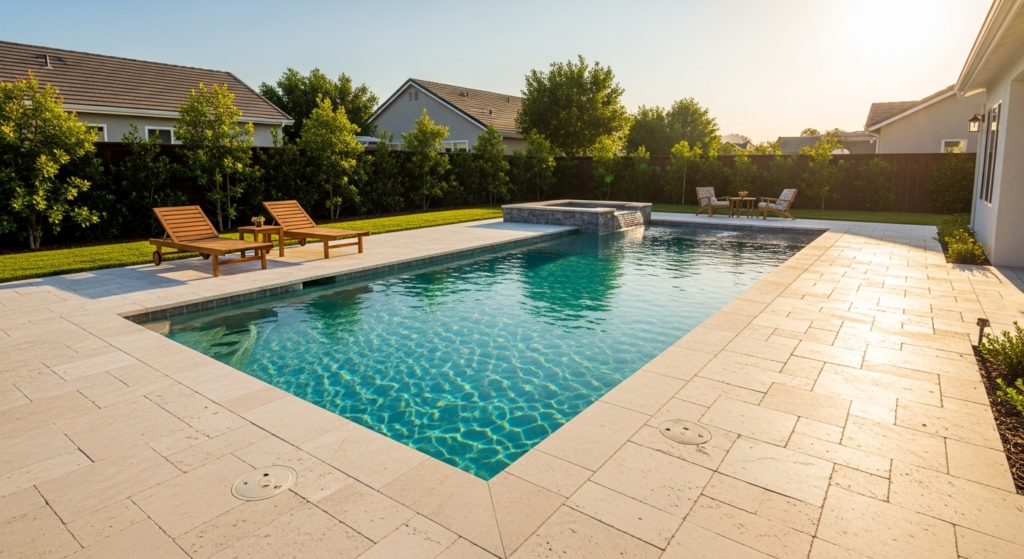
What Are the Best Pavers for Pool Deck Surfaces and Why Does the Choice Matter?
When contractors and designers talk about the best pavers for pool deck installations, they are referring to individual modular units made from natural stone, concrete, porcelain, brick, or rubber that are laid around the perimeter of a swimming pool to create a functional and decorative surface.
Unlike a poured concrete slab, which is installed as a single continuous piece, pavers are individual units. This modular nature is one of the primary reasons the best pavers for pool deck projects outperform poured concrete over time. If one unit cracks, stains, or shifts, it can be replaced individually without disturbing the rest of the surface.
The area surrounding a swimming pool is one of the most demanding environments for any outdoor material. The surface must handle constant water exposure, pool chemicals, bare feet, UV radiation, and heavy foot traffic — all simultaneously. A material that performs well in a driveway or garden path may deteriorate quickly in a pool environment.
Choosing the best pavers for pool deck use also has a direct impact on your property value. According to the National Association of Realtors, well-executed outdoor living improvements can return between 50% and 80% of their cost at resale. A beautifully installed, durable pool deck is one of the most visible and impactful upgrades a homeowner can make.
At Cicarelli Contractors, the team has helped dozens of Bay Area homeowners navigate this exact decision — matching the right materials to each property’s specific conditions, aesthetic goals, and long-term budget.
The 7 Best Pavers for Pool Deck Projects: A Complete Material Guide
The following seven materials represent the most widely used and highest-performing options for pool deck paver installations. Each is evaluated across the factors that matter most: slip resistance, heat retention, durability, maintenance requirements, and installed cost.
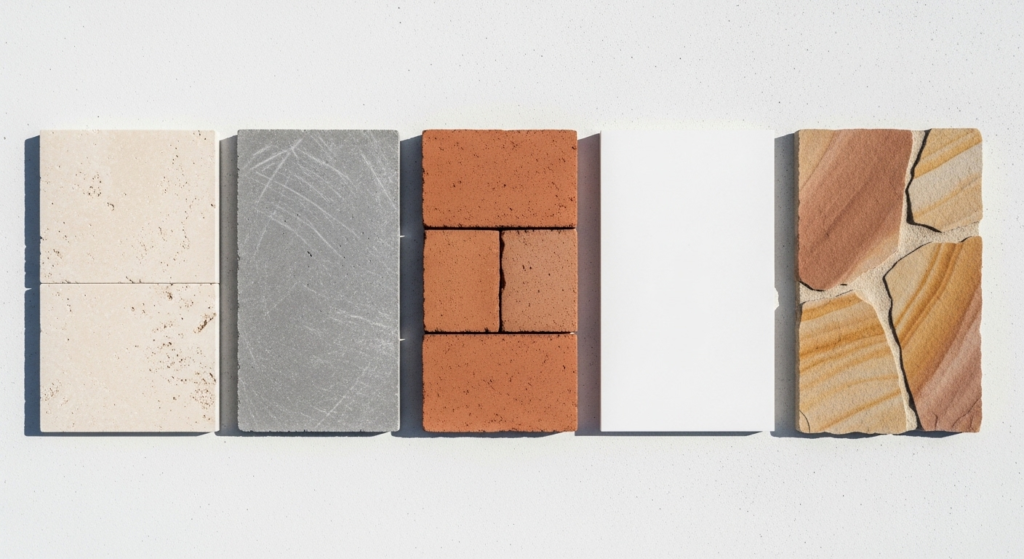
1. Travertine Pavers — The Top Choice Among the Best Pavers for Pool Deck Use
Travertine consistently ranks at the top of any list of the best pavers for pool deck installations, and the reasons are well-founded. This natural limestone-based stone has a naturally porous surface that stays remarkably cool underfoot even during peak summer heat — a quality that sets it apart from most competing materials.
The texture of travertine provides excellent wet traction without any additional surface treatment, making it one of the safest choices for a pool surround. Its warm, natural tones — ivory, walnut, gold, and silver — complement a wide range of home styles, from Mediterranean villas to modern California ranch homes.
Travertine is also naturally resistant to mold and mildew, which is a meaningful advantage in the consistently wet environment around a pool. With proper sealing every one to three years, travertine pool deck pavers can last 25 to 50 years or more.
Average installed cost: $15–$30 per square foot Durability: 25–50 years Slip resistance: Excellent Heat retention: Very low Maintenance: Moderate — requires periodic sealing
Homeowners seeking a resort-style aesthetic with outstanding long-term performance.
2. Concrete Pavers — The Most Versatile of the Best Pavers for Pool Deck Budgets
Concrete pavers are among the most popular choices when homeowners are searching for the best pavers for pool deck projects that balance cost, design flexibility, and durability. Available in hundreds of shapes, sizes, colors, and finishes, concrete pavers can convincingly replicate the look of natural stone, brick, or even wood at a significantly lower price point.
Modern concrete pool deck pavers are manufactured with textured surfaces that provide reliable traction when wet. Their modular design also allows for natural ground movement without the widespread cracking that plagues poured concrete slabs — a particularly important consideration in the Bay Area, where seismic activity and soil shifting are real factors.
Average installed cost: $8–$20 per square foot Durability: 20–40 years Slip resistance: Good to excellent depending on finish Heat retention: Moderate Maintenance: Low — occasional sealing recommended
Homeowners who want maximum design flexibility at a competitive price.
3. Natural Stone Pavers — Timeless Beauty in the Best Pavers for Pool Deck Category
Natural stone pavers — including bluestone, limestone, slate, and granite — represent some of the most visually striking options among the best pavers for pool deck materials available. Each piece is unique, giving the finished surface an organic character that no manufactured product can fully replicate.
Bluestone is particularly popular in California for its cool gray tones and naturally textured surface. Limestone offers a softer, warmer appearance and stays relatively cool underfoot. Granite is one of the hardest and most durable natural stones available, though it requires a brushed or flamed finish to achieve adequate slip resistance when wet.
Average installed cost: $20–$40 per square foot Durability: 30–50+ years Slip resistance: Varies by stone type and finish Heat retention: Moderate to high depending on color Maintenance: Moderate — periodic sealing required
Homeowners who prioritize a unique, high-end look and are prepared to invest in long-term quality.
4. Porcelain Pavers — The Low-Maintenance Leader Among Best Pavers for Pool Deck Options
Porcelain pavers have emerged as one of the fastest-growing choices in the best pavers for pool deck category, driven by their exceptional durability and near-zero maintenance requirements. Unlike natural stone, porcelain is non-porous, meaning it does not absorb water, pool chemicals, or organic stains.
This non-porous quality makes porcelain highly resistant to mold, algae, and UV fading — three of the most persistent problems in pool deck environments. Large-format porcelain pavers create a seamless, contemporary aesthetic that works beautifully with modern home designs, and many options convincingly replicate the appearance of marble, concrete, or natural wood.
Average installed cost: $15–$35 per square foot Durability: 30–50 years Slip resistance: Good — specify R11 or higher anti-slip rating Heat retention: Low to moderate Maintenance: Very low — no sealing required
Homeowners who want a modern, sleek pool deck with minimal ongoing upkeep.
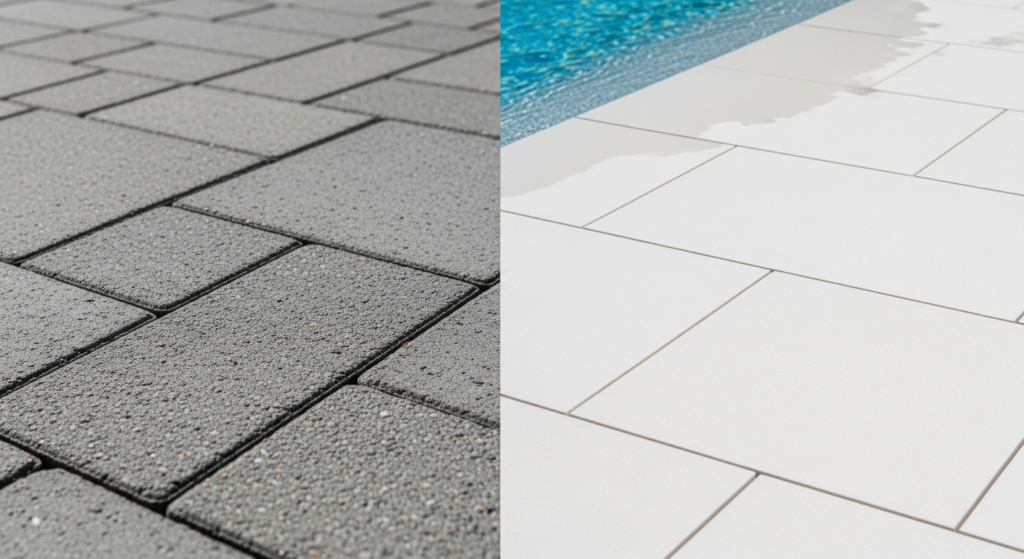
5. Brick Pavers — Classic Durability Among the Best Pavers for Pool Deck Styles
Brick pavers bring a warm, timeless character to pool decks and have been used in outdoor construction for generations. Made from fired clay, brick pavers are extremely durable and naturally fade-resistant because the color runs throughout the entire material rather than sitting on the surface.
When evaluating the best pavers for pool deck use, brick scores well for durability and traction but requires some consideration regarding heat retention. Darker red and brown tones absorb more heat than lighter materials, which can make the surface uncomfortable during peak summer hours. Selecting lighter brick tones or incorporating shaded areas into the deck design helps manage this issue effectively.
Average installed cost: $10–$20 per square foot Durability: 25–40 years Slip resistance: Good Heat retention: Moderate to high Maintenance: Low
Homeowners who prefer a traditional, cottage, or Mediterranean aesthetic.
6. Flagstone Pavers — Organic Character in the Best Pavers for Pool Deck Landscape Designs
Flagstone refers to flat, irregularly shaped pieces of natural stone — typically sandstone, quartzite, or slate — used to create organic, free-form pool deck surfaces. Among the best pavers for pool deck installations in naturalistic or wooded settings, flagstone stands out for its hand-crafted, one-of-a-kind appearance.
The irregular shapes and natural color variations of flagstone blend beautifully with lush landscaping, water features, and informal garden designs. The surface texture provides reliable traction when wet, and the material stays relatively cool due to its natural composition and typically lighter coloring.
Average installed cost: $15–$30 per square foot Durability: 20–40 years Slip resistance: Good Heat retention: Low to moderate Maintenance: Moderate — sealing and joint maintenance required
Homeowners with naturalistic landscaping who want a custom, organic pool surround.
7. Rubber Pavers — The Safety-First Option in the Best Pavers for Pool Deck Selection
Rubber pavers occupy a unique position in the best pavers for pool deck conversation because they prioritize safety and comfort above all other qualities. Made from recycled rubber, these pavers provide exceptional cushioning and slip resistance, significantly reducing the risk of injury from falls — a critical consideration for households with young children or elderly family members.
While rubber pavers do not offer the same visual sophistication as stone or concrete options, they have improved considerably in recent years and are now available in a range of colors and patterns. They are also among the easiest pavers to install and replace, making them a practical choice for budget-conscious projects.
Average installed cost: $3–$8 per square foot Durability: 10–20 years Slip resistance: Excellent Heat retention: Low Maintenance: Very low
Safety-focused applications, rental properties, or homeowners working within a tight budget.
Best Pavers for Pool Deck Comparison Table
| Paver Type | Cost (Installed/sq ft) | Durability | Slip Resistance | Heat Retention | Maintenance |
|---|---|---|---|---|---|
| Travertine | $15–$30 | 25–50 years | Excellent | Very Low | Moderate |
| Concrete | $8–$20 | 20–40 years | Good–Excellent | Moderate | Low |
| Natural Stone | $20–$40 | 30–50+ years | Varies | Moderate–High | Moderate |
| Porcelain | $15–$35 | 30–50 years | Good | Low–Moderate | Very Low |
| Brick | $10–$20 | 25–40 years | Good | Moderate–High | Low |
| Flagstone | $15–$30 | 20–40 years | Good | Low–Moderate | Moderate |
| Rubber | $3–$8 | 10–20 years | Excellent | Low | Very Low |
How to Choose the Best Pavers for Pool Deck Projects in the Bay Area
Identifying the best pavers for pool deck use in your specific situation requires looking beyond aesthetics and considering the practical realities of your property, your climate, and your long-term maintenance capacity.
Consider Your Local Climate and Sun Exposure
In the San Francisco Bay Area, summer temperatures in inland areas like Richmond and El Cerrito can push well above 90 degrees Fahrenheit. In those conditions, heat retention becomes a critical factor when selecting the best pavers for pool deck surfaces. Light-colored travertine, ivory concrete, and pale limestone stay significantly cooler underfoot than dark stone, brick, or charcoal-toned concrete. If your pool deck receives full sun for most of the day, prioritizing low heat-absorption materials is not just a comfort decision — it is a safety one.
Verify Slip Resistance Ratings Before You Buy
All pool deck surfaces should achieve a coefficient of friction (COF) of at least 0.6 when wet, in accordance with ADA guidelines. When evaluating the best pavers for pool deck safety, look for materials rated R11 or higher on the German slip resistance scale. Always ask your contractor to confirm the wet traction rating of any material before it is ordered or installed.
Match the Material to Your Home’s Architecture
The best pavers for pool deck installations are ones that feel like a natural extension of your home’s existing style. A Mediterranean or Spanish Colonial home pairs beautifully with travertine or terracotta brick. A modern minimalist home looks stunning with large-format porcelain or smooth brushed concrete. A craftsman or cottage-style home benefits from the warmth of flagstone or natural bluestone.
Account for Long-Term Maintenance Costs
Some of the best pavers for pool deck use require more upkeep than others. Travertine and natural stone need periodic sealing to prevent staining and water infiltration. Porcelain and rubber require almost no maintenance. Concrete pavers fall in the middle — occasional sealing and joint sand replenishment keep them performing well for decades. Factor these ongoing costs into your total budget before making a final decision.
The team at Cicarelli Contractors specializes in helping Bay Area homeowners identify the best pavers for pool deck projects based on their specific property conditions, design goals, and budget. Their local expertise in Richmond, Berkeley, and El Cerrito gives clients a meaningful advantage when planning a pool deck renovation.
Want expert guidance on selecting the best pavers for your pool deck? Explore Cicarelli Contractors’ outdoor living services and schedule your free consultation today.
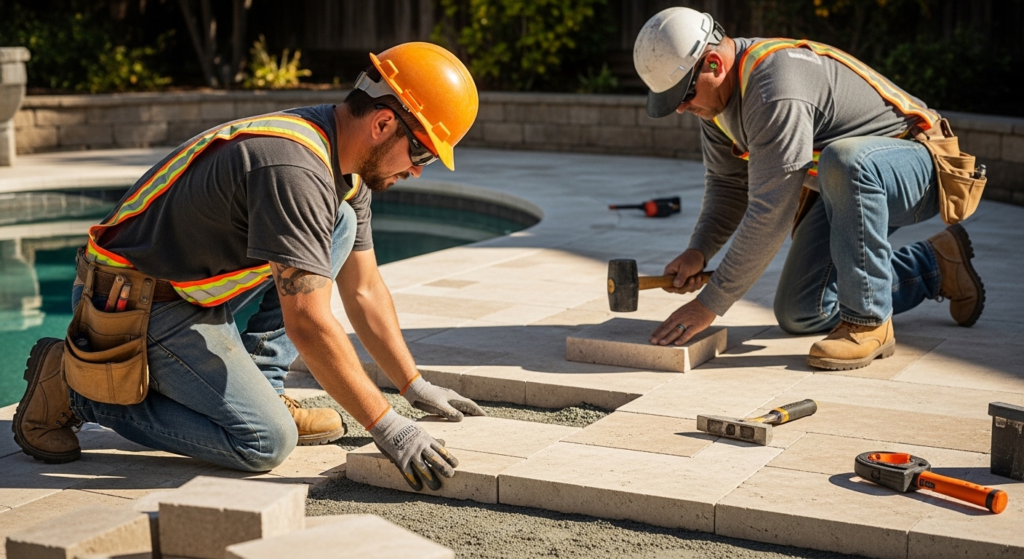
How Much Do the Best Pavers for Pool Deck Projects Actually Cost?
Understanding the full cost of installing the best pavers for pool deck surfaces helps you budget accurately and avoid unexpected expenses during your project. Costs vary based on material selection, total square footage, local labor rates, and the complexity of the installation pattern chosen.
Average Cost by Project Size
- Small pool deck (200–400 sq ft): $2,400–$16,000
- Medium pool deck (400–700 sq ft): $4,800–$28,000
- Large pool deck (700–1,200 sq ft): $8,400–$48,000
These figures reflect combined material and labor costs. In the San Francisco Bay Area, labor rates typically run 15–25% above the national average due to local market conditions and contractor demand.
Key Factors That Influence the Final Price
Several variables affect the total investment required to install the best pavers for pool deck surfaces on your property:
- Material selection: Natural stone and porcelain carry higher material costs than concrete or rubber
- Pattern complexity: Herringbone, diagonal, and custom patterns require additional cuts and labor time
- Site preparation: Grading, compaction, and base layer installation add to the overall cost
- Existing surface removal: Demolishing an old concrete deck adds approximately $1–$3 per square foot
- Sealing and finishing: Initial sealing is often included in the installation quote; ongoing sealing is an additional recurring cost
If your project requires removing an existing pool deck before new pavers can be installed, Cicarelli Contractors’ demolition and excavation team handles that phase efficiently and professionally, ensuring a clean, properly graded surface before installation begins.
Common Mistakes to Avoid When Installing the Best Pavers for Pool Deck Surfaces
Even the best pavers for pool deck use will underperform if they are installed incorrectly or neglected over time. The following mistakes are among the most common — and the most costly — that homeowners and inexperienced contractors make.
Skipping Proper Base Preparation
The single most common cause of paver failure is an inadequate base. Installing the best pavers for pool deck surfaces requires a compacted gravel base of at least four to six inches, topped with a layer of coarse bedding sand, to ensure proper drainage and long-term stability. Rushing or skipping this step leads to settling, shifting, and surface cracking within just a few years of installation.
Prioritizing Appearance Over Safety
It is easy to be drawn to a beautifully polished stone or a smooth large-format porcelain tile, but if the surface becomes dangerously slippery when wet, it is the wrong choice for a pool deck regardless of how attractive it looks. Always verify the wet slip resistance rating of any material before purchasing, and never compromise on this specification.
Ignoring Drainage Planning
Water must drain away from the pool deck efficiently to prevent pooling, which creates both slip hazards and accelerated surface deterioration. A properly designed pool deck should slope at least one-eighth of an inch per foot away from the pool edge and toward designated drainage points. This is a non-negotiable element of any well-executed best pavers for pool deck installation.
Using Indoor-Rated Tiles on an Outdoor Pool Deck
Some homeowners attempt to reduce costs by using indoor ceramic or porcelain tiles on their pool deck. Indoor tiles are not engineered for outdoor freeze-thaw cycles, prolonged UV exposure, or the chemical environment around pools. Always specify outdoor-rated, frost-resistant pavers for any exterior pool application.
Neglecting Routine Maintenance
Even the most durable of the best pavers for pool deck materials need occasional attention. Failing to reseal natural stone, allowing joint sand to erode, or ignoring small cracks can transform minor issues into expensive repairs. A simple annual inspection and maintenance routine dramatically extends the life of your pool deck surface.
For homeowners who want ongoing peace of mind after installation, Cicarelli Contractors offers a comprehensive warranty and maintenance program designed to keep your outdoor surfaces performing and looking their best year after year.
What Real Clients Say About Choosing the Best Pavers for Pool Deck Projects
Hearing directly from homeowners who have already gone through the process of selecting and installing the best pavers for pool deck surfaces provides perspective that no product specification sheet can offer.
“We had Cicarelli Contractors install travertine pavers around our pool in Richmond, and the results exceeded every expectation. The crew was professional, on time, and incredibly detail-oriented. The deck looks like something out of a luxury resort, and the surface stays cool even on the hottest days. We could not be happier with how it turned out.” — Maria T., Richmond, CA
“After getting quotes from three different contractors, we chose Cicarelli because they took the time to explain every material option and helped us understand the long-term costs involved. They installed concrete pavers with a brushed finish, and the deck has held up beautifully through two full summers. Highly recommend their team.” — James R., El Cerrito, CA
“The team at Cicarelli was fantastic from start to finish. They handled the full demolition of our old cracked concrete deck and installed new flagstone pavers that completely transformed our backyard. The whole project was completed in less than two weeks and the quality of the work was outstanding.” — Sandra L., Berkeley, CA
These outcomes reflect what is possible when you work with a contractor who understands both the technical requirements and the aesthetic possibilities of installing the best pavers for pool deck surfaces. You can learn more about the Cicarelli team and their approach at the About page.
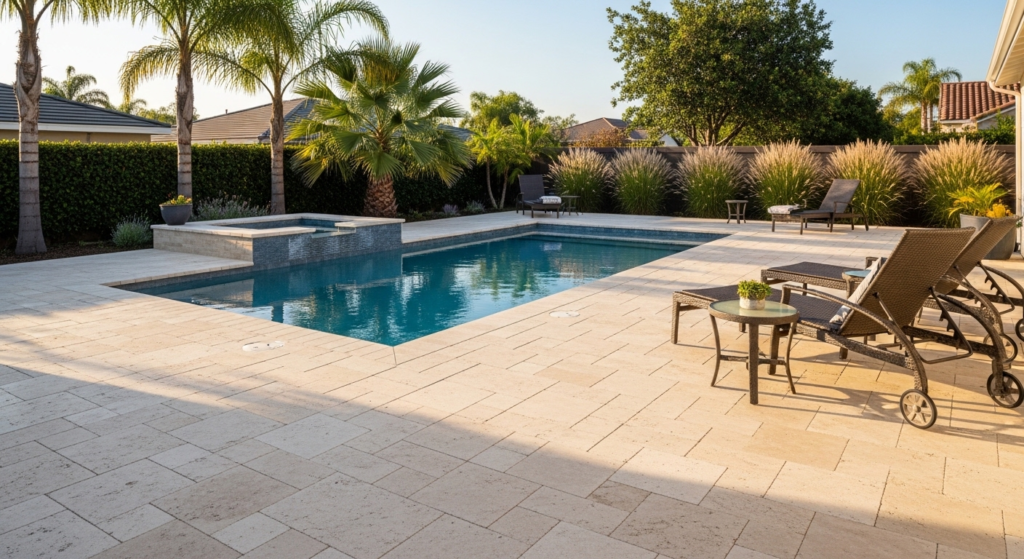
Step-by-Step Installation Process for the Best Pavers for Pool Deck Projects
Understanding how the best pavers for pool deck installations are executed helps you set realistic timeline expectations and communicate more effectively with your contractor throughout the project.
Step 1: Site Assessment and Design Planning
A qualified contractor evaluates your existing pool deck area, assesses drainage patterns, checks for underground utilities, and discusses your design preferences in detail. Material selection, pattern layout, and color choices are all finalized during this phase.
Step 2: Demolition and Excavation
If an existing surface is present, it must be fully removed before new pavers can be installed. This involves breaking up old concrete, removing all debris, and grading the soil to the correct slope for drainage. Cicarelli Contractors’ demolition and excavation team handles this phase with precision, ensuring a clean and properly prepared starting surface.
Step 3: Base Layer Preparation
A compacted gravel base is installed and carefully leveled, followed by a layer of coarse bedding sand. This foundation layer is the most critical element of any long-lasting best pavers for pool deck installation — it determines drainage performance and structural stability for the entire lifespan of the deck.
Step 4: Paver Installation
Individual pavers are laid according to the planned pattern, cut to fit edges and curves, and checked for level throughout the process. Consistent joint spacing is maintained to ensure proper drainage and a clean, finished appearance.
Step 5: Joint Filling and Compaction
Polymeric sand is swept into the joints between pavers and compacted with a plate compactor. This sand hardens when activated with water, locking the pavers firmly in place and preventing weed growth and insect infiltration over time.
Step 6: Sealing
A penetrating or surface sealer is applied to protect the pavers from staining, UV fading, and water infiltration. Sealing is especially important for natural stone and concrete pavers and is a standard part of any professional best pavers for pool deck installation.
Step 7: Final Inspection and Client Walkthrough
The completed deck is inspected for level, drainage performance, and finish quality. All construction debris is removed, and the homeowner is walked through care and maintenance recommendations to protect their investment going forward.
Frequently Asked Questions About the Best Pavers for Pool Deck Installations
What is the best material for a pool deck?
Travertine is widely considered the best overall material for a pool deck because of its natural slip resistance, low heat retention, long lifespan, and elegant appearance. Concrete pavers offer the best value, combining design flexibility with durability at a lower price point. The right choice among the best pavers for pool deck use depends on your budget, climate, and style preferences.
Are pavers or poured concrete better for a pool deck?
Pavers are generally the better choice for pool decks compared to poured concrete. The best pavers for pool deck installations allow for natural ground movement without widespread cracking, can be individually replaced if damaged, provide better drainage through their joints, and offer far more design flexibility than a poured slab.
How long do pool deck pavers last?
Most of the best pavers for pool deck use last between 20 and 50 years depending on the material, installation quality, and maintenance routine followed. Travertine and natural stone can last 50 years or more with proper sealing. Concrete pavers typically last 20 to 40 years. Rubber pavers have the shortest lifespan at 10 to 20 years.
Do pool deck pavers get hot in the sun?
Heat retention varies significantly by material and color. Among the best pavers for pool deck use in hot climates, travertine and light-colored concrete stay the coolest in direct sunlight. Dark natural stone, brick, and charcoal concrete absorb considerably more heat and can become uncomfortable for bare feet during peak summer hours.
How much does it cost to install pavers around a pool?
Installing the best pavers for pool deck surfaces typically costs between $8 and $40 per square foot installed, depending on the material and local labor rates. A standard 500-square-foot pool deck costs between $4,000 and $20,000 on average. In the Bay Area, costs tend to run higher due to local market conditions.
Conclusion: Finding the Best Pavers for Your Pool Deck
Choosing the best pavers for pool deck surfaces is one of the most impactful decisions you will make for your outdoor living space. The right material will protect your family, enhance your property value, and deliver decades of beauty with minimal upkeep. The wrong choice can lead to safety hazards, costly repairs, and a deck that looks worn long before its time.
The best pavers for pool deck projects in the Bay Area come down to a combination of factors: slip resistance for safety, heat retention for comfort, durability for long-term value, and aesthetics for curb appeal and personal enjoyment. Travertine leads the field for premium installations. Concrete pavers offer the best overall value. Porcelain delivers the lowest maintenance burden. Natural stone provides unmatched character. Each of the seven materials covered in this guide has a legitimate place in the conversation about the best pavers for pool deck use — the right answer depends on your specific situation.
What remains constant across every successful pool deck project is the importance of working with an experienced, knowledgeable contractor who understands local conditions and takes the time to guide you through every decision. At Cicarelli Contractors, that is exactly what every client in Richmond, Berkeley, El Cerrito, and across the Bay Area receives — from the first consultation to the final walkthrough.
Ready to install the best pavers for your pool deck in Richmond, CA? Contact Cicarelli Contractors today for your free estimate and let our team help you build the outdoor space you have always envisioned. You can also explore our full outdoor living services, review our warranty and maintenance program, or learn more about our team.
Phone: (650) 404-7049 Email: info@cicarellicontractor.com Address: Richmond, CA 94805 Office Hours: Monday–Friday 9 AM–5 PM | Saturday 9 AM–2 PM
