
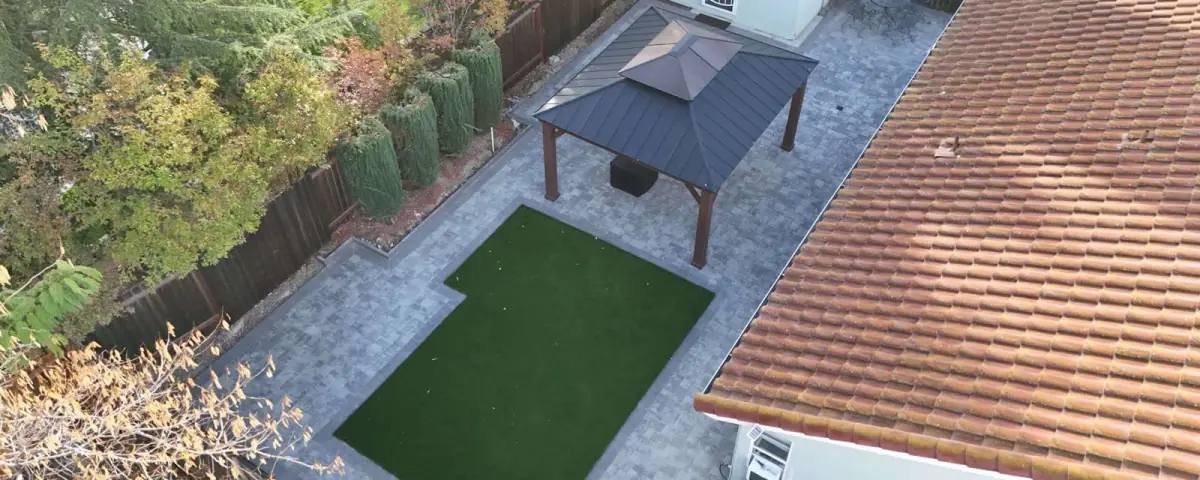
1 year
General construction warranty
Workmanship warranty from the date of completion on Cicarelli Contractors' general construction work.
Cicarelli Contractors, a CSLB-licensed general contractor (License #1109419) based in Richmond, California, backs its general construction and concrete work with a 1-year workmanship warranty from the date of completion. Below: what each warranty covers, how to request service and how to care for your new backyard.
Our warranties
Cicarelli Contractors gives a 1-year workmanship warranty from the date of completion on general construction and on concrete work. Carvestone installations also carry a 7-year limited residential warranty against chipping and delamination, and Belgard pavers and retaining walls carry Belgard's own lifetime transferable limited warranty.
1 year
Workmanship warranty from the date of completion on Cicarelli Contractors' general construction work.
1 year
Workmanship warranty from the date of completion on concrete work.
1 + 7 years
1-year workmanship warranty against defects in the Carvestone installation, plus a 7-year limited residential warranty covering Carvestone against chipping and delamination.
Lifetime limited
Belgard, the paver manufacturer, gives a lifetime transferable limited warranty on its interlocking concrete pavers and retaining walls.
A workmanship warranty comes from the contractor and covers how the work was installed. A manufacturer warranty comes from the product maker and covers defects in the product itself. Most backyard projects have both.
| Workmanship warranty | Manufacturer warranty | |
|---|---|---|
| Given by | Cicarelli Contractors | The product maker, such as Belgard |
| Covers | Defects caused by the installation | Defects in the product |
| Length | 1 year from the date of completion | Set by the maker (Belgard: lifetime, limited) |
| How to claim | Call, text or email Cicarelli Contractors | Through the maker, usually with proof of purchase |
The CSLB advises homeowners to get every warranty in writing, for labor and for materials. Cicarelli Contractors writes the warranty terms into the contract for your project.
Maintenance guide
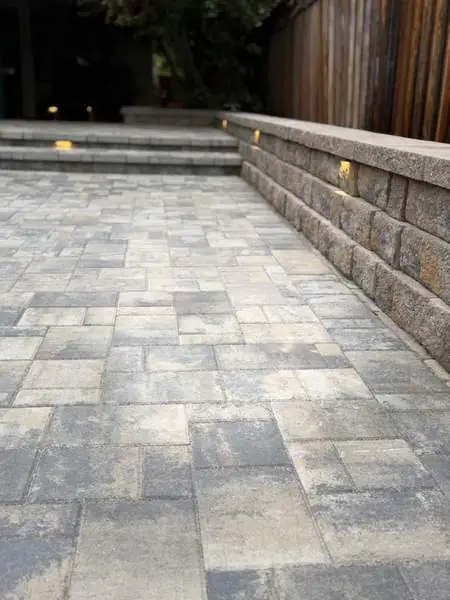
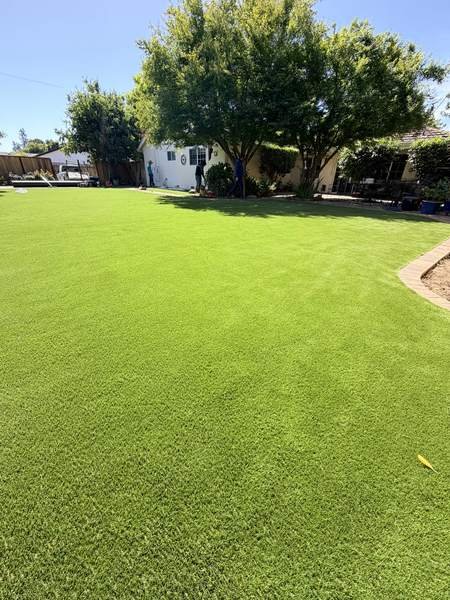
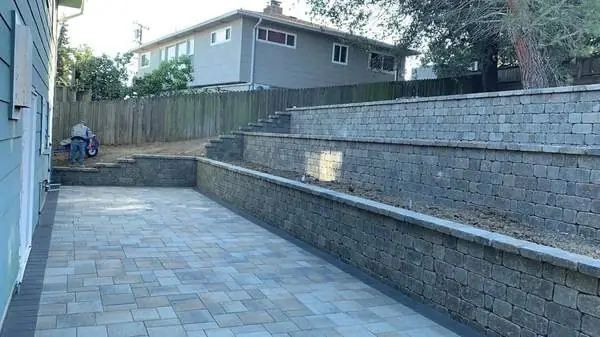
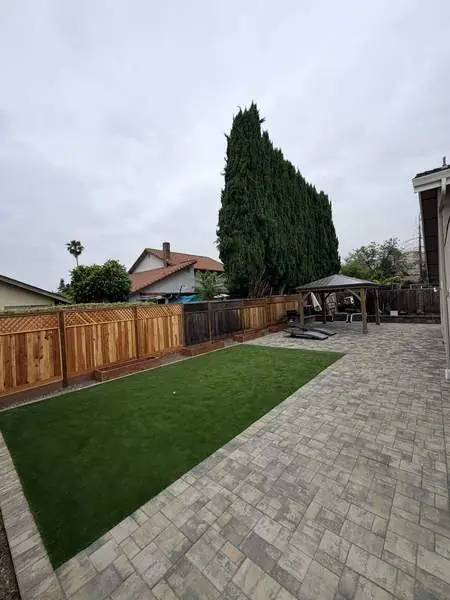
Pavers, artificial turf and retaining walls need little care, but a few habits keep them like new: keep joints, drains and surfaces clear of debris, keep water away from where it does not belong, and look for small changes after heavy rain before they become repairs.
| When | Pavers | Artificial turf | Walls & former pool area |
|---|---|---|---|
| Every week or two | Sweep; rinse as needed | Remove leaves and debris | Clear debris from drain outlets |
| Every month | Check joints and drainage | Brush high-traffic areas; check seams | Check downspouts and sprinklers |
| Spring and fall | Deep clean; refill joint sand | Thorough rinse and brushing | Walk the wall and the filled area |
| After heavy rain | Look for low spots and standing water | Check drainage and edges | Look for bulging, cracks or settling |
For more on paver care, see the CMHA maintenance guide for interlocking concrete pavements.
Warranty & care guide
A workmanship warranty is a contractor's written promise to repair defects caused by how the work was installed, for a set period after completion. At Cicarelli Contractors, a CSLB-licensed general contractor (License #1109419) based in Richmond, California, that period is 1 year from the date of completion for general construction and concrete work across 9 Bay Area counties.
A workmanship warranty is usually limited by changes or damage that the contractor did not cause: repairs or alterations by someone else, later changes to grading, drainage or irrigation, missing routine care, normal wear, and damage from impact or loads the work was not designed for. Reporting a problem late can also limit it.
Your written contract with Cicarelli Contractors lists the work the warranty covers and the date it starts. The CSLB advises homeowners to get every warranty in writing and to record any change to the work in a signed change order.
In the first year, walk the yard after the first heavy rains and look for movement and water: pavers that rock or sink, turf seams or edges that lift, retaining walls that bulge or crack, and low spots over a former pool. Because the Cicarelli warranty runs 1 year from completion, report anything you find with photos right away.
| Project | What to look for |
|---|---|
| Pavers and driveways | Rocking or sinking pavers, joints that open up, water pooling against the house or a wall |
| Artificial turf | Open seams, lifting edges, soft spots, water that stays on the surface |
| Retaining walls | Bulging, leaning, new cracks, blocked drain outlets |
| Former pool area | Depressions, wet spots, cracks in a patio or path built over it |
Take dated photos, note whether the problem appeared after rain, irrigation or other work, and send them to the team by text to (650) 404-7049 or by email to info@cicarellicontractor.com.
Industry estimates put concrete pavers at 25 to 50 years or more. The pavers themselves rarely wear out; early problems usually come from a poorly compacted base or bad drainage, which is why the base, edge restraint and slope matter as much as the paver you choose.
Belgard backs its interlocking concrete pavers and retaining walls with a lifetime transferable limited product warranty, which covers the product against its standards but not breakage from impact, abrasion or overloading. The installation is a separate question: that is what the 1-year Cicarelli Contractors workmanship warranty covers. See the paver patios page for how the base is built.
Pavers need their joints kept full of sand, because the sand locks the pavers together. Polymeric sand hardens once it is wetted, so it resists washing out and weeds better than plain sand. Sealer is optional: it can deepen the color and make stains easier to clean, but it must be reapplied over time.
Before refilling or sealing, clean the pavers without a pressure washer pointed at the joints: sweep, rinse with a garden hose and scrub stains with a paver cleaner and a stiff brush. Follow the instructions on the sand and sealer you buy, and test a sealer on a small area first, because it can change the color and sheen. On Carvestone, sealer loss is not covered by the warranty.
After a pool removal, keep the permit number and the final inspection approval, the written contract with the completion date, the removal method (partial or full) and, on a full removal, the engineering compaction report. Buyers, inspectors and future contractors will ask for them.
Photos of the work before the pool was filled help too, because the buried part of the job cannot be seen later. Cicarelli Contractors pulls the permit, schedules the city inspections and, on full removals, provides the compaction report when your city requires it. See how the job is done on the pool removal page and in the pool removal FAQ.
Updated · By Athalyson Bernardo, Owner of Cicarelli Contractors
FAQ
Call or text us Monday to Saturday, 9 am to 5 pm, with photos of the problem.
Call (650) 404-7049Cicarelli Contractors backs general construction and concrete work with a 1-year workmanship warranty from the date of completion. Carvestone installations add a 7-year limited residential warranty against chipping and delamination, and Belgard pavers and retaining walls carry Belgard's lifetime transferable limited product warranty. The terms are part of your written contract.
A workmanship warranty covers problems caused by the way the work was installed, not defects in the materials themselves, normal wear or damage caused later by others. At Cicarelli Contractors it lasts 1 year from the date of completion, and your written contract lists the work it applies to.
A contractor warranty comes from the company that built the project and covers its installation. A manufacturer warranty comes from the product maker and covers defects in the product, such as a paver that does not meet its standard. On a Belgard paver patio, for example, Cicarelli covers the installation and Belgard covers the pavers.
No. The 7-year limited Carvestone warranty is residential and non-transferable, and it is valid only after the service is paid in full. It covers chipping and delamination; it does not cover cracking, color, sealer loss or joint sealant failure, and it gives no guarantee regarding drainage. The Belgard product warranty, by contrast, is transferable.
Sealing is optional for most concrete pavers. If you choose to seal, follow the sealer maker's instructions for when to recoat, clean the surface and refill the joints first, and test a small area, because a sealer can change the color and sheen. On Carvestone, sealer loss is not covered by the warranty.
Remove leaves and debris, rinse the turf with a garden hose and brush high-traffic areas to lift the fibers. Pick up pet waste promptly, rinse the spot and use a turf-safe cleaner for odors. Avoid harsh chemicals, and keep grills, fire pits and hot objects off the surface.