
Planning an outdoor upgrade but unsure what it will actually cost you? Understanding paver walkway cost Bay Area 2026 is the first step to making a smart, budget-conscious decision for your home. Prices in the Bay Area are higher than the national average — and in 2026, material costs and labor rates have shifted again. Whether you are envisioning a clean concrete path from your front door to the street, or a dramatic natural stone walkway winding through your garden in Oakland or San Jose, getting accurate numbers upfront prevents expensive surprises.
In this guide, you will find a complete breakdown of paver walkway pricing by material type, labor costs, project size, and the factors that drive costs up or down across the Bay Area. You will also see real project examples from homeowners in Richmond, Berkeley, and Marin County who worked with Cicarelli Contractors to complete their outdoor transformations.
Ready to plan your project with confidence? Keep reading to discover everything you need to know about budgeting for a paver walkway in 2026.
Get a free, no-obligation estimate today. When researching paver walkway cost Bay Area 2026, getting multiple professional quotes is always the smartest first step. Contact Cicarelli Contractors and speak directly with a Bay Area outdoor living specialist.
What Is a Paver Walkway and Why Does It Matter for Your Property?
When you search for paver walkway cost Bay Area 2026, you will find that the answer starts with understanding what a paver walkway actually is. A paver walkway is a hardscaped path built from individual units — bricks, concrete blocks, natural stone slabs, or travertine tiles — set into a prepared base of compacted gravel and sand. Unlike poured concrete slabs, paver walkways are modular. Individual units can be replaced if they crack or shift, and the design possibilities are virtually unlimited.
In the Bay Area, curb appeal is not just aesthetic — it directly affects property value. A well-installed paver walkway can add 5 to 10 percent to a home’s resale value according to industry estimates from the National Association of Realtors. For a median-priced Bay Area home, that represents tens of thousands of dollars in added equity. When you combine that return with the practical benefits of a durable, low-maintenance path, understanding the true paver walkway cost Bay Area 2026 becomes a genuinely strategic financial conversation.
Paver walkways also support the Bay Area’s increasing focus on sustainable landscaping. Permeable paver systems allow rainwater to filter through the surface and recharge groundwater, reducing runoff in a region that faces both drought and storm water management challenges.
Where Are Paver Walkways Most Commonly Installed?
Bay Area homeowners typically install paver walkways in these locations:
- Front entry paths from the sidewalk or driveway to the front door
- Side yard passages connecting front and back gardens
- Backyard entertaining areas linking a patio to a pool, garden, or outdoor kitchen
- Pool surrounds requiring slip-resistant, heat-reflective surfaces
- Garden paths winding through landscaped beds
Each location type has different sizing requirements, base preparation needs, and aesthetic considerations — all of which influence the final cost. Our team at Cicarelli Contractors’ Outdoor Living Space services handles all of these scenarios across the greater Bay Area.
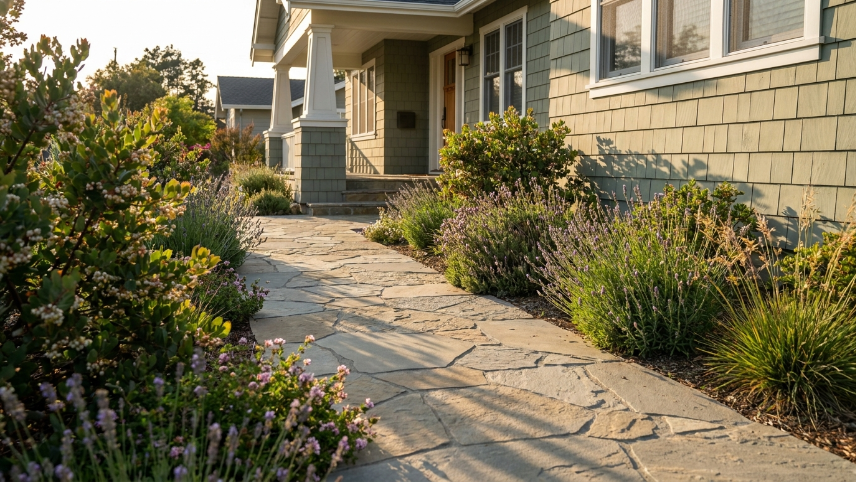
Paver Walkway Cost Bay Area 2026: Complete Price Breakdown
The single most common question homeowners ask is: “What will this actually cost me?” The honest answer is that paver walkway cost Bay Area 2026 varies significantly based on four main variables: material type, square footage, site conditions, and design complexity. Below is a detailed breakdown of each factor.
Average Cost Per Square Foot by Material Type
| Material | Low Estimate | High Estimate | Average (per sq ft) |
|---|---|---|---|
| Concrete Pavers | $8 | $18 | $13 |
| Brick Pavers | $12 | $22 | $17 |
| Natural Flagstone | $18 | $35 | $26 |
| Travertine | $20 | $40 | $30 |
| Granite / Slate | $25 | $50 | $37 |
| Permeable Pavers | $15 | $30 | $22 |
These figures represent the fully installed cost including materials, labor, base preparation, and basic edging. They reflect 2026 Bay Area market conditions, which run 20 to 35 percent above national averages due to elevated labor costs, permit fees in some jurisdictions, and Bay Area supply chain dynamics.
Total Project Cost by Square Footage
| Project Size | Concrete Pavers | Natural Stone | Travertine / Premium |
|---|---|---|---|
| 100 sq ft (small path) | $800 – $1,800 | $1,800 – $3,500 | $2,000 – $4,000 |
| 200 sq ft (standard entry) | $1,600 – $3,600 | $3,600 – $7,000 | $4,000 – $8,000 |
| 400 sq ft (large walkway) | $3,200 – $7,200 | $7,200 – $14,000 | $8,000 – $16,000 |
| 600 sq ft (extended path/side yard) | $4,800 – $10,800 | $10,800 – $21,000 | $12,000 – $24,000 |
These ranges assume a flat to gently sloped site. Steep grades, extensive excavation requirements, or complex drainage work in hillside neighborhoods — common in areas like the Oakland Hills or parts of San Francisco — can add $2,000 to $8,000 or more to the base estimate.
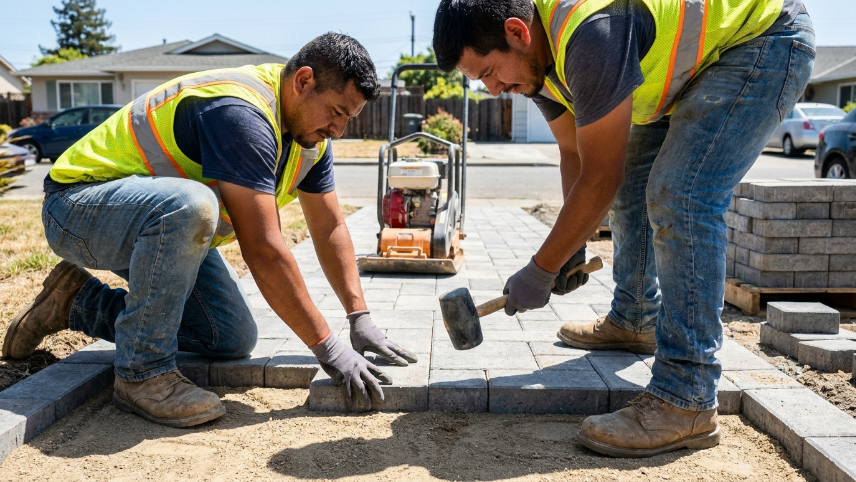
What Factors Drive Paver Walkway Cost in the Bay Area?
When Bay Area homeowners compare quotes from different contractors, the numbers can vary widely. Understanding the factors behind those differences helps you evaluate proposals fairly — and avoid choosing a low bid that will cost you more in the long run. Here are the primary cost drivers for paver walkway cost Bay Area 2026 projects.
1. Labor Costs in the Bay Area Market
Labor typically accounts for 50 to 60 percent of the total project cost. In the Bay Area, skilled hardscape labor runs between $65 and $120 per hour in 2026, reflecting union-adjacent wage expectations, high cost of living, and strong local demand. Compare this to a national average closer to $40 to $60 per hour, and it is clear why local estimates are elevated.
When you work with a licensed, insured contractor like Cicarelli Contractors, you are paying for experienced crews who understand Bay Area soil conditions, local building codes, and drainage requirements specific to the region’s microclimates.
2. Site Preparation and Excavation
Every honest breakdown of paver walkway cost Bay Area 2026 must include the base preparation. A paver walkway is only as good as its base. Proper installation requires excavating 6 to 10 inches of soil, compacting a gravel sub-base, and adding a sand setting layer before the first paver is placed. Sites with clay-heavy soil (very common in Contra Costa and Alameda counties), tree roots, or significant slopes require additional excavation work and potentially engineered drainage solutions.
At Cicarelli Contractors’ demolition and excavation division, we handle all site prep in-house, which keeps timelines tight and eliminates the coordination headaches of managing multiple subcontractors.
3. Material Quality and Origin
Imported travertine from Turkey or natural bluestone from Pennsylvania adds both freight costs and premium pricing to your project. Locally sourced concrete pavers from Bay Area suppliers can reduce material costs while offering comparable durability for most residential applications.
4. Design Complexity
A straight, rectangular path is the most efficient layout to install. Curves, patterns (herringbone, running bond, basket weave), inlaid borders, and mixed-material designs all require more cutting, more time, and more skilled labor. Complex designs can increase the per-square-foot cost by 20 to 40 percent compared to a standard layout.
5. Removal of Existing Hardscape
If you need to remove an old concrete sidewalk, cracked brick path, or deteriorated asphalt before installing new pavers, expect to add $2 to $6 per square foot for demolition and disposal. Cicarelli’s demolition team offers efficient, clean removal so your project can start fresh without delays.
6. Permits and Local Regulations
Many homeowners researching paver walkway cost Bay Area 2026 forget to account for permit considerations. Most residential paver walkways in Bay Area cities do not require permits unless they exceed specific square footage thresholds or are installed over easements. However, cities like San Francisco, Oakland, and San Jose each have different requirements. A reputable contractor will clarify permit status before any work begins. Always verify your contractor holds a valid California CSLB license at cslb.ca.gov.
Choosing the Right Paver Material: A Bay Area Homeowner’s Guide
The material you choose will define the look, feel, maintenance requirements, and long-term value of your walkway. Here is how the most popular options compare when evaluating paver walkway cost Bay Area 2026 alongside durability and aesthetics.
Concrete Pavers
The most budget-friendly option, concrete pavers deliver versatility and durability that suit most Bay Area climates. They are available in dozens of colors, shapes, and textures. Concrete pavers resist freeze-thaw cycles relevant in higher-elevation East Bay and South Bay areas, and their modular nature makes repairs straightforward. Cost: $8 to $18 per square foot installed.
Brick Pavers
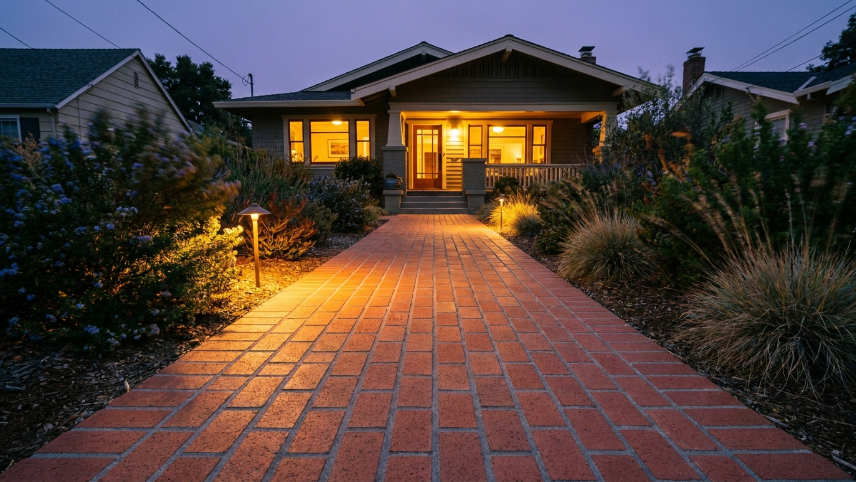
For homeowners comparing paver walkway cost Bay Area 2026 by material, brick is a perennial favorite. Classic red brick walkways complement the Craftsman bungalows, Victorian homes, and ranch-style houses common across the Bay Area. Brick is one of the most durable paver materials available — many brick paths installed in the early 20th century are still in service today. Cost: $12 to $22 per square foot installed.
Natural Flagstone
Sandstone, limestone, and irregular flagstone give a naturalistic, organic feel that pairs beautifully with Bay Area gardens and drought-tolerant landscaping. Flagstone works especially well in Marin County and Peninsula homes where blending with the natural environment is a design priority. Cost: $18 to $35 per square foot installed.
Travertine
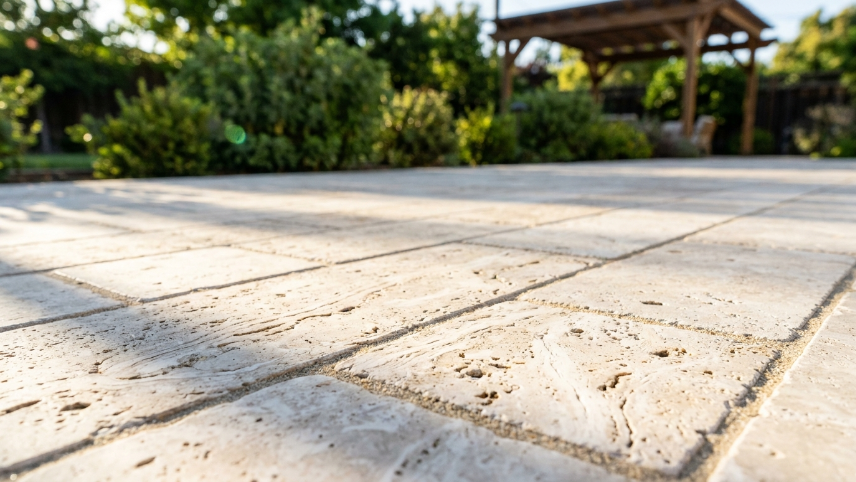
Travertine is the premium choice for homeowners who want a sophisticated, light-colored surface that reflects heat and remains comfortable underfoot in summer. It is popular in San Jose, Palo Alto, and other South Bay communities where outdoor entertainment spaces are extensively used. Cost: $20 to $40 per square foot installed.
Permeable Pavers
Given the Bay Area’s stormwater regulations and increasing concern over impervious surface coverage, permeable paver systems are growing in popularity. They allow water to infiltrate through the joints and base, reducing runoff dramatically. Many Bay Area municipalities offer fee reductions or rebates for permeable hardscape projects. Cost: $15 to $30 per square foot installed.
Real Bay Area Project Examples: What Homeowners Paid in 2026
Nothing illustrates real paver walkway cost Bay Area 2026 data better than actual completed projects. These case studies are based on projects completed by Cicarelli Contractors in the Bay Area. They illustrate the real-world range across different neighborhoods, materials, and project scopes.
Case Study 1: Front Entry Walkway in Richmond, CA
A homeowner near Point Richmond contacted Cicarelli Contractors after their old concrete path cracked and settled unevenly — a common issue caused by Bay Area clay soil expansion. The project involved removing 180 square feet of old concrete, regrading for improved drainage away from the foundation, and installing a charcoal concrete paver path with a herringbone pattern and contrasting border.
- Total area: 180 sq ft
- Material: Concrete pavers (premium grade)
- Total project cost: $4,800
- Timeline: 3 days
The homeowner noted a dramatic curb appeal improvement and reported zero settling or shifting after 18 months.
Case Study 2: Backyard Garden Path in Oakland Hills
An Oakland Hills homeowner with a steeply terraced backyard needed a garden path connecting three landscape levels. The project required significant excavation, retaining edge installation on the downhill side, and custom-cut flagstone to follow the natural terrain of the hillside lot.
- Total area: 240 sq ft
- Material: Pennsylvania bluestone flagstone
- Total project cost: $9,200
- Timeline: 5 days
The homeowner connected the project to our outdoor living space design service to integrate the walkway with new raised planting beds and low-voltage landscape lighting.
Case Study 3: Pool Deck and Walkway Combo in San Jose
After removing an aging pool, the homeowners in East San Jose wanted to reclaim the space with a new patio and connecting walkways. Cicarelli Contractors handled the pool removal and immediately transitioned to the new hardscape installation — a significant time and cost saving compared to hiring separate contractors.
- Total walkway area: 360 sq ft
- Material: Travertine
- Total walkway cost: $10,800
- Timeline: Combined pool removal + walkway: 8 days
This project illustrates the value of working with a full-service contractor. The family saved approximately $2,500 by bundling the excavation from the pool removal with the walkway base preparation.
What Bay Area Homeowners Say About Cicarelli Contractors
“We had three quotes for our front paver walkway in Richmond. Cicarelli was not the cheapest, but they were the most transparent about exactly what was included. The crew was professional, on time every day, and the finished walkway is absolutely beautiful. Worth every penny.”
— Maria T., Richmond, CA (Google Review, ⭐⭐⭐⭐⭐)
“I cannot say enough good things about this team. They removed our old pool and then installed a gorgeous travertine walkway and patio in the same project. Clean, efficient, and the quality is outstanding. Our backyard looks like it belongs in a magazine.”
— James R., San Jose, CA (Google Review, ⭐⭐⭐⭐⭐)
“Cicarelli handled our Oakland Hills garden path project on a tricky sloped lot. They solved drainage problems we did not even know we had and delivered a flagstone walkway that looks like it has always been there. Professional from start to finish.”
— Lisa and Marco D., Oakland, CA (Google Review, ⭐⭐⭐⭐⭐)
Read more reviews on Google Maps and Facebook.Get a free estimate for your project. Request your free quote now and let our team walk you through your best material options and design ideas.
How the Paver Walkway Installation Process Works: Step by Step
Knowing what to expect from a professional installation helps you prepare your property and evaluate contractor proposals more confidently. Here is the standard process Cicarelli Contractors follows for every Bay Area paver walkway project.
- Site Assessment and Design Consultation: Our team visits your property to measure the area, evaluate grade and drainage conditions, identify any underground utilities, and discuss design preferences and material options. We bring physical material samples to this meeting.
- Written Estimate and Contract: We provide a detailed written estimate itemizing materials, labor, base preparation, edging, and cleanup. Our full service overview explains what is always included.
- Site Preparation and Excavation: We excavate 6 to 10 inches below the finished surface level, removing soil, roots, and any existing hardscape. The sub-grade is compacted and graded to direct water away from structures.
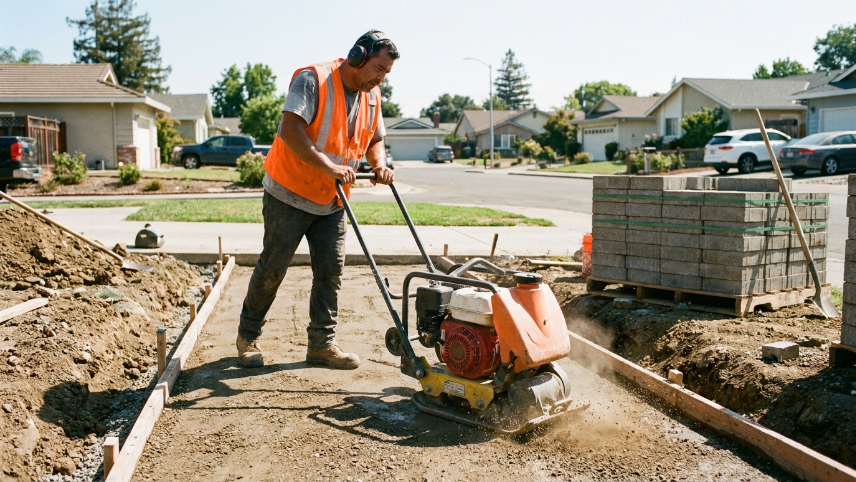
- Base Layer Installation: A 4 to 6 inch layer of compactable gravel (Class II base rock) is installed and mechanically compacted. For areas with clay soil, we may add geotextile fabric to prevent base contamination over time.
- Sand Setting Bed: One inch of coarse bedding sand is screeded to a perfectly level and graded plane. This is the critical final leveling layer before pavers are placed.
- Paver Installation: Pavers are laid from a corner, following the agreed pattern. Each paver is hand-set and checked with a level. Cuts are made with a diamond blade saw to fit edges and curves precisely.
- Edge Restraints: Plastic or aluminum edge restraints are spiked into the base along all exposed edges to keep pavers from migrating over time.
- Joint Sand Compaction: Polymeric joint sand is swept into the joints and mechanically compacted into the paver surface. This locks the pavers in place and resists weed germination and ant intrusion.
- Final Inspection and Cleanup: We walk the finished project with you, ensure every paver is flush and level, and remove all debris and equipment from the site.
Common Mistakes That Drive Up Paver Walkway Costs (And How to Avoid Them)
Choosing the Lowest Bid Without Vetting the Contractor
In the Bay Area’s competitive contractor market, bids can vary enormously. An unusually low bid often reflects a thinner base layer, lower-grade materials, unlicensed labor, or missing scope items that will surface as change orders once work begins. Always verify that a contractor holds a valid California CSLB license and carries general liability and workers’ compensation insurance.
Skipping Proper Drainage Planning
Bay Area soil — particularly the expansive clay soils common in the East Bay and South Bay — shifts significantly with moisture changes. Without adequate drainage planning, pavers settle unevenly within a few years. A quality installation always addresses how water moves across and away from the walkway surface.
Underestimating the Impact of Excavation Requirements
Many homeowners receive a “per square foot” estimate that does not clearly account for excavation depth. If your site has existing hardscape, dense root systems from Bay Area oaks or other trees, or significant grade changes, excavation costs can add substantially to the base estimate. Get a written, itemized proposal before signing anything.
Ignoring Maintenance Requirements
Even durable pavers benefit from periodic joint sand replenishment, sealing (especially for travertine and natural stone), and cleaning to prevent efflorescence and moss growth — both common in the Bay Area’s moist coastal climate. Cicarelli Contractors offers a warranty and maintenance program to keep your investment looking great for years.
Choosing Style Over Function
A highly decorative pattern looks stunning in a showroom photo but may not be practical for a high-traffic entry path. Work with your contractor to balance aesthetics with the practical demands of how the space will actually be used.
Best Time of Year to Install a Paver Walkway in the Bay Area
Timing your project strategically can influence the paver walkway cost Bay Area 2026 you end up paying. The Bay Area’s mild Mediterranean climate means paver installation is possible year-round — one significant advantage over many other U.S. regions.
Spring (March through May) and early fall (September through October) represent peak demand periods, as homeowners prepare their outdoor spaces for the entertaining season. During these windows, top contractors like Cicarelli Contractors tend to book out 4 to 6 weeks in advance, and material lead times can extend.
Winter installation (November through February) often comes with faster scheduling and occasionally more competitive pricing as demand softens. The rainy season requires careful scheduling around weather windows, but a skilled Bay Area contractor knows how to manage this efficiently.
If you are planning a paver walkway project for spring or summer 2026, scheduling your estimate now is the smartest move. Reach out to our team early to secure your preferred timeline.
How to Get the Best Value on Paver Walkway Cost Bay Area 2026 Projects
You do not have to compromise on quality to manage your project budget wisely. Savvy Bay Area homeowners who research paver walkway cost Bay Area 2026 thoroughly often find ways to stretch their budget without cutting corners. Here are practical strategies to maximize value.
Bundle Projects for Efficiency
One of the most effective ways to reduce paver walkway cost Bay Area 2026 is to combine projects. If you are planning multiple outdoor improvements — a paver walkway, patio expansion, retaining wall, or any remodeling — scheduling them together with one contractor reduces mobilization costs and often earns a bundled project discount. Cicarelli Contractors handles a wide range of remodeling services that pair naturally with hardscape projects.
Choose Concrete Pavers for High-Traffic Areas
For utilitarian paths — side yards, service areas, or paths that receive heavy foot traffic — concrete pavers offer near-identical durability to natural stone at a fraction of the cost. Reserve premium materials like travertine or flagstone for high-visibility areas where aesthetics justify the investment.
Keep the Design Simple Where It Does Not Show
Complex patterns and mixed-material designs add significant labor costs. A clean running bond or simple grid pattern in a back side yard path can save 20 to 30 percent on labor without any visible compromise in the sections that matter for curb appeal.
Ask About the Referral Program
Cicarelli Contractors offers a referral program that rewards homeowners who connect friends and neighbors with our services. If you know someone else considering a paver project, a referral could offset a portion of your own project cost.
Frequently Asked Questions About Paver Walkway Cost Bay Area 2026
How much does a paver walkway cost in the Bay Area in 2026?
The paver walkway cost Bay Area 2026 typically ranges from $8 to $50 per square foot installed, depending on the material selected. A standard 200 sq ft front entry walkway costs between $1,600 and $10,000 fully installed. Natural stone and travertine projects fall on the higher end; concrete and brick pavers on the lower end.
What is the cheapest paver option for a Bay Area walkway?
Concrete pavers are the most affordable choice, starting around $8 per square foot installed. They come in a wide range of styles and colors, and their durability is well-suited to Bay Area soil and climate conditions.
How long does paver walkway installation take?
A typical residential paver walkway installation takes 2 to 5 days for a standard project. Larger projects, those requiring significant excavation, or complex designs may take up to 7 to 10 days.
Do I need a permit to install a paver walkway in the Bay Area?
Most residential paver walkways in Bay Area cities do not require permits. However, requirements vary by municipality and project scope. Cicarelli Contractors handles all permit research and applications as part of our project scoping process.
How long do paver walkways last in the Bay Area?
A properly installed paver walkway lasts 25 to 50 years or more with basic maintenance. The ability to replace cracked or settled individual pavers extends the overall lifespan far beyond a comparable poured concrete surface.
Is paver walkway cost Bay Area 2026 higher than last year?
Yes, modestly. Material costs in the Bay Area increased approximately 5 to 8 percent from 2025 to 2026, driven primarily by continued demand for outdoor living improvements and ongoing Bay Area labor market conditions.
Ready to Transform Your Outdoor Space? Here Is What to Do Next
Understanding paver walkway cost Bay Area 2026 is the foundation of a successful project. You now know the realistic price ranges by material type, the factors that push costs up or down, what a professional installation process looks like, and how to avoid the common mistakes that lead to inflated bills and disappointing results.
Cicarelli Contractors is a fully licensed and insured Bay Area contractor serving Richmond, Oakland, Berkeley, San Jose, Marin County, and surrounding communities. Our team brings deep experience in hardscape design, site preparation, and outdoor living space transformations. We stand behind every project with a comprehensive warranty and maintenance program that protects your investment for the long term.
Ready to start your paver walkway project in the Bay Area? Request your free estimate today.
Contact us online or call us at (650) 404-7049. Our office is open Monday through Friday, 9 AM to 5 PM, and Saturday, 9 AM to 2 PM. You can also explore our full range of services, read more on our blog, or learn more about our team.
Cicarelli Contractors — Bay Area
Address: Richmond, CA 94805 | Phone: (650) 404-7049 | Email: info@cicarellicontractor.com
Hours: Mon–Fri 9 AM – 5 PM | Sat 9 AM – 2 PM | CA CSLB Licensed & Insured
