
Table of Contents
- Direct Answer
- What a Pool Demolition Permit California Requires Before You Dig
- Buildable vs. Non-Buildable: The Decision That Sets Your Permit Requirements
- Who Can Apply for a Pool Demolition Permit in California?
- Inside the Permit Process: Plans, Inspections, and Closure
- The Permit Mistake That Turns a Simple Fill-In Into a Future Liability
- How Permit Requirements Differ Across Bay Area Cities
- When a Standard Demolition Permit Isn’t the Whole Story
- FAQ
- Pool demolition permit vs. grading permit: what’s the real difference?
- Do I still need a permit if I only want to drain and cover the pool temporarily?
- Does a pool demolition permit ever need to be reopened later?
- Why do some Bay Area pool demolition permits require a geotechnical engineer and others don’t?
- Why do pool demolition permit fees and timelines vary so much between cities?
- What should I ask a contractor about permits before signing a contract?
- Conclusion
Direct Answer: A pool demolition permit California building departments issue requires an engineer-reviewed site plan, proof that utilities have been disconnected, and inspections at each stage, with a compaction report added only when the filled area must remain buildable for future construction.
Introduction
Search “pool removal permit,” “pool abandonment permit,” and “pool demolition permit” on the same afternoon, and you’ll find all three used to describe the same paperwork. That confusion is normal. Bay Area building departments don’t always use the same term for the same document, which makes it hard to know what you’re actually applying for.
This guide focuses on one specific piece of that puzzle: what a pool demolition permit California cities actually require before, during, and after the work. You’ll learn how the buildable versus non-buildable decision changes your paperwork, who is allowed to apply, what happens at each inspection, and the single mistake that causes the most trouble months or years later.
We’ll also walk through how requirements shift from one Bay Area city to the next, since a project in Oakland doesn’t always follow the same checklist as one in Sunnyvale.
Ready to start your project the right way? Reach out to Cicarelli Contractors for a permit-ready site assessment before you break ground.
What a Pool Demolition Permit California Requires Before You Dig
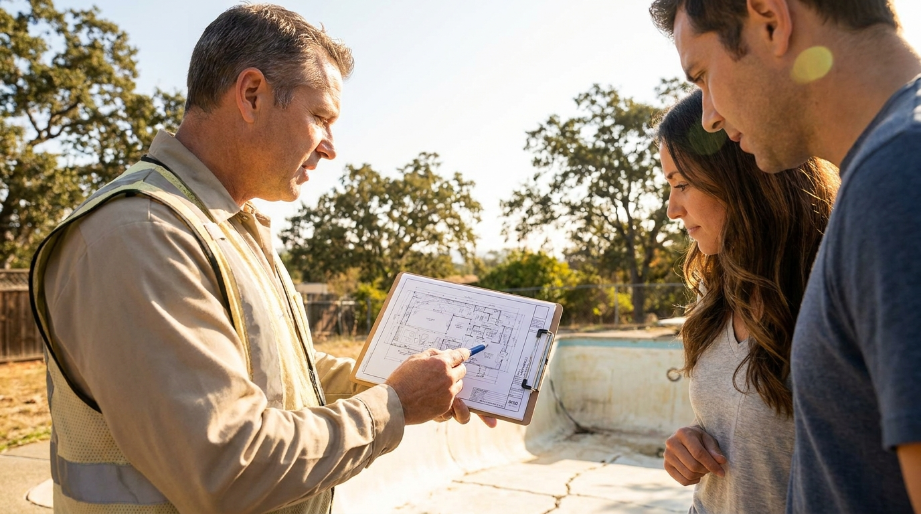
Every city in the nine-county Bay Area requires a demolition permit before any pool removal work begins. That part is consistent. A pool demolition permit California cities issue always starts with the same building department review, even though the paperwork attached to it changes by project.
Beyond the base demolition permit, your project may also need a grading permit if the amount of soil moved crosses a city’s threshold, plumbing and electrical permits if pool equipment is being disconnected, and in some cases a separate planning clearance. San José, for example, requires a planning-level clearance before the building division will issue a demolition permit if the pool has an existing planning permit on file or the property sits on the city’s historic resources inventory.
None of this is optional paperwork you can skip to save time. Every city we’ve listed treats an unpermitted pool fill as a code violation, and it becomes a real problem the moment you try to sell the home or pull a permit for anything else on that lot.
Buildable vs. Non-Buildable: The Decision That Sets Your Permit Requirements
This decision determines almost everything else about your pool demolition permit California building departments will ask you to document. Before you apply, answer one question: will anything with a foundation ever sit on top of that filled pool?
Non-Buildable Fill: The area stays open space, landscaping, or garden beds, with nothing structural planned on top. Most cities allow the pool shell to remain below grade here, as long as the bottom is punched with drainage holes and the void is backfilled with approved loose material. This is the faster, simpler path. Common mistake: assuming “non-buildable” is permanent, then discovering the compaction process has to happen retroactively once plans change.
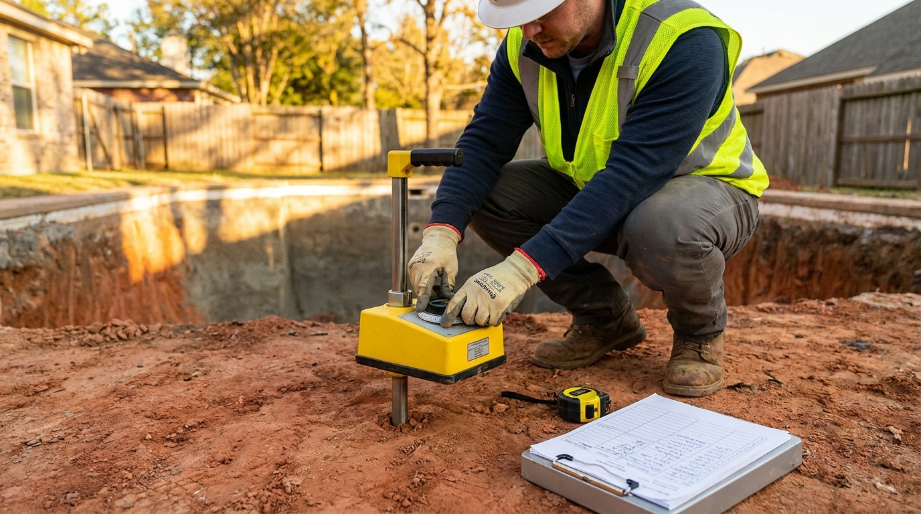
Buildable Fill: You intend to build a patio, addition, ADU, or any structure with a foundation over that footprint, now or later. This triggers a stricter standard. Most Bay Area cities require backfill placed in compacted lifts, generally to at least 90 percent relative compaction, tested and documented by a California-licensed geotechnical or soils engineer. Common mistake: skipping the engineer to save money now, then paying for it twice once plans firm up.
Mountain View’s building division spells this out clearly: if the pool shell is left in place, plans must show at least 12 inches of demolition depth from finish grade and at least 20 percent of the pool bottom punched out, with a compaction report required whenever the fill will support future construction.
Who Can Apply for a Pool Demolition Permit in California?
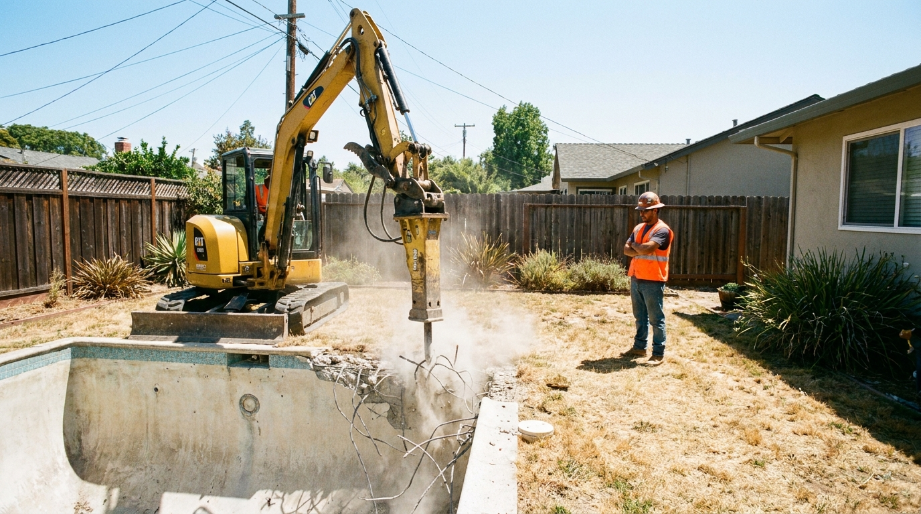
California allows a few different license types to apply for a pool demolition permit California residents rely on for this work. A licensed General Contractor (B), a Swimming Pool Contractor (C-53), or a Demolition Contractor (C-21) can all pull the permit on your behalf.
Homeowners can also apply directly in most cities, usually by signing an owner-builder acknowledgment form that confirms they understand the work and liability involved. This route works, but it puts every inspection, correction, and scheduling call on your plate instead of your contractor’s.
Hiring a properly licensed contractor keeps you off the hook for that coordination. It also protects you if an inspector flags something, since a licensed contractor is contractually on the hook to fix it, not you.
Inside the Permit Process: Plans, Inspections, and Closure
Once you know whether your project is buildable or non-buildable, applying for your demolition permit follows a fairly predictable structure across Bay Area cities.
Your site plan needs to show the pool’s location and size, its distance from property lines and structures, the fill material, and a written scope of work stating whether the shell stays in place or gets fully removed. For buildable projects, that plan must also be wet-stamped by the Engineer of Record, a California-licensed engineer who takes responsibility for the compaction design.
Before demolition starts, all utilities tied to the pool have to be disconnected and, in many cities, inspected before work proceeds. That means capping gas and water lines, removing electrical wiring back to the service panel, and relabeling the equipment breaker. Sunnyvale’s building division requires this utility work verified before the crew is cleared to drill drainage holes in the pool floor.
Most jurisdictions require at least two inspections: an in-progress inspection, scheduled once drainage holes are drilled and before backfill begins, and a final inspection once grading is complete. For buildable projects, the geotechnical engineer’s compaction report gets submitted alongside that final inspection, and that combination is what closes the permit.
Some cities offer a faster path for straightforward, non-buildable projects. San José has a same-day Simple Projects Service for demolitions that clearly won’t be built on, while anything more complex goes through standard plan review. That distinction, more than city size, is usually what determines how long your project takes.
Not sure which path your property qualifies for? Talk to Cicarelli Contractors before you submit anything to the city.
The Permit Mistake That Turns a Simple Fill-In Into a Future Liability
Here’s the mistake we see most often with a pool demolition permit California homeowners handle themselves, and it rarely shows up until years after the work is done: filling in a pool as non-buildable to save time and money, then changing your mind about the yard down the road.
The technical cause is straightforward. Non-buildable fill isn’t tested or compacted to the standard a foundation needs. It’s backfilled loosely enough to settle naturally over open space, which is exactly what makes it wrong to build on without redoing the work. When a homeowner later wants a patio slab, an ADU, or a room addition over that spot, the city has no compaction records to approve construction, and the ground itself likely isn’t ready for it either.
A few things reduce this risk if there’s any chance your plans could change:
- Ask your contractor for a rough cost estimate of engineering the fill as buildable now, even if you’re not building yet.
- Keep every permit document, inspection sign-off, and any soils report in one folder tied to the property, not just your email.
- If you’re on the fence, lean toward buildable. Downgrading later is simple. Upgrading later means redoing the ground.
Before you commit to either path, ask your contractor directly: “If I change my mind about building here in five years, what happens to this fill?” A contractor with real experience will have a specific answer, not a vague reassurance.
How Permit Requirements Differ Across Bay Area Cities
A pool demolition permit California residents apply for in one city can carry a different checklist than the same project two towns over. Local add-ons tend to fall into a few recurring categories, summarized below.
| City / County Area | Additional Requirement Beyond the Base Demolition Permit |
|---|---|
| San José | Planning Division clearance required if the pool has an existing planning permit or the property is on the historic resources inventory; same-day Simple Projects Service available for clearly non-buildable fills. |
| Mountain View | Digitally stamped plans required from a licensed designer, architect, contractor, or homeowner; specific depth and bottom-punch percentage required if the shell remains in place. |
| Sunnyvale | HOA approval letter required if the property is part of a homeowners association; water must be drained to the sanitary sewer clean-out, never to the street or storm drain. |
| Alameda County cities (Union City, Fremont, and others) | Utility district clearance required from the local water and sanitary districts and PG&E before permit issuance; a performance bond or security deposit may be required at intake. |
| Contra Costa County (including Danville) | Coordination with the local sanitary district required before draining pool water; plot plan showing distances to structures and property lines is a standard submittal requirement. |
The pattern across all five is the same, even though the specific extra step differs. Cities layer additional requirements onto the same base demolition permit, based on local infrastructure, like sanitary districts and utility providers, and local risk factors, like historic properties and HOA rules. Confirming the exact list with your specific city’s building department before you apply is still the only way to avoid a resubmittal.

When a Standard Demolition Permit Isn’t the Whole Story
A standard pool demolition permit California building departments issue covers most residential projects cleanly, but a few situations add layers most homeowners don’t expect.
If your home is on a septic system, the sanitary district typically needs to be contacted before any pool water is drained, since it can’t go into the street or a storm drain either way. If your property sits on the local historic resources inventory, expect a planning-level review before the building division touches the file. And if an ADU or addition is coming within the next year or two, it usually makes sense to engineer the fill as buildable from day one.
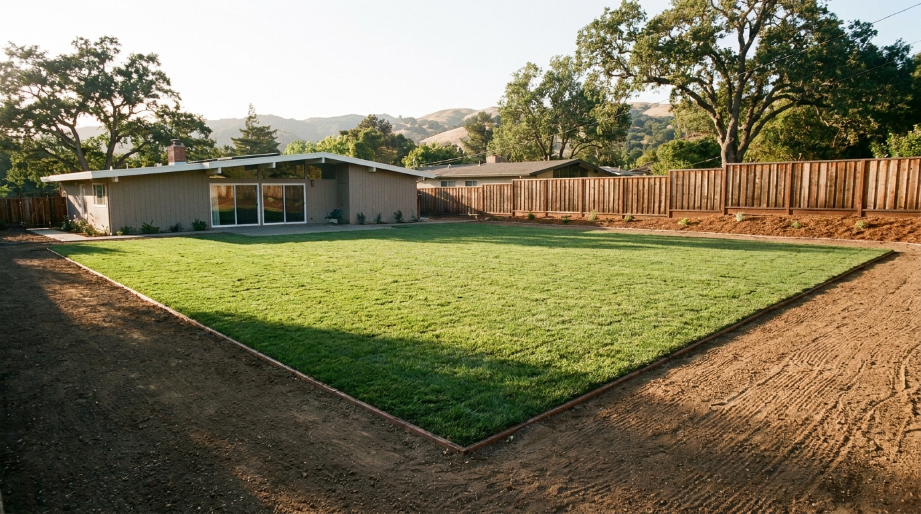
On the other hand, a standard permit is genuinely enough if you’re simply removing a pool and replacing it with a lawn, garden beds, or a patio with no foundation. Adding engineering documentation to a project that will never carry a structure is time spent on paperwork you don’t need. The extra layers only make sense when there’s a real chance you’ll build on that footprint.
Consider a homeowner in Walnut Creek who filled in an unused pool as non-buildable to plant a lawn. Two years later, an ADU became worth exploring for that same backyard. Because the fill was never engineered for structural loads, the geotechnical review had to start over, adding real time to a project one conversation up front could have avoided.
Clients who leave reviews for Cicarelli Contractors on Google consistently mention the permit and inspection side of the project being handled without them having to chase the city themselves, often the part of a pool demolition that causes the most stress for first-time homeowners.
FAQ
Pool demolition permit vs. grading permit: what’s the real difference?
A demolition permit covers breaking down the pool shell, coping, and equipment. A grading permit covers larger changes to the land, like moving significant volumes of soil. Most Bay Area pool projects only need the demolition permit. Ask your contractor whether grading applies too.
Do I still need a permit if I only want to drain and cover the pool temporarily?
Yes, in nearly every Bay Area city. Draining a pool and leaving the shell buried, sometimes called abandonment, still needs an inspected, documented permit, since an empty shell under a temporary cover is a safety and drainage hazard. Skipping this step now often costs more later.
Does a pool demolition permit ever need to be reopened later?
Yes, and it’s the scenario homeowners are least prepared for. If a non-buildable fill is later built on, the city typically requires a new geotechnical review first. Keeping your original permit closure documents and compaction records, if any, speeds that review up considerably.
Why do some Bay Area pool demolition permits require a geotechnical engineer and others don’t?
It depends on what happens above the fill afterward. Open landscaping usually needs simpler backfill with no engineering. Anything built with a foundation over that spot needs compacted, engineer-tested fill. The building department decides which category applies based on your stated plans.
Why do pool demolition permit fees and timelines vary so much between cities?
Fees are usually based on the valuation of the work, so pool size changes the number city by city. Timelines depend on the review path: simple, non-buildable projects can qualify for faster issuance, while anything needing engineer sign-off takes longer.
What should I ask a contractor about permits before signing a contract?
Ask who is pulling the permit and under which license. Ask whether the quote includes an engineer’s compaction report, if your project needs one, and how many inspections are covered. Ask to see a permit the contractor actually closed out in your city, or check their verified licensing history on BuildZoom before signing.
Conclusion
The paperwork behind a pool demolition permit California cities require isn’t complicated once you understand the one question that drives most of it: will anything ever be built on that footprint? Answer that honestly before you apply, and the rest of the process, plans, inspections, and closure, tends to fall into place.
If you’d rather not track city-specific rules yourself, Cicarelli Contractors’ pool demolition team handles the permit process across all nine Bay Area counties as part of every project. For the full picture of what happens after the permit is issued, from draining to final grading, our guide on what to expect from pool removal start to finish walks through the rest of the timeline.
For questions specific to your city or property, browse our Bay Area service areas or reach out directly.
Ready to get your permit process started? Contact Cicarelli Contractors for a site assessment, or call (650) 404-7049.
