
The house demolition cost refers to the total expense of safely tearing down a residential or commercial structure, removing debris, and preparing the site for future construction or landscaping. This cost is not a fixed number. It shifts based on dozens of variables, and understanding those variables is the first step toward an accurate budget.
At its core, the house demolition cost covers labor, equipment rental or operation, debris hauling, landfill disposal fees, and permit costs. In some cases, it also includes hazardous material abatement, utility disconnection, and site grading after the structure is removed.
The national average house demolition cost in 2026 ranges from $6,000 to $25,000 for a standard single-family home. However, projects in high-cost metropolitan areas like the San Francisco Bay Area can exceed $35,000 depending on the size, materials, and site conditions.
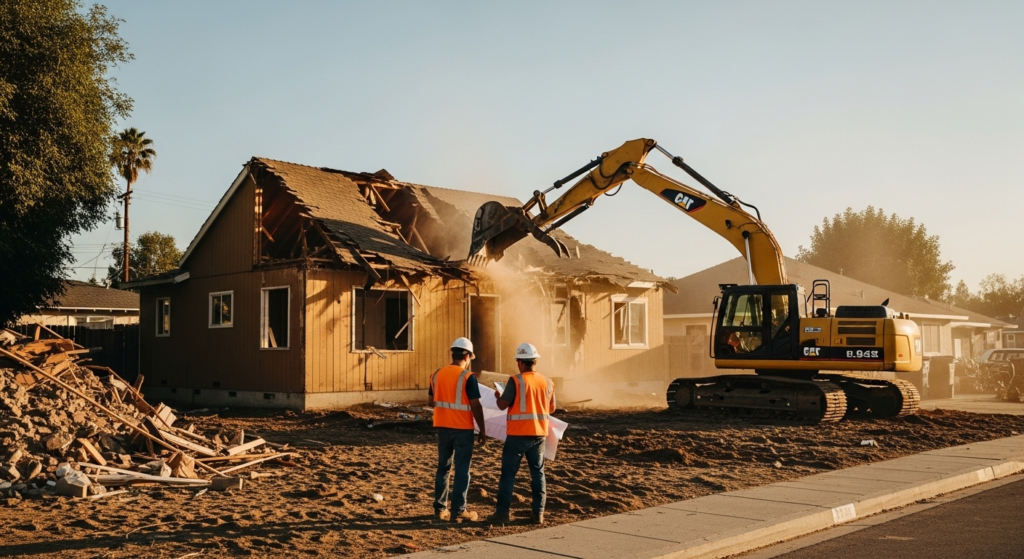
How Much Does House Demolition Cost in 2026? National Averages
The following table provides a clear breakdown of average house demolition costs by project type in the United States for 2026.
| Project Type | Average Cost (Low) | Average Cost (High) | Average Cost (Mid) |
|---|---|---|---|
| Small house (under 1,000 sq ft) | $4,500 | $12,000 | $8,000 |
| Medium house (1,000–2,000 sq ft) | $8,000 | $20,000 | $14,000 |
| Large house (2,000–3,500 sq ft) | $15,000 | $35,000 | $24,000 |
| Partial demolition only | $1,500 | $8,000 | $4,500 |
| Garage demolition | $1,200 | $5,000 | $3,000 |
| Pool removal (fill-in method) | $3,000 | $10,000 | $6,500 |
These figures represent the total house demolition cost including labor, equipment, debris removal, and basic permitting. They do not include hazardous material removal, which is priced separately.
House Demolition Cost Per Square Foot
One of the most reliable ways to estimate your project is by calculating the house demolition cost per square foot. Nationally, this figure ranges from $4 to $15 per square foot. In California and other high-cost states, expect to pay between $8 and $18 per square foot.
For example, a 1,500-square-foot home in Richmond, CA, could carry a house demolition cost of $12,000 to $27,000 depending on the structure type, materials, and site accessibility.
What Factors Affect the House Demolition Cost the Most?
Understanding what drives the house demolition cost up or down gives you negotiating power and helps you plan more accurately. The following factors have the greatest impact on your final bill.
1. Size and Square Footage of the Structure
The larger the structure, the higher the house demolition cost. More material means more labor hours, more equipment time, and more debris to haul away. A 3,000-square-foot home will almost always cost more than twice as much to demolish as a 1,000-square-foot home because of the compounding effect of these variables.
2. Type of Construction Materials
Wood-frame homes are generally the least expensive to demolish. Concrete block, brick, and steel-reinforced structures require specialized equipment and more labor, which significantly increases the house demolition cost. Homes built before 1980 may also contain asbestos, lead paint, or other hazardous materials that require certified abatement before demolition can begin.
3. Location and Site Accessibility
Urban and suburban properties in densely built areas like the Bay Area present unique challenges. Limited access for heavy machinery, proximity to neighboring structures, and strict local regulations all contribute to a higher house demolition cost. Rural properties, by contrast, often benefit from easier site access and lower disposal fees.
4. Permit Requirements
Every demolition project in the United States requires permits. The cost of these permits varies by municipality but typically ranges from $200 to $2,000. In California, permit requirements are among the most stringent in the country, and failing to obtain the correct permits can result in fines that dwarf the original house demolition cost.
5. Hazardous Material Abatement
Asbestos removal alone can add $1,500 to $30,000 to your house demolition cost depending on the extent of contamination. Lead paint abatement typically adds $1,000 to $10,000. These are non-negotiable costs — federal and state law requires certified professionals to handle these materials before any structural demolition begins.

House Demolition Cost by Region: How Location Changes Everything
The house demolition cost is not uniform across the United States. Regional labor rates, disposal fees, and regulatory environments create significant price differences from state to state and even city to city.
West Coast (California, Oregon, Washington)
The West Coast consistently reports the highest house demolition costs in the country. In the San Francisco Bay Area, where Cicarelli Contractors operates, the average house demolition cost for a standard single-family home ranges from $15,000 to $40,000. High labor costs, strict environmental regulations, and premium disposal fees all contribute to this elevated range.
If you are located in Richmond, CA, or anywhere in the Bay Area and need a reliable estimate, the team at Cicarelli Contractors specializes in hard demolition and excavation services and can provide a detailed, transparent quote tailored to your specific property.
Midwest (Illinois, Ohio, Michigan)
Midwestern states offer some of the most competitive house demolition costs in the country. Average prices range from $5,000 to $15,000 for a standard residential structure. Lower labor rates and more accessible disposal facilities keep costs manageable.
South (Texas, Florida, Georgia)
Southern states fall in the middle range, with average house demolition costs between $6,000 and $20,000. Warm weather allows for year-round project scheduling, which can reduce costs by avoiding weather-related delays.
Northeast (New York, Massachusetts, New Jersey)
The Northeast rivals the West Coast in terms of house demolition cost. Dense urban environments, strict permitting requirements, and high labor rates push average costs to $12,000 to $35,000 for residential projects.
Step-by-Step: How to Plan and Budget Your House Demolition
Planning your house demolition cost accurately requires a structured approach. Follow these steps to avoid surprises and stay within budget.
Step 1: Assess the Structure
Before contacting any contractor, document the size, age, and construction materials of the structure. Note any additions, outbuildings, or attached structures that will also need to be removed. This information will help contractors provide more accurate quotes and will help you compare bids on an equal basis.
Step 2: Test for Hazardous Materials
Hire a certified inspector to test for asbestos, lead paint, and other hazardous materials before requesting demolition quotes. Knowing the abatement scope upfront prevents unexpected cost additions after the project begins. This step is especially critical for homes built before 1980.
Step 3: Contact Your Local Municipality
Call your city or county building department to understand the permit requirements for your demolition project. Ask about utility disconnection requirements, setback rules, and any environmental restrictions that may apply to your property. In California, this step is particularly important given the state’s complex regulatory environment.
Step 4: Get at Least Three Quotes
Never accept the first quote you receive. Contact at least three licensed and insured demolition contractors and ask for itemized bids. An itemized bid breaks down the house demolition cost into labor, equipment, disposal, permits, and any additional services. This transparency allows you to compare bids accurately and identify any contractor who is underpricing to win the job and then adding costs later.
Step 5: Verify Licensing and Insurance
In California, all contractors must hold a valid license issued by the Contractors State License Board (CSLB). Verify your contractor’s license number before signing any contract. Also confirm that they carry general liability insurance and workers’ compensation coverage. If a worker is injured on your property and the contractor lacks proper insurance, you could be held financially responsible.
Step 6: Plan for Debris Removal and Site Preparation
The house demolition cost includes debris removal in most standard contracts, but confirm this in writing. Also discuss what happens to the site after demolition. Will the contractor grade the land? Fill in any excavations? Remove the foundation? These post-demolition services affect your total cost and your timeline for the next phase of your project.

Real Client Story: Demolition in Richmond, CA
One of the most common scenarios the team at Cicarelli Contractors encounters is a homeowner who purchased a distressed property with an aging structure that needs to be fully removed before new construction can begin.
A recent client in Richmond, CA, purchased a 1,200-square-foot wood-frame home built in 1962. The structure had significant termite damage, outdated electrical wiring, and a partial asbestos ceiling in the kitchen. The client initially received a quote from another contractor for $9,500 with no itemization. After contacting Cicarelli Contractors, they received a fully itemized quote that included asbestos abatement, permit fees, full structural demolition, foundation removal, and site grading for a total of $18,400.
While the second quote was higher, the client understood exactly what they were paying for. The project was completed on schedule, all permits were properly closed, and the site was ready for new construction within three weeks. The client later left this review:
“Cicarelli Contractors was incredibly professional from start to finish. They explained every step of the process, handled all the permits, and left the site completely clean. I would not trust anyone else with a project this size in the Bay Area.” — Verified Google Review
This case illustrates why the lowest house demolition cost is rarely the best house demolition cost. Transparency, licensing, and experience matter far more than the bottom line on an initial quote.
If you are ready to start your project, you can request a free consultation here.
Hidden Costs That Inflate Your House Demolition Cost
Many homeowners are blindsided by costs that were not included in their initial quote. The following are the most common hidden expenses that inflate the final house demolition cost.
Utility Disconnection Fees
Before any demolition can begin, all utilities — gas, electric, water, and sewer — must be properly disconnected by the respective utility companies. These disconnection fees are typically not included in contractor quotes and can add $500 to $2,500 to your total house demolition cost.
Tree and Landscaping Removal
If trees, large shrubs, or hardscaping elements need to be removed from the demolition zone, these costs are usually separate. Tree removal alone can add $300 to $3,000 per tree depending on size and location.
Foundation Removal
Many demolition quotes cover only the above-grade structure. Removing the foundation — whether a concrete slab, crawl space, or full basement — is often priced separately and can add $3,000 to $15,000 to your house demolition cost.
Soil Testing and Remediation
If the property has a history of underground storage tanks, chemical use, or industrial activity, soil testing may be required before or after demolition. Remediation costs vary widely but can be substantial.
Neighbor Notification and Legal Fees
In some municipalities, you are legally required to notify adjacent property owners before demolition begins. If disputes arise, legal fees can add unexpected costs to your project.
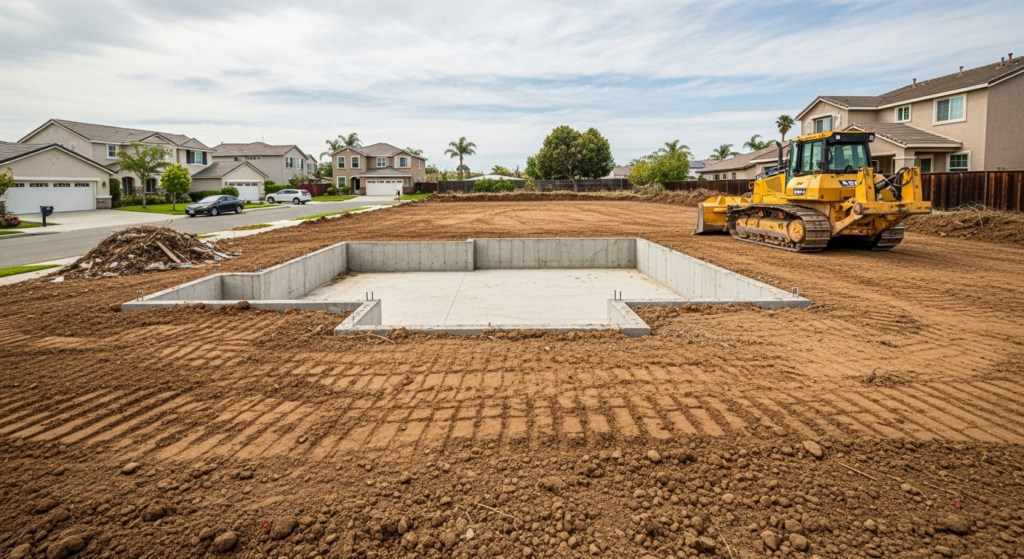
Common Mistakes Homeowners Make When Budgeting House Demolition Cost
Avoiding these mistakes can save you thousands of dollars and weeks of delays.
Mistake 1: Accepting a Verbal Quote
Always get your quote in writing with full itemization. A verbal agreement is unenforceable and leaves you vulnerable to cost additions after work begins.
Mistake 2: Skipping the Hazardous Material Inspection
Skipping this step to save money upfront almost always results in higher costs later. If hazardous materials are discovered during demolition, work must stop until certified abatement is completed — and emergency abatement services cost significantly more than planned abatement.
Mistake 3: Hiring an Unlicensed Contractor
Unlicensed contractors may offer lower prices, but they expose you to enormous financial and legal risk. In California, hiring an unlicensed contractor for a project over $500 is illegal and can result in fines, voided insurance claims, and personal liability for worker injuries.
Mistake 4: Underestimating Permit Timelines
In many California municipalities, demolition permits take two to six weeks to process. Failing to account for this timeline can delay your entire construction schedule and increase carrying costs on the property.
Mistake 5: Not Planning for Site Restoration
The house demolition cost does not end when the structure falls. Site grading, soil compaction, and preparation for new construction are essential steps that must be budgeted from the beginning.
For homeowners who also need to address outdoor structures like pools, Cicarelli Contractors offers professional pool demolition and removal services in the Bay Area as part of a comprehensive site clearance approach.
How to Reduce Your House Demolition Cost Without Cutting Corners
There are legitimate ways to reduce your house demolition cost without compromising safety, quality, or legal compliance.
Salvage and Resale of Materials
Before demolition begins, consider hiring a deconstruction specialist to carefully remove and resell valuable materials such as hardwood flooring, cabinetry, copper plumbing, and architectural fixtures. Salvage credits can reduce your net house demolition cost by $1,000 to $5,000 depending on the materials present.
Schedule During Off-Peak Periods
Contractors are often more willing to negotiate pricing during slower periods, typically late fall and winter in most US markets. Scheduling your project during these windows can reduce labor costs by 10 to 20 percent.
Bundle Services
If you need demolition, excavation, and new construction, bundling these services with a single contractor often results in meaningful discounts. Cicarelli Contractors offers a full range of remodeling and construction services that can be coordinated to reduce your overall project cost.
Get Multiple Itemized Bids
As mentioned earlier, comparing itemized bids from multiple contractors is the single most effective way to ensure you are paying a fair house demolition cost. It also gives you leverage to negotiate with your preferred contractor.
What to Look for in a House Demolition Contractor
Choosing the right contractor is as important as budgeting accurately. The following criteria should guide your selection process.
A qualified demolition contractor should hold a valid state contractor’s license, carry general liability insurance of at least $1 million per occurrence, and have documented experience with projects similar in size and complexity to yours. They should be willing to provide references from recent clients and should have a clear, written process for permit acquisition, hazardous material handling, and debris disposal.
Cicarelli Contractors has built a strong reputation in the Bay Area for transparent pricing, professional execution, and exceptional client communication. You can read more about their approach and team on their About page or explore their full range of demolition and excavation services.
Additional verified reviews from satisfied clients include:
“The crew was on time every day, cleaned up after themselves, and the project came in exactly on budget. Highly recommend for anyone in the Richmond area.” — Google Review, 5 stars
“We had a complicated demolition with asbestos abatement required. Cicarelli handled everything professionally and kept us informed throughout. Worth every penny.” — Google Review, 5 stars
You can also find Cicarelli Contractors on Google Maps and follow their latest projects on Facebook.

The house demolition cost is one of the most misunderstood line items in residential construction budgeting. As you have seen throughout this guide, the true cost goes far beyond the price of swinging a wrecking ball. It encompasses permits, hazardous material abatement, debris disposal, site preparation, and the expertise of the professionals you hire to manage the process.
To recap the key points from this guide: the national average house demolition cost ranges from $6,000 to $25,000 for a standard single-family home, with costs in the Bay Area and other high-cost markets running significantly higher. The most important factors affecting your final cost are the size and materials of the structure, site accessibility, local permit requirements, and the presence of hazardous materials. Avoiding common mistakes — such as accepting verbal quotes, skipping hazardous material inspections, and hiring unlicensed contractors — can save you thousands of dollars and weeks of delays.
If you are planning a demolition project in Richmond, CA, or anywhere in the San Francisco Bay Area, the team at Cicarelli Contractors is ready to help. With years of experience in hard demolition, excavation, and full-service construction, they bring the expertise, licensing, and transparency that every demolition project demands.
Ready to get an accurate house demolition cost estimate for your property? Contact Cicarelli Contractors today for a free, no-obligation consultation.
Phone: (650) 404-7049 Email: info@cicarellicontractor.
You can also explore their full range of services, including outdoor living space design, painting services, and warranty and maintenance programs, to make the most of your property after demolition is complete.
For additional resources and project planning guides, visit the Cicarelli Contractors Resources page and blog.
