
Is your home falling apart, or just falling behind? That question sits at the heart of one of the most important — and expensive — decisions a homeowner can face. When a property needs serious work, the debate around house demolition vs renovation becomes unavoidable. Do you tear it all down and start fresh, or do you invest in bringing the existing structure back to life?
According to the National Association of Home Builders, the average cost of a full home renovation in the United States ranges from $100,000 to over $500,000 depending on scope and location. Meanwhile, full house demolition and rebuild can run anywhere from $150,000 to $450,000 or more. When comparing house demolition vs renovation, the numbers are close — but the right choice depends on far more than price alone.
In this complete guide, you will learn exactly how to evaluate house demolition vs renovation for your specific situation, including real cost breakdowns, structural considerations, local regulations, and expert insights from Cicarelli Contractors, a trusted name in demolition and remodeling services in Richmond, CA and the greater Bay Area.
Continue reading to discover which path makes the most financial and practical sense for your home.
Ready to get a professional assessment? Contact Cicarelli Contractors today and request your free consultation.
What Is House Demolition vs Renovation and Why Does It Matter?
Before diving into costs and comparisons, it is important to define what each option actually involves. The house demolition vs renovation decision is not just about money — it is about the future of your property, your family’s safety, and your long-term investment.
House demolition refers to the complete or partial removal of an existing structure. A full demolition means the entire building is torn down to the foundation or below grade. A partial demolition involves removing specific sections — walls, additions, or structures like pools and garages — while preserving the main building.
Home renovation refers to improving, updating, or restoring an existing structure without removing it entirely. Renovations can range from cosmetic updates like painting and flooring to major structural work like rewiring, replumbing, or reconfiguring floor plans.
Understanding the difference between these two paths is the foundation of making a smart decision. The house demolition vs renovation question is one that contractors, architects, and real estate professionals deal with every single day — and the answer is rarely black and white.
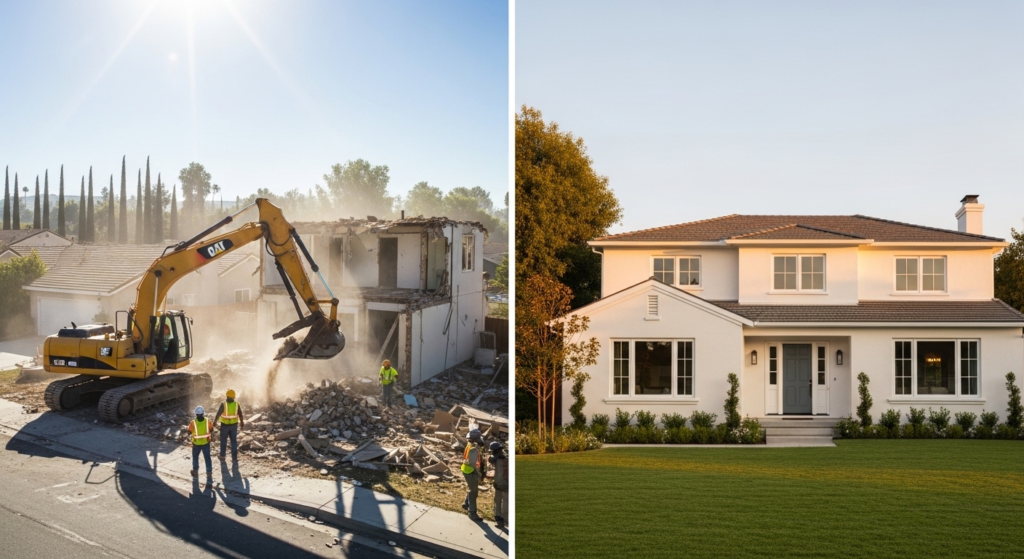
How Do You Know When Demolition Is the Right Choice?
Structural Damage Beyond Repair
One of the clearest signs that house demolition vs renovation tips toward demolition is when the structural integrity of the home is compromised beyond what renovation can reasonably fix. Foundation failures, severe termite damage, extensive mold infiltration, and fire damage that has weakened load-bearing elements are all situations where rebuilding from scratch is not just more practical — it is safer.
A licensed structural engineer can assess whether the bones of your home are worth saving. In many cases, homeowners discover that the cost of repairing structural damage actually exceeds the cost of a full demolition and rebuild.
The Cost of Renovation Exceeds 50% of Home Value
A widely used rule of thumb in the construction industry is the 50% rule: if the cost of renovation exceeds 50% of the current market value of the home, demolition and rebuild often becomes the more financially sound option. This benchmark is especially relevant in high-value markets like the Bay Area, where land values are significant and a new build can dramatically increase property worth.
Outdated Systems That Cannot Be Upgraded Efficiently
Homes built before 1980 often contain outdated electrical panels, galvanized plumbing, asbestos insulation, and lead paint. When multiple systems need full replacement simultaneously, the disruption and cost of working around an existing structure can make house demolition vs renovation lean heavily toward starting fresh.
Zoning Changes or Desired Square Footage Increase
If local zoning laws now allow for a larger footprint than the existing home occupies, or if you need significantly more square footage than the current structure can provide, demolition opens the door to a purpose-built home designed exactly to your specifications.
When Does Renovation Make More Sense Than Demolition?
Historic or Architecturally Significant Homes
Not every home should be torn down, even when it needs significant work. Properties with historic designation, unique architectural character, or sentimental value often benefit more from thoughtful renovation. In many jurisdictions, demolishing a historically designated structure requires special permits and may not be permitted at all.
Strong Existing Foundation and Structural Frame
If a home has a solid foundation, sound framing, and good bones, renovation is almost always the more cost-effective path. Preserving what already works — and updating what does not — can deliver a like-new result at a fraction of the cost of full demolition and rebuild.
Shorter Timeline Requirements
Full house demolition followed by new construction typically takes 12 to 24 months from start to finish. A targeted renovation, depending on scope, can be completed in 3 to 9 months. If timeline is a priority, the house demolition vs renovation calculation often favors renovation.
Neighborhood Comparables and Resale Value
In some neighborhoods, the cost of a full demolition and rebuild may exceed what the market will support in resale value. Before committing to either path, a real estate professional familiar with your local market should evaluate comparable sales and projected post-project values.
House Demolition vs Renovation: A Full Cost Breakdown

| Factor | Full Demolition and Rebuild | Full Home Renovation |
|---|---|---|
| Average Cost (US) | $150,000 – $450,000+ | $100,000 – $500,000+ |
| Timeline | 12 – 24 months | 3 – 12 months |
| Permits Required | Yes, extensive | Yes, varies by scope |
| Disruption Level | Very High | High |
| Customization | Complete | Limited by existing structure |
| Energy Efficiency | Maximum (new systems) | Moderate (depends on upgrades) |
| Best For | Severely damaged or outdated homes | Structurally sound homes needing updates |
This table makes the house demolition vs renovation comparison tangible. Neither option is universally cheaper — the right answer depends entirely on your home’s current condition, your goals, and your local market.
Demolition Cost Factors
The cost of house demolition in California varies based on several factors:
- Size of the structure (square footage)
- Type of demolition (full vs. partial)
- Presence of hazardous materials (asbestos, lead paint)
- Accessibility of the site
- Disposal and hauling fees
- Local permit costs
In the Bay Area, full residential demolition typically ranges from $15,000 to $45,000 for the teardown alone, before any rebuilding begins. Cicarelli Contractors provides professional hard demolition and excavation services throughout Richmond, CA and surrounding communities, with transparent pricing and experienced crews.
Renovation Cost Factors
Renovation costs are driven by:
- Scope of work (cosmetic vs. structural)
- Materials selected
- Labor rates in your region
- Permit requirements
- Unexpected discoveries (hidden damage, code violations)
The Bay Area is one of the most expensive construction markets in the country. Labor costs alone can run 20 to 40 percent higher than the national average, which is a critical factor when evaluating house demolition vs renovation in this region.
What Are the Pros and Cons of House Demolition?
Pros of House Demolition:
- Complete design freedom with a blank slate
- New construction meets current building codes automatically
- Maximum energy efficiency with modern systems
- Eliminates all hidden damage and hazardous materials
- Can increase property value significantly in high-land-value markets
Cons of House Demolition:
- Higher upfront cost in many scenarios
- Longer timeline before occupancy
- Requires temporary housing during construction
- Extensive permitting process
- Emotional difficulty of losing the original structure
What Are the Pros and Cons of Home Renovation?
Pros of Home Renovation:
- Preserves existing character and features
- Generally faster completion timeline
- Can be phased to manage budget
- Less permitting complexity in many cases
- Maintains neighborhood aesthetic continuity
Cons of Home Renovation:
- Hidden problems discovered mid-project can escalate costs
- Limited by existing structural constraints
- May not achieve the full modernization desired
- Older systems may still require replacement
- Renovation fatigue from living in a construction zone
Real-World Case Study: A Bay Area Homeowner’s Decision
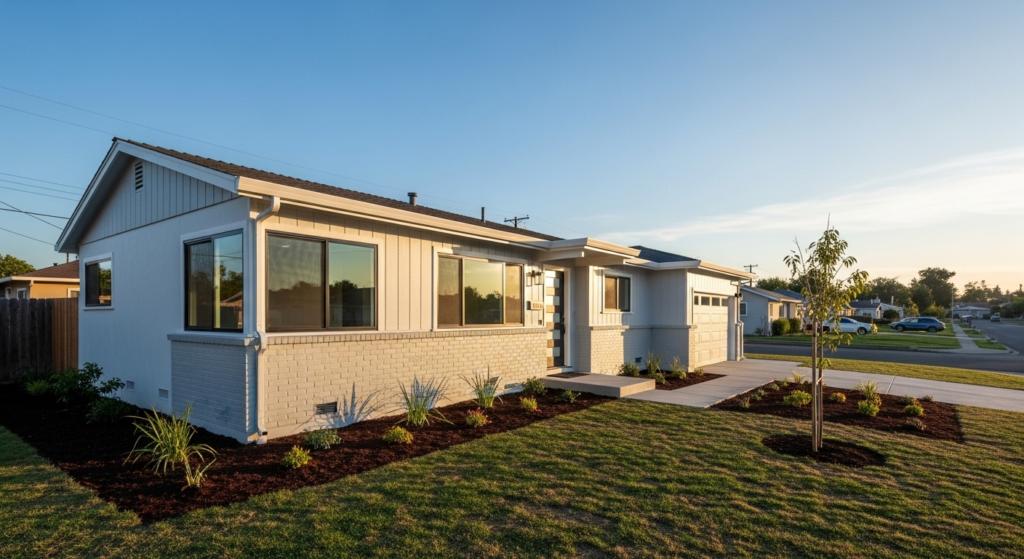
A homeowner in Richmond, CA contacted Cicarelli Contractors after purchasing a 1960s ranch-style home that had been neglected for over a decade. The initial instinct was full demolition — a common reaction when facing a house demolition vs renovation decision. After a thorough structural assessment, the team discovered that the foundation was in excellent condition and the framing was sound despite cosmetic deterioration throughout the interior.
The recommendation: targeted renovation rather than full house demolition. The project included a complete kitchen and bathroom remodel, full electrical panel upgrade, new HVAC system, exterior painting, and landscaping improvements. The total cost came in at $187,000 — significantly less than the estimated $320,000 for full demolition and rebuild on the same lot, reinforcing how house demolition vs renovation outcomes can vary dramatically based on structural integrity.
The homeowner later shared this review on Google: “Cicarelli Contractors walked me through every option honestly. They could have pushed me toward a bigger project, but they gave me the real numbers and helped me make the right call. The renovation turned out better than I imagined.”
This is exactly the kind of transparent, client-first approach that defines how house demolition vs renovation decisions should be handled by a qualified contractor.
Wondering which option is right for your home? Explore Cicarelli Contractors’ full range of remodeling services or learn more about the team before making your decision.
How to Evaluate Your Home: A Step-by-Step Decision Framework
Step 1: Hire a licensed structural engineer to assess foundation, framing, and load-bearing elements.
Step 2: Get a full inspection for hazardous materials including asbestos, lead paint, and mold.
Step 3: Obtain renovation cost estimates from at least three licensed contractors.
Step 4: Research local zoning laws and permit requirements for both demolition and new construction.
Step 5: Consult a real estate professional to evaluate post-project market value for both scenarios.
Step 6: Apply the 50% rule — if renovation costs exceed 50% of current home value, demolition deserves serious consideration.
Step 7: Factor in timeline, temporary housing costs, and personal priorities before making a final decision.
Following this framework ensures that your house demolition vs renovation decision is based on data, not emotion or assumption.
Common Mistakes Homeowners Make in the Demolition vs Renovation Decision
Underestimating Hidden Renovation Costs
One of the most common and costly mistakes in the house demolition vs renovation process is underestimating what renovation will actually cost once walls are opened and hidden problems are revealed. Experienced contractors build contingency budgets of 15 to 20 percent into renovation projects for exactly this reason.
Skipping the Structural Assessment
Homeowners who skip a professional structural assessment before committing to renovation often find themselves mid-project with a contractor recommending demolition anyway — at a much higher total cost than if the decision had been made upfront.
Ignoring Local Permit Requirements
Both demolition and renovation require permits in California. Failing to pull the correct permits can result in stop-work orders, fines, and complications when selling the property. Cicarelli Contractors handles all permitting as part of their demolition and excavation services, ensuring full compliance with local codes.
Choosing a Contractor Based on Price Alone
The lowest bid is rarely the best value in construction. Choosing a contractor without verifying licensing, insurance, and references is a risk that can turn either a demolition or renovation project into a financial disaster. Check reviews on Google Maps and platforms like Houzz and Angi before hiring.
Partial Demolition: The Middle Ground Option
Not every house demolition vs renovation situation requires an all-or-nothing choice. Partial demolition — removing specific sections of a home while preserving the main structure — is a powerful middle-ground strategy that many homeowners overlook.
Common partial demolition scenarios include:
- Removing a deteriorated addition while keeping the original home
- Demolishing an attached garage to build a larger, code-compliant replacement
- Removing a pool or outbuilding that is no longer functional or desired
- Tearing out interior walls to open floor plans without touching the exterior
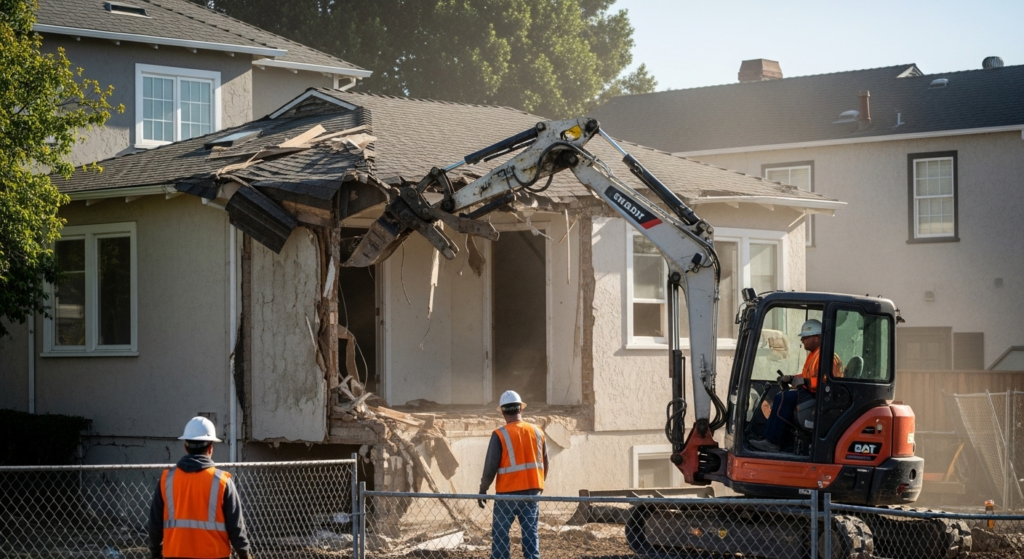
Cicarelli Contractors specializes in this type of targeted work. Their pool demolition services in the Bay Area are a prime example — homeowners who no longer want a pool can have it professionally removed and the space repurposed, without touching the rest of the property.
Local Regulations and Permits in Richmond, CA and the Bay Area
The house demolition vs renovation decision in California is heavily influenced by local regulations. The Bay Area has some of the most complex permitting environments in the country, with requirements varying by city and county.
Key regulatory considerations include:
- Demolition permits from the local building department
- Environmental review for hazardous materials abatement
- Grading and excavation permits for site work
- Historic preservation review in designated districts
- Utility disconnection requirements before demolition begins
- Waste disposal and recycling mandates (California requires diversion of construction debris)
Working with a contractor who understands the local regulatory landscape is not optional — it is essential. Cicarelli Contractors operates throughout Richmond, CA and the greater Bay Area, with deep familiarity with Contra Costa County and surrounding jurisdictions. You can reach the team at (650) 404-7049 or by email at info@cicarellicontractor.
What Do Real Customers Say About Cicarelli Contractors?
Customer reviews consistently highlight the professionalism, transparency, and quality of work delivered by Cicarelli Contractors. Here are a few representative examples from their Google Business profile:
“We were completely torn between tearing down our old addition or renovating it. The Cicarelli team came out, assessed everything, and gave us a clear breakdown of both options. No pressure, just honest advice. We went with a partial demolition and renovation combo and could not be happier.” — Verified Google Review
“From the first call to the final walkthrough, everything was handled professionally. They kept us informed at every step and finished on time. I would recommend them to anyone in the Bay Area dealing with a major home project.” — Verified Google Review
“The crew was respectful of our property and neighbors throughout the demolition. Clean, efficient, and exactly what they quoted. Five stars without hesitation.” — Verified Google Review
You can read more reviews and see their full profile on Google Maps or follow their latest projects on Facebook.
Tools and Resources for Homeowners Evaluating Demolition vs Renovation
These resources can help you research, plan, and budget your project:
- HomeAdvisor — Cost estimator tools and contractor matching for demolition and renovation projects
- Angi — Verified contractor reviews and project cost guides
- Houzz — Design inspiration and contractor directory
- California Department of Housing and Community Development — State-level building codes and permit information
- Cicarelli Contractors Resources Page — Local guides and project information for Bay Area homeowners
- Cicarelli Contractors Services Overview — Full list of available services including demolition, remodeling, painting, and outdoor living
Common Questions About House Demolition vs Renovation

Frequently Asked Questions
Q1: Is it cheaper to demolish a house and rebuild or renovate it?
It depends on the condition of the existing structure. If the home has significant structural damage, hazardous materials, or outdated systems throughout, demolition and rebuild can be more cost-effective in the long run. For homes with solid foundations and good framing, renovation typically costs less. The house demolition vs renovation cost comparison must account for hidden renovation costs, which can escalate significantly once work begins.
Q2: How long does house demolition take compared to renovation?
A full residential demolition typically takes 1 to 5 days for the physical teardown, but the complete process including permits, hazmat abatement, debris removal, and site preparation can take 2 to 6 weeks. Renovation timelines vary widely — from a few weeks for cosmetic updates to 6 to 12 months for major structural work. New construction after demolition adds another 12 to 18 months on average.
Q3: Do I need a permit for house demolition in California?
Yes. In California, a demolition permit is required for any full or partial structural removal. Additional permits may be required for hazardous materials abatement, grading, and utility disconnection. Working with a licensed contractor like Cicarelli Contractors ensures all permits are obtained correctly and the project remains in full compliance with local codes.
Q4: What happens to the foundation when a house is demolished?
In a full demolition, the foundation may be removed entirely or left in place depending on the plans for the site. If a new structure will be built, the existing foundation is typically evaluated by a structural engineer. If it meets current code requirements and the new design, it may be reused. Otherwise, it is removed and a new foundation is poured.
Q5: Can I live in my home during a major renovation?
In some cases, yes — particularly if the renovation is limited to specific areas of the home. For major structural renovations involving the kitchen, bathrooms, HVAC, or electrical systems, temporary relocation is often recommended for safety and practical reasons. Your contractor should provide a clear project timeline so you can plan accordingly.
Q6: What is partial demolition and when is it recommended?
Partial demolition involves removing specific sections of a structure — such as an addition, garage, pool, or interior walls — while preserving the main building. It is recommended when only part of the property needs to be removed or reconfigured, and the primary structure is in good condition. Cicarelli Contractors offers professional pool demolition and removal services as a common partial demolition solution in the Bay Area.
Conclusion: Making the Right Choice Between House Demolition and Renovation
The house demolition vs renovation decision is one of the most consequential choices a homeowner can make. There is no universal right answer — only the right answer for your specific property, budget, goals, and timeline.
Here is a quick recap of what you have learned in this guide:
- House demolition makes the most sense when structural damage is severe, renovation costs exceed 50% of home value, or you need complete design freedom
- Renovation is the smarter choice when the home has solid bones, a shorter timeline is needed, or the scope of work is manageable
- Partial demolition offers a powerful middle ground for targeted removal without full teardown
- Bay Area homeowners face unique cost, regulatory, and market considerations that make professional guidance essential
- Transparent, data-driven contractor assessment is the foundation of a good decision
Whether you are leaning toward demolition, renovation, or something in between, the team at Cicarelli Contractors is ready to help you evaluate your options with honesty and expertise.
Ready to start your project in Richmond, CA or anywhere in the Bay Area? Contact Cicarelli Contractors today for your free consultation and honest assessment. Call (650) 404-7049, email info@cicarellicontractor.com, or submit your request online. Office hours: Monday through Friday, 9 AM to 5 PM — Saturday, 9 AM to 2 PM.
You can also explore our warranty and maintenance programs, check out our referral program, or browse the full blog for more expert guidance on home improvement in the Bay Area.
Cicarelli Contractors Address: Richmond, CA 94805 Phone: (650) 404-7049 Email: info@cicarellicontractor.
