
Direct Answer: When pool removal Bay Area homeowners choose partial removal, the footprint stays legally unbuildable for permanent structures, but Cicarelli Contractors can still design patios, turf, or garden spaces around it once the fill is properly compacted and drained.
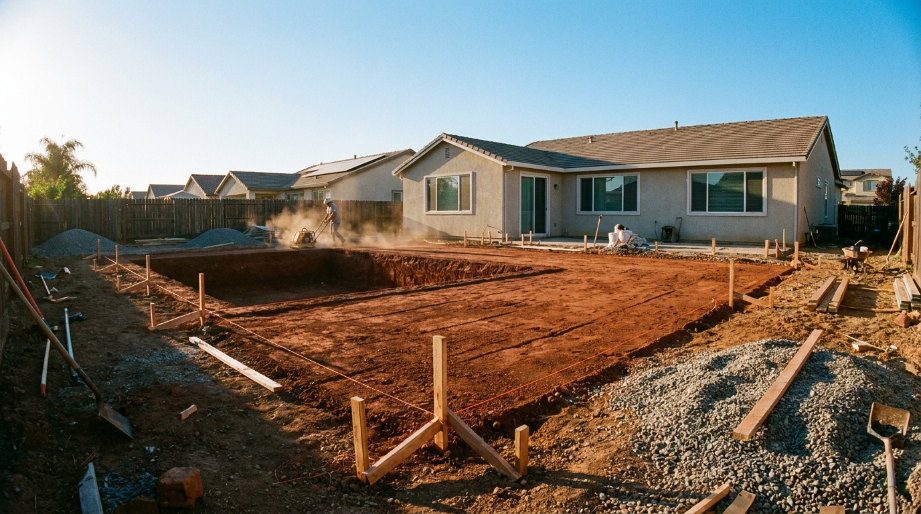
Table of Contents
- What Partial Pool Removal Actually Leaves Behind
- What Pool Removal Bay Area Homeowners Miss When Planning a Remodel
- How Cicarelli Contractors Evaluates a Former Pool Footprint
- The Settling Problem Nobody Mentions Until It’s Your Patio
- What You Can Build Over a Partial Removal, and What You Can’t
- Where a Reclaimed Pool Footprint Works Best in a Bay Area Backyard
- Why a Remodeling Contractor, Not Just a Demo Crew, Should Handle This
- FAQ
- Partial vs. full pool removal, which do Bay Area remodeling contractors recommend before a backyard renovation?
- Can you build a paver patio over a partially removed pool?
- How do you know if a former pool area is settling after a remodel?
- Why do backyards with a filled-in pool develop dips or soft spots years later?
- What affects the cost of preparing a former pool site for a remodel?
- What should you ask a contractor before building over a former pool site?
- How much does it cost to remove a pool in the Bay Area before starting a remodel?
If you searched for pool removal Bay Area options, you have probably run into three terms that sound like they mean the same thing: pool removal, pool demolition, and pool fill-in. They are not interchangeable, and the method a previous contractor used determines what you can build on that spot today.
Most guides on this topic stop at one question: can you build over it. That matters, but if you are planning a backyard remodel rather than new construction, a more useful question comes first. What does a partially filled pool actually change about your patio design, your drainage plan, or your outdoor kitchen layout? That is where our crews spend most of their time on these projects.
This guide covers what partial removal physically leaves behind, how it changes a remodeling or outdoor living project specifically, and what to check before you build anything on top of it, from a paver patio to a raised garden bed. If you are not sure which type of removal is under your yard, contact our team and we can review the property history with you before you start planning.
What Partial Pool Removal Actually Leaves Behind
Partial pool removal leaves the lower section of the pool shell buried in your yard, with the top portion broken away and the whole cavity backfilled. Crews typically demolish the top 18 to 36 inches of the pool walls, punch drainage holes through the remaining floor, and fill the cavity with dirt and compacted gravel.
Full removal takes the opposite approach. Every piece of the shell comes out of the ground, and the site gets backfilled from bare soil up. Partial removal finishes faster. Full removal leaves a cleaner slate for whatever comes next.
This distinction comes up constantly in pool removal Bay Area projects because so many pools in this region were installed decades ago, often before current owners bought the home. If you inherited a filled yard along with the property, you may not know which method was used. City permit records, or the original demolition and grading permit, are the first place to check before planning any remodel over that spot.
What Pool Removal Bay Area Homeowners Miss When Planning a Remodel
Most guides frame pool removal Bay Area decisions around one binary: buildable or not buildable. For a remodel, the variables that actually matter are drainage behavior, soil movement, and how much weight your new design puts on that section of yard.
| Factor | Full Removal | Partial Removal |
|---|---|---|
| Buildability | Supports permanent structures once engineered fill is verified | Not considered buildable for permanent structures |
| Typical remodel use | Additions, ADUs, poured patios | Paver patios, turf, garden beds |
| Drainage behavior | Predictable once compacted uniformly | Requires extra attention around the buried shell |
| Design flexibility | High, few restrictions | Moderate, limited to lightweight surfaces |
A paver patio settles differently than poured concrete. Turf tolerates minor grade shifts far better than a built-in bench wall does. Matching your design to the removal method, rather than assuming any surface works the same way, is the step most homeowners skip.
How Cicarelli Contractors Evaluates a Former Pool Footprint
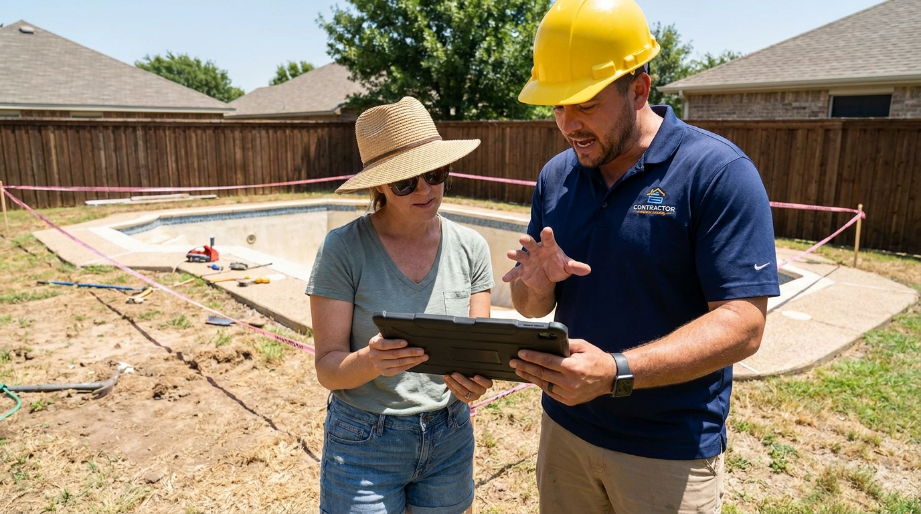
Before we draw up a remodel plan for a yard with a filled pool, our crews walk the site to check three things: how the fill was placed, how water currently drains across it, and what the new design will actually rest on. Every pool removal Bay Area evaluation we run starts with the same three checks, regardless of what the finished project looks like.
We recently worked with a homeowner in Contra Costa County who wanted an outdoor kitchen and dining patio built where a pool had been partially removed years earlier by a previous owner. Because the original fill records were incomplete, we brought in a soil test before finalizing the patio base, added extra sub-base depth over the softer section, and routed drainage away from that zone entirely. The project moved forward on schedule once we understood exactly what we were building over.
It is a pattern that shows up often enough that it comes up in feedback from past clients on our Google Business Profile, homeowners who did not realize a previous pool removal would affect their new patio or landscaping plans until we flagged it during the estimate.
The Settling Problem Nobody Mentions Until It’s Your Patio
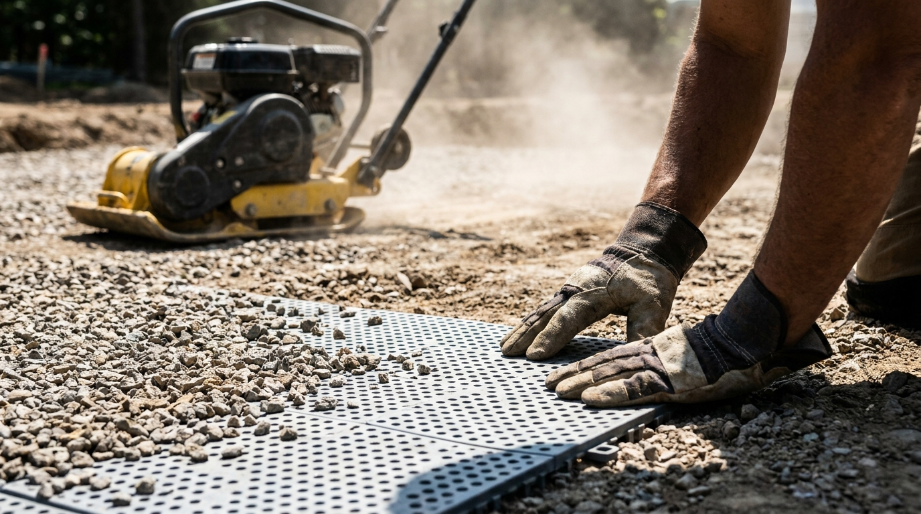
The most common issue with a partially removed pool is not the buried shell itself. It is water that gets trapped under your new patio or lawn because the fill above it was never compacted in controlled layers. In pool removal Bay Area projects, this kind of drainage problem tends to surface months after the remodel is finished, not during it.
Trapped moisture creates a soft pocket that shifts with seasonal rain, which is exactly the kind of movement a rigid surface cannot absorb. A few practical steps reduce the risk before you build anything on top of it.
- Confirm the fill was compacted in layers, not dumped in all at once
- Request a compaction check before finalizing a hardscape design
- Grade the finished surface to drain away from the old pool footprint, not into it
- Avoid planting deep-rooted trees directly over the buried shell
Before you sign a contract, ask your contractor how they plan to verify compaction on the section of yard sitting over the old pool, not just the rest of the property. If you are ready to move forward, reach out to schedule a site visit and we can walk the yard with you before any design work starts.
What You Can Build Over a Partial Removal, and What You Can’t
Partial removal supports lightweight, flexible surfaces well. It does not support anything that needs a rigid, continuous foundation. Across pool removal Bay Area projects we have handled, the pattern is consistent: light structures work, rigid foundations do not.
- Paver or flagstone patios: the flexible base tolerates minor settling well. The common mistake is skipping extra sub-base depth over the old footprint.
- Synthetic turf: handles grade shifts without cracking. The common mistake is installing it without extra drainage venting over the buried shell.
- Raised garden beds: keeps weight off the native fill entirely. The common mistake is anchoring the bed frame directly into the old shell.
- Pergolas and shade structures: light footing loads generally work. The common mistake is pouring deep concrete footings without checking fill depth first.
- Additions, ADUs, or anything with a poured foundation: this generally requires full removal and engineered fill first. The common mistake is assuming a partial fill just needs more dirt to become buildable. If this describes your project, our guide on pool demolition in the Bay Area explains how full removal differs from a partial fill, and it is worth a conversation with a full removal specialist before you commit to a design.
Where a Reclaimed Pool Footprint Works Best in a Bay Area Backyard
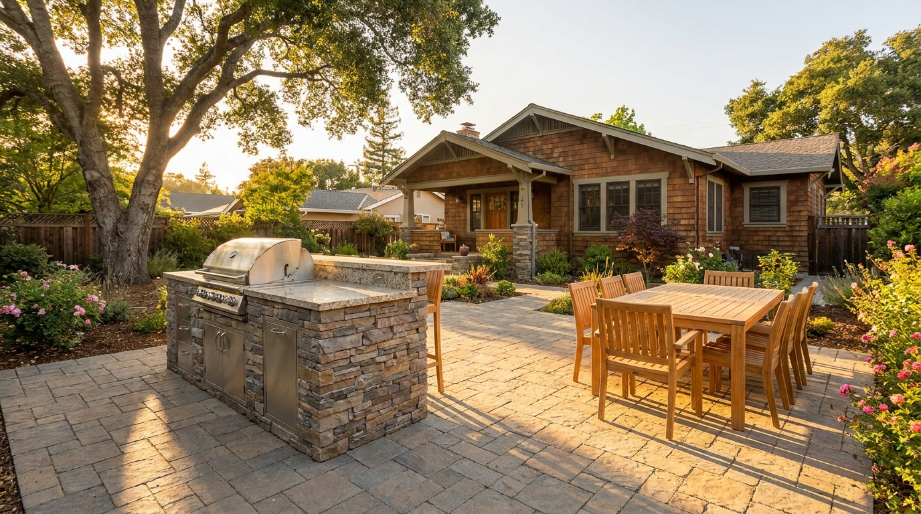
A partial removal works best on flat lots where the new design stays light, like the level backyards common across the Contra Costa and Alameda County flatlands. Picture a paver patio and outdoor kitchen replacing an old pool on a flat lot in Concord or Walnut Creek, built with a flexible base that moves with the ground instead of against it.
On sloped lots common in the Oakland and Berkeley hills, added grading and drainage work is usually necessary regardless of which removal method was used, since hillside soil movement is a separate issue from the pool fill itself. For pool removal Bay Area properties on a slope, a partial removal alone rarely solves the whole site problem.
A partial removal is not the best choice when any of the following apply.
- You are planning any structure with a poured foundation
- The lot already has drainage or grading issues unrelated to the pool
- You plan to sell within a few years and want to avoid a partial removal disclosure
Our outdoor living space page compares patio, turf, and garden layouts if you are still deciding what to put where the pool used to be.
Why a Remodeling Contractor, Not Just a Demo Crew, Should Handle This
A pool-only demolition company can break concrete and haul debris, but that scope usually stops once the hole is filled. Choosing the right contractor matters as much as the pool removal Bay Area method itself, since the fill work and the finished design need to come from teams that talk to each other.
Our remodeling services page breaks down how we fold site work like this into a full backyard renovation, from grading through the finished patio, kitchen, or addition. You can also review our project history and licensing status on BuildZoom before hiring anyone for this kind of work.
Plan the Remodel Around What’s Actually Under Your Yard
Whether you are planning a full backyard remodel or just want a safe, functional patio where a pool used to be, understanding your site’s history is the first step. For pool removal Bay Area homeowners weighing a remodel over a former pool, the right move is confirming exactly what is buried there before finalizing a design.
Contact Cicarelli Contractors to schedule a site evaluation and start planning your outdoor living space with a full picture of what is under your yard.
FAQ
Partial vs. full pool removal, which do Bay Area remodeling contractors recommend before a backyard renovation?
Most remodeling contractors recommend full removal if you plan to add anything with a poured foundation, since partial removal is not considered buildable in most Bay Area jurisdictions. If your plans stay light, like a patio, turf, or garden beds, a properly compacted partial removal can work well. The right choice depends more on your remodel plans than on any single factor.
Can you build a paver patio over a partially removed pool?
In most cases, yes. Paver and flagstone patios use a flexible base that tolerates minor settling better than poured concrete does. You should still confirm the fill under that section was compacted in layers, and add extra sub-base depth if it was not. Skipping that step is the most common reason patios crack or sink over a former pool.
How do you know if a former pool area is settling after a remodel?
Watch for small dips, standing water after rain, or hairline cracks appearing in pavers or turf seams above where the pool used to sit. These signs often show up seasonally, worse after the first heavy rains of the year. Catching it early usually means a simple regrade rather than tearing out the whole patio.
Why do backyards with a filled-in pool develop dips or soft spots years later?
Dips usually mean the fill material settled unevenly, often because it was placed all at once instead of compacted in controlled layers. Trapped water under the surface speeds up the problem, since saturated soil compresses more than dry soil does. This is why verifying compaction matters more than the fill material itself.
What affects the cost of preparing a former pool site for a remodel?
The biggest factors are how much of the original pool shell remains, whether additional excavation or engineered fill is needed, and how accessible the yard is for equipment. The scope of your remodel matters too, since a patio needs far less site preparation than an addition. Your contractor can walk through these factors with you during a site visit.
What should you ask a contractor before building over a former pool site?
Ask whether the original removal was partial or full, and whether any permit or compaction records exist. Ask how they plan to verify the fill is compacted before starting your design, and how the finished grade will handle drainage. A contractor who has handled this before should be able to answer all three without hesitation.
How much does it cost to remove a pool in the Bay Area before starting a remodel?
Cost depends on pool size, site access, and whether you choose partial or full removal, so there is no single figure that applies across every property. What matters more for a remodel is matching the removal method to what you actually plan to build afterward. A contractor can outline the specific cost factors for your property during a consultation.
