
Did you know that nearly 5.7 million residential pools in the United States are abandoned, underused, or actively costing homeowners thousands of dollars every year in maintenance?
If you are staring at a cracked, empty, or neglected pool in your backyard, you are probably already asking the most important question: should I choose pool demolition or fill-in?
These two options are not the same, and picking the wrong one can cost you time, money, and future flexibility with your property.
In this guide, you will learn exactly what each method involves, how much each one costs, which one fits your goals, and how to avoid the most expensive mistakes homeowners make.
Keep reading to discover which choice is right for your home.
Ready to get started? Request your free quote from Cicarelli Contractors today.
What Is Pool Demolition or Fill-In, and Why Does It Matter?
Before you can make a confident decision, you need to understand what pool demolition or fill-in actually means in practical terms. These are two distinct methods of pool removal, each with different processes, costs, timelines, and long-term outcomes for your property.
What Is a Full Pool Demolition?
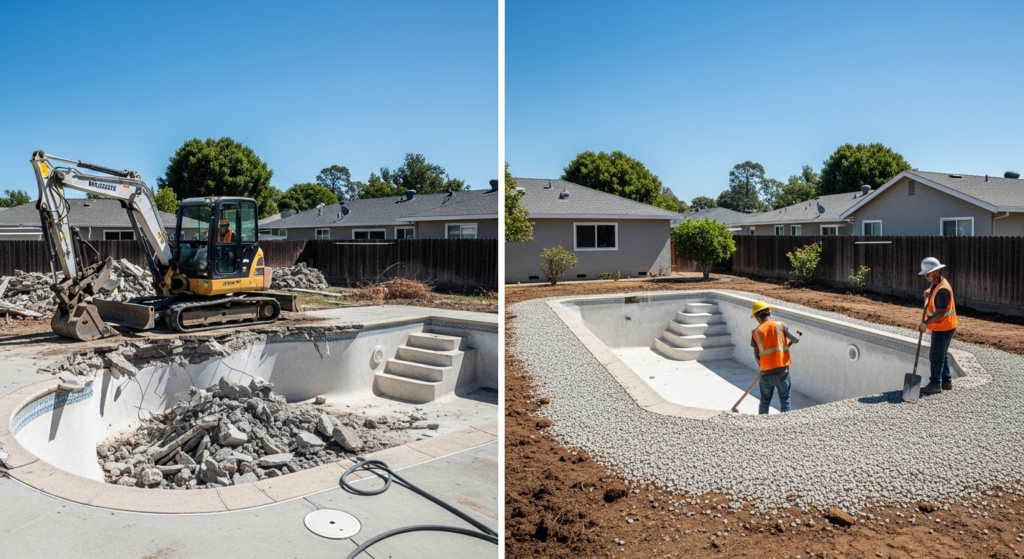
Full pool demolition, also called complete pool removal, means the entire pool structure is broken apart and hauled away from your property. This includes the concrete shell, plumbing lines, electrical components, and any surrounding deck material you choose to remove. Once the excavation is complete, the hole is backfilled with clean soil and compacted properly. The result is a clean, fully usable piece of land with no restrictions on future construction.
When homeowners in the Bay Area work with Cicarelli Contractors’ professional pool demolition team, the full removal process is handled from permitting through final grading, leaving the yard ready for landscaping, a new structure, or whatever the homeowner envisions next.
What Is a Pool Fill-In?
A pool fill-in, also called partial pool removal or pool abandonment, is a less invasive process. The contractor breaks holes in the bottom of the pool shell to allow for drainage, then fills the entire structure with a combination of gravel, crushed concrete, and compacted soil. The top layer is graded and seeded or prepared for light landscaping. The pool shell itself remains underground.
This method is faster and less expensive, but it comes with important limitations that every homeowner should understand before choosing it.
The 7 Powerful Ways to Decide Between Pool Demolition or Fill-In
1. Consider Your Long-Term Plans for the Property
The single most important factor in choosing between pool demolition or fill-in is what you plan to do with the land after the pool is gone.
If you want to build an addition, an accessory dwelling unit (ADU), a garage, or any permanent structure over the former pool area, full demolition is the only viable option. Building over a filled pool shell is not permitted in most California jurisdictions, and any structure placed over improperly compacted fill is a serious safety and liability risk.
If your goal is simply to reclaim the yard for a lawn, a garden, or light outdoor use, a pool fill-in may be sufficient. However, even for landscaping purposes, the soil settlement that occurs over a filled pool can create uneven ground over time.
For homeowners in Richmond, Oakland, Berkeley, and surrounding Bay Area communities, Cicarelli Contractors offers a full range of outdoor living space transformations that can help you visualize and plan what comes after pool removal.
2. Understand the True Cost Difference
Cost is one of the most searched aspects of pool demolition or fill-in, and for good reason. The price difference between the two methods is significant, but so are the long-term financial implications.
Typical Cost Ranges in the Bay Area:
| Method | Average Cost | Timeline | Future Build Permitted |
|---|---|---|---|
| Partial Fill-In | $5,000 – $15,000 | 2–5 days | No |
| Full Demolition | $10,000 – $20,000+ | 5–10 days | Yes |
The lower upfront cost of a fill-in can be appealing, but homeowners who later want to build on that land will need to pay for excavation and removal anyway, often at a higher cost because the fill material must also be removed. In many cases, choosing full pool demolition or fill-in wisely from the start saves money over the long term.
Additional cost factors include pool size, depth, access to the backyard, proximity to utilities, local permit fees, and the condition of the existing structure. Cicarelli Contractors provides transparent, detailed estimates so you know exactly what you are paying for before any work begins.
3. Check Local Permit Requirements in California
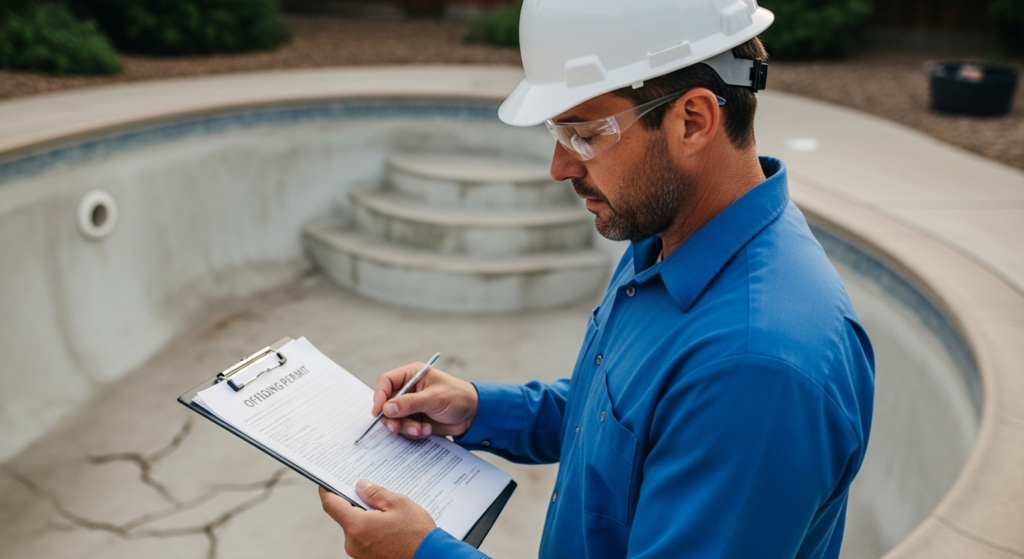
In California, both pool demolition and pool fill-in require permits from your local building department. This is not optional, and skipping the permit process can result in fines, forced re-excavation, and serious complications when you try to sell your home.
Permit requirements vary by city and county across the Bay Area. In Richmond, San Jose, Oakland, and San Francisco, the permitting process typically involves a site inspection, a demolition or grading plan, and final sign-off once the work is complete. A licensed contractor handles this process on your behalf, which is one of the most important reasons to work with an experienced team rather than attempting a DIY approach.
Cicarelli Contractors is fully licensed and experienced in navigating Bay Area permit requirements for both pool demolition or fill-in projects. Their team manages the paperwork so you can focus on planning what comes next.
4. Evaluate the Impact on Your Home’s Resale Value
One of the most common questions homeowners ask before choosing pool demolition or fill-in is whether removing the pool will help or hurt their home’s value. The answer depends on your local market and the condition of the pool.
In the Bay Area, where outdoor space is limited and highly valued, a well-maintained pool can add value. However, an old, cracked, or non-functional pool is often viewed as a liability by buyers. It raises concerns about maintenance costs, safety, insurance premiums, and the expense of bringing the pool up to code.
According to data from the National Association of Realtors, homes with removed pools in markets where pools are not a primary selling feature often sell faster and attract a broader pool of buyers. Removing a deteriorating pool and restoring the yard to usable green space is frequently cited by real estate agents as a smart pre-sale investment.
Full pool demolition or fill-in that is properly documented with permits and final inspections also provides clean disclosure paperwork, which buyers and their agents will request during escrow.
5. Assess Safety and Liability Risks
An unused or deteriorating pool is one of the most significant liability risks on a residential property. Even a pool that is drained and covered presents dangers, particularly for households with children, elderly residents, or pets.
Homeowners insurance premiums are often higher for properties with pools, and some insurers require specific safety measures such as fencing, alarms, and covers. Removing the pool through either pool demolition or fill-in can reduce or eliminate these requirements, potentially lowering your annual insurance costs.
In the Bay Area, where properties are densely situated and neighbors share close proximity, an abandoned pool also creates concerns about mosquito breeding, structural collapse, and unauthorized access. Addressing the pool through a professional pool demolition or fill-in is the most responsible path forward.
6. Think About Soil Stability and Future Landscaping
One of the most overlooked aspects of choosing between pool demolition or fill-in is what happens to the soil after the work is done.
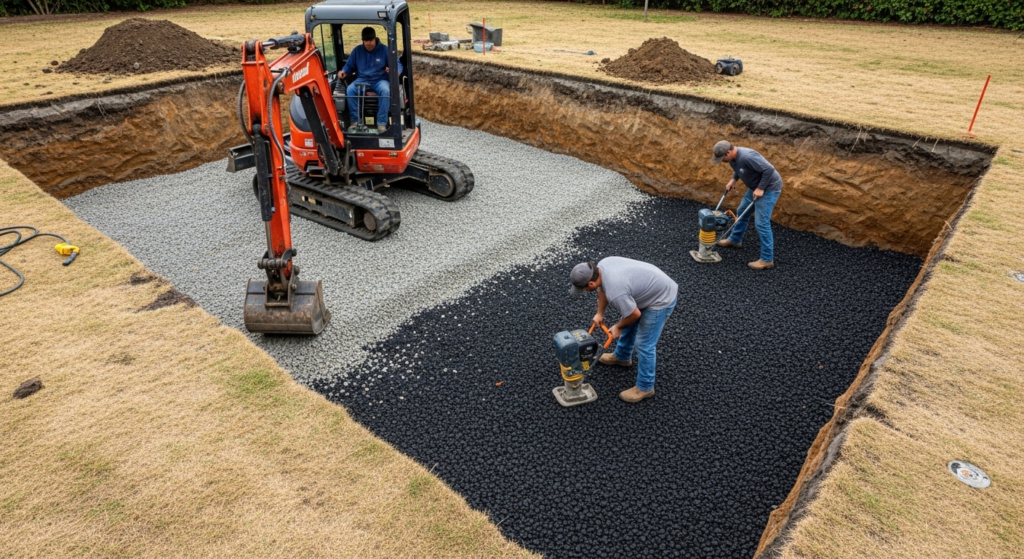
In a full demolition, the excavated area is backfilled with clean, engineered fill material and compacted in layers to meet building standards. This creates a stable, uniform surface that can support structures, heavy landscaping, or hardscape features like patios and walkways.
In a partial fill-in, the pool shell remains underground and the fill material is placed inside it. Over time, the fill can settle unevenly, creating depressions in the yard surface. This is particularly common in areas with clay-heavy soil, which is prevalent throughout much of the Bay Area. While this settling is manageable for a lawn or garden, it can be problematic for patios, fences, or any feature that requires a level surface.
Cicarelli Contractors’ excavation and demolition team uses proper compaction techniques and quality fill materials to minimize settling regardless of which method you choose.
7. Work With a Contractor Who Specializes in Pool Removal
The quality of the outcome for any pool demolition or fill-in project depends almost entirely on the experience and professionalism of the contractor you hire. This is not a project for a general handyman or an unlicensed crew.
A qualified pool removal contractor will assess your specific site conditions, advise you on the best method for your goals, handle all permits, manage debris disposal responsibly, and restore your yard to a clean, finished state. They will also provide documentation of the work completed, which is essential for future property transactions.
Cicarelli Contractors has built a strong reputation across the Bay Area for professional, transparent, and high-quality pool demolition or fill-in services. Their team serves Richmond, Oakland, Berkeley, Walnut Creek, San Jose, and surrounding communities.
Here is what real clients have said:
“Cicarelli Contractors removed our old pool in Richmond and the whole process was smooth from start to finish. They handled the permits, the excavation, and left our yard looking clean and ready for landscaping. Highly recommend.” — Sandra M., Richmond, CA (Google Review)
“We had a 40-year-old pool that was cracking and leaking. Cicarelli gave us a fair quote, showed up on time, and finished the job ahead of schedule. Our backyard looks amazing now.” — James T., Oakland, CA (Google Review)
“Professional, honest, and thorough. They explained every step of the pool fill-in process and made sure we understood our options. The yard is level and ready for our new patio.” — Maria L., Berkeley, CA (Google Review)
You can read more reviews and explore their work on Google Maps and follow their latest projects on Facebook.
Common Mistakes Homeowners Make When Choosing Pool Demolition or Fill-In
Understanding what to avoid is just as important as knowing what to do. These are the most frequent and costly errors homeowners make during the pool removal process.
Choosing the Cheapest Bid Without Checking Credentials
The lowest quote is rarely the best value. Unlicensed contractors may skip permits, use improper fill materials, or fail to compact the soil correctly. The result can be a yard that sinks, a property that fails inspection, or a legal issue when you try to sell. Always verify that your contractor is licensed, bonded, and insured in California.
Skipping the Permit Process
As mentioned earlier, unpermitted pool removal is a serious problem in California. It can result in fines, mandatory re-excavation, and disclosure complications during a home sale. Never allow a contractor to suggest skipping permits as a way to save money.
Not Considering Future Use Before Choosing Fill-In
Many homeowners choose a partial fill-in to save money, then later decide they want to build a structure over the area. At that point, they must pay to excavate the fill material and complete a full demolition anyway. If there is any possibility you will want to build on that land in the future, full pool demolition or fill-in with complete removal is the smarter investment.
Ignoring Utility Lines
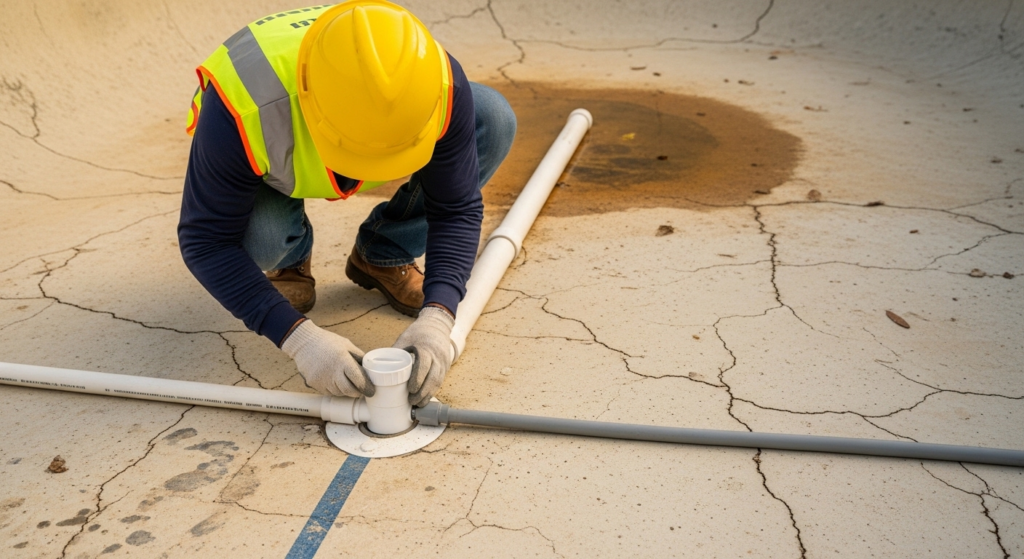
Pool areas often have buried electrical conduit, gas lines, and plumbing that must be properly capped and documented before any demolition or fill work begins. Failing to address these utilities creates safety hazards and can result in costly repairs later.
Real-World Case Study: Pool Demolition or Fill-In in Richmond, CA
A homeowner in Richmond, CA contacted Cicarelli Contractors after inheriting a property with a 35-year-old in-ground concrete pool that had not been used in over a decade. The pool had significant structural cracks, outdated electrical wiring, and no functioning filtration system. The homeowner’s goal was to sell the property within 12 months and wanted to maximize the yard’s appeal to buyers.
After a site assessment, the Cicarelli team recommended full pool demolition rather than a fill-in, for two reasons. First, the homeowner’s real estate agent confirmed that buyers in that Richmond neighborhood preferred open, usable yard space. Second, a full removal with proper documentation would provide clean disclosure paperwork and eliminate any buyer concerns about the pool’s condition.
The project was completed in 7 days. Permits were obtained from the City of Richmond, the pool shell was fully excavated and removed, the area was backfilled with compacted engineered fill, and the surface was graded and hydroseeded. The homeowner listed the property two months later and received multiple offers above asking price.
This is the kind of outcome that comes from choosing the right method of pool demolition or fill-in and working with a contractor who understands both the technical and market dimensions of the project. Learn more about Cicarelli Contractors’ full range of services here.
How the Pool Demolition or Fill-In Process Works: Step by Step
Whether you choose full demolition or partial fill-in, understanding the process helps you plan effectively and set realistic expectations.
Step 1: Site Assessment and Consultation
A qualified contractor visits your property to assess the pool size, depth, access points, soil conditions, and proximity to utilities and structures. This assessment informs the project plan and cost estimate.
Step 2: Permit Application
Your contractor submits the required permit applications to your local building department. In the Bay Area, this process typically takes 1 to 4 weeks depending on the municipality.
Step 3: Utility Disconnection
All electrical, gas, and plumbing connections to the pool are safely disconnected and capped by licensed professionals before demolition begins.
Step 4: Demolition or Preparation
For full demolition, heavy equipment breaks apart the concrete shell and removes all material from the site. For a fill-in, holes are broken in the pool bottom to allow drainage, and the shell is prepared to receive fill material.
Step 5: Backfill and Compaction
The excavated area or pool shell is filled with gravel, crushed concrete, and clean soil in compacted layers. Proper compaction is critical to prevent future settling.
Step 6: Grading and Surface Restoration
The surface is graded to match the surrounding yard, and the area is prepared for its next use, whether that is lawn, landscaping, hardscape, or construction.
Step 7: Final Inspection and Documentation
A city inspector signs off on the completed work, and you receive documentation confirming the pool removal was completed to code. This paperwork is essential for future property transactions.
For a deeper look at the excavation and demolition process, visit Cicarelli Contractors’ hard demolition and excavation services page.
Frequently Asked Questions About Pool Demolition or Fill-In
What is the difference between pool demolition and pool fill-in?
Pool demolition involves completely removing the pool structure, including all concrete, plumbing, and materials from the site. Pool fill-in, also called partial removal, involves breaking the bottom of the pool for drainage, then filling the shell with gravel and soil. Demolition costs more but allows full use of the land.
How much does pool demolition or fill-in cost in the Bay Area?
In the Bay Area, a partial pool fill-in typically costs between $5,000 and $15,000, while a full pool demolition ranges from $10,000 to $20,000 or more, depending on pool size, access, and site conditions.
Do I need a permit for pool demolition or fill-in in California?
Yes. In California, both pool demolition and pool fill-in typically require a permit from your local building department. A licensed contractor like Cicarelli Contractors handles the permitting process as part of the project.
Will pool removal increase my home’s value?
In many cases, yes. Removing an unused or deteriorating pool can increase usable yard space, reduce liability, lower insurance costs, and make the property more attractive to a wider range of buyers.
How long does pool demolition or fill-in take?
A partial pool fill-in can be completed in 2 to 5 days. A full pool demolition typically takes 5 to 10 days, depending on pool size, access, and site conditions.
Conclusion: Make the Right Choice for Your Property
Choosing between pool demolition or fill-in is one of the most impactful decisions you can make for your home’s safety, value, and future potential. Full demolition gives you maximum flexibility and the cleanest outcome, while a partial fill-in offers a faster, lower-cost solution for homeowners with more limited goals. The right answer depends on your long-term plans, budget, local permit requirements, and the specific conditions of your property.
What is clear is that both options require a licensed, experienced contractor who understands the technical, legal, and market dimensions of pool removal in California. Cicarelli Contractors has the expertise, the equipment, and the track record to guide you through every step of the process, from the initial site assessment to the final inspection.
If you are ready to reclaim your backyard and make a smart investment in your property, the team at Cicarelli Contractors is ready to help.
Request your free quote today and take the first step toward a safer, more valuable home.
You can also explore all available services, learn about the warranty and maintenance program, or visit the resources page for more helpful information.
Cicarelli Contractors Richmond, CA 94805 Phone: (650) 404-7049 Email: info@cicarellicontractor.
