
Outdoor Living Space ROI: Backyard Improvements That Add Value in the Bay Area
Which outdoor projects pay back at resale? National NAR data on patios, decks, kitchens and fire pits, plus the Bay Area factors that change…
Quick answer
The best backyard patio ideas for Bay Area homes are paver patios that drain well, terraced patios with retaining walls on sloped lots, pergola-covered dining areas, fire pit patios for cool evenings, outdoor kitchens, and low-water layouts that pair pavers with artificial turf. Choose by your microclimate, slope, drainage and how you actually use the yard.
Related service: Outdoor living services
Bay Area backyards are small, often sloped and spread across very different microclimates, from foggy San Francisco and Daly City to the warmer valleys of Walnut Creek, Livermore and San Jose. A patio idea that looks great online can feel cold, wet or unusable if it ignores those conditions.
This guide, by Athalyson Bernardo, owner of Cicarelli Contractors in Richmond, CA, collects patio ideas we build across nine Bay Area counties. Every idea below maps to a service on our outdoor living page, so you can see what is realistic for your lot.
A Bay Area patio works when it matches the microclimate, handles winter rain and fits the lot. Coastal yards need wind and fog shelter, inland yards need shade, and hillside lots need retaining walls and drainage. Get the base, slope and water flow right first, then choose the style, furniture and features on top.
Three site questions shape every design we price:

The most practical backyard patio ideas for the Bay Area combine a durable surface with one or two features that extend use: shade, warmth, cooking or seating. Below are nine ideas our team builds, each tied to a specific service, so you can mix them into a plan that fits your yard, budget and microclimate.
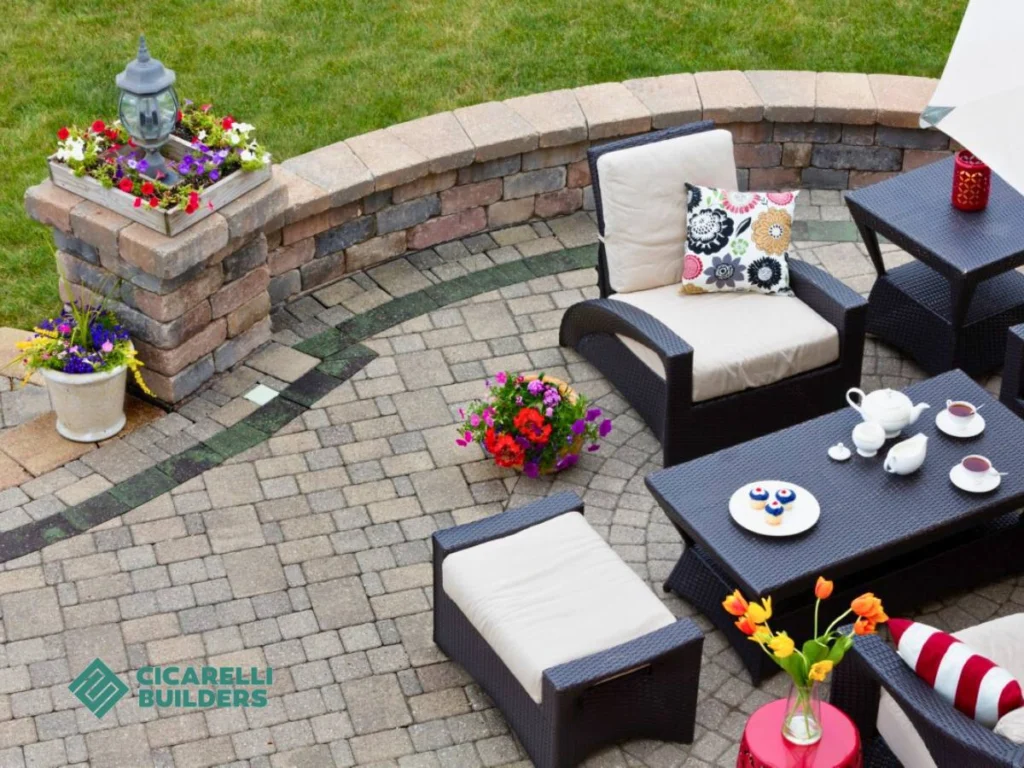
Big rectangular pavers in gray, charcoal or sand tones give a clean, modern look that suits both Craftsman homes in Berkeley and newer homes in the Tri-Valley. Pavers are laid on a compacted base with joints, so a single unit can be lifted and reset if something shifts. See our paver patio service.
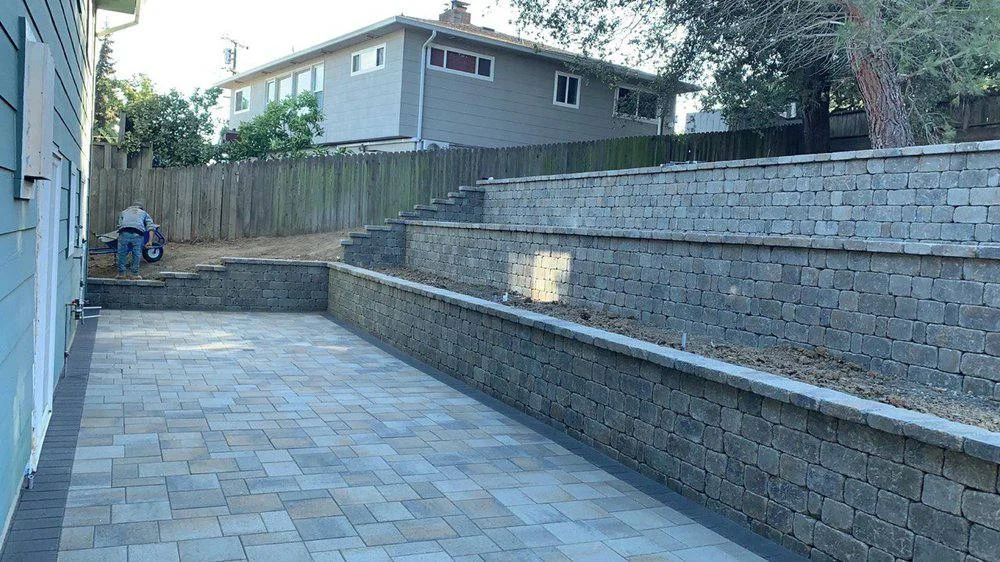
On a sloped lot, two smaller level patios connected by steps often work better than one large one. Retaining walls hold the soil, and a wall cap at seat height doubles as built-in seating for guests.
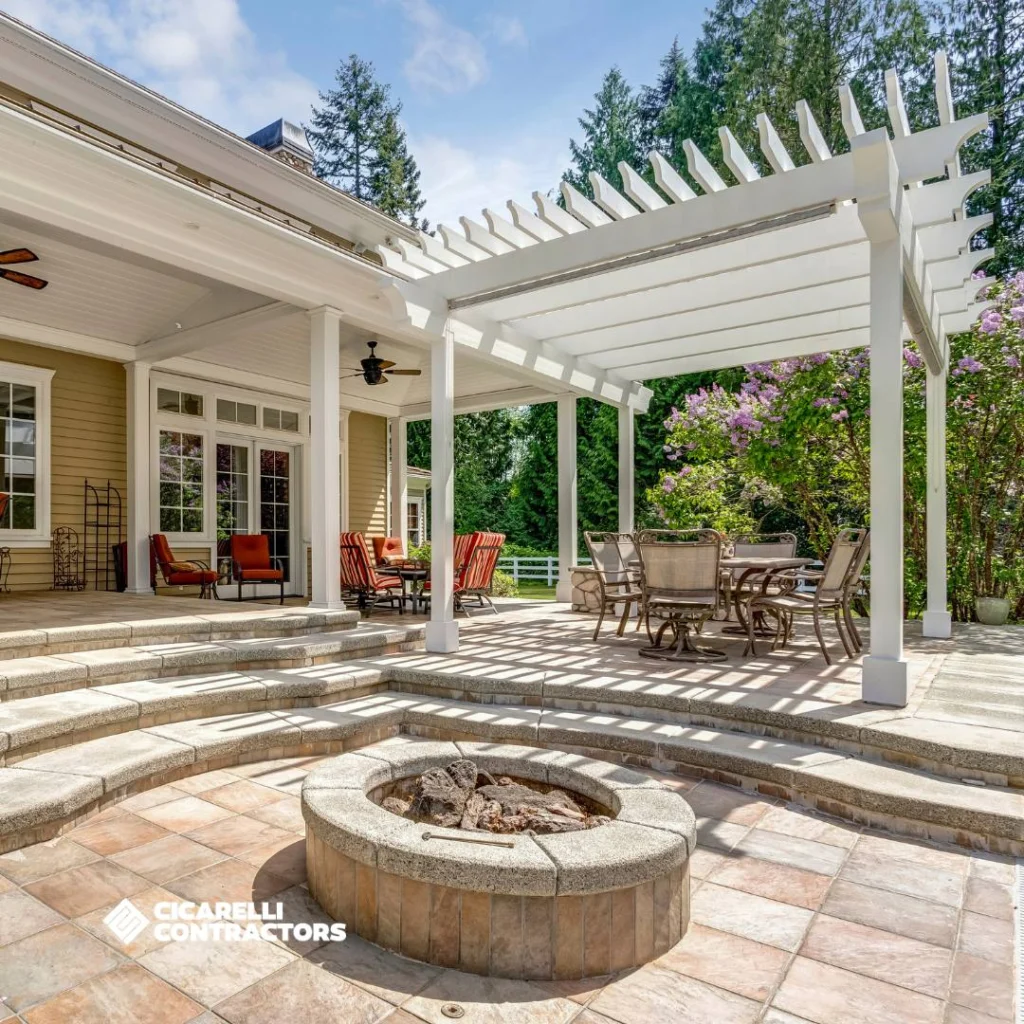
A pergola over the table filters afternoon sun inland and frames the space on the coast. Add string lights for evenings. Our pergolas and decks page explains the options, including decks for yards where a raised platform makes more sense than pavers.
Bay Area evenings cool off quickly, even in summer. A round paver patio around a fire pit or outdoor fireplace is one of the easiest ways to use the yard after sunset. Check local burn rules and spacing from structures before choosing wood or gas.
A built-in grill island with counter space turns the patio into a second kitchen. Place it close to the house for shorter trips and easier utility runs. Gas, electrical and plumbing usually need permits, so plan the outdoor kitchen before the pavers go down.
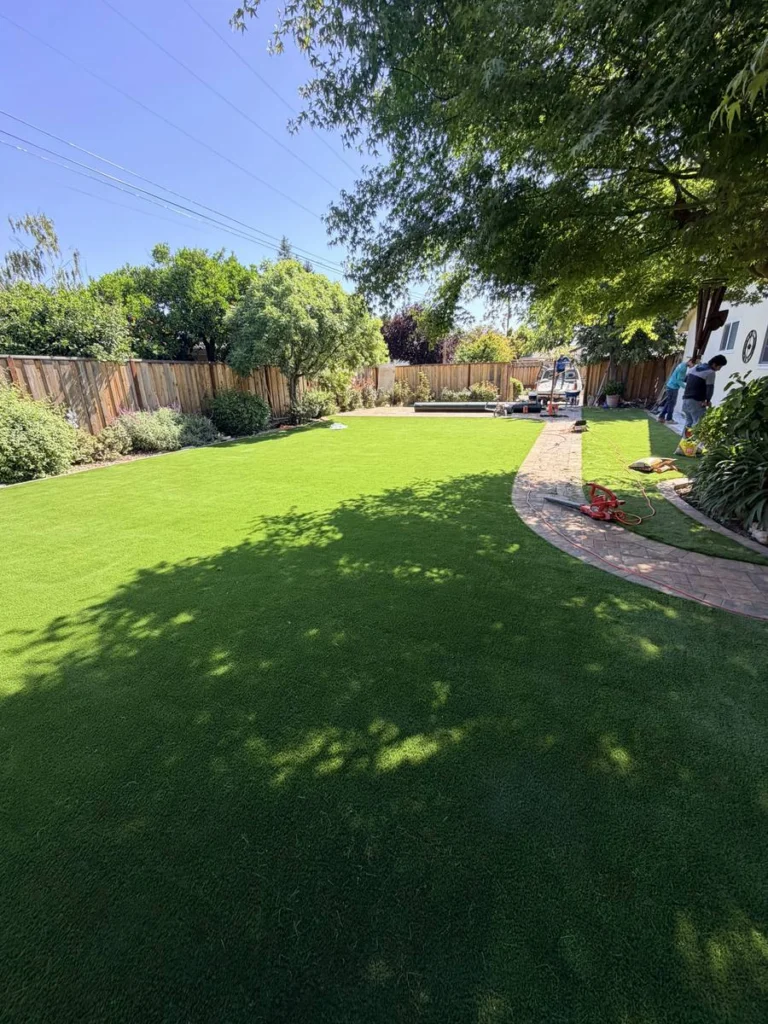
For low water use and low upkeep, pair a paver patio with a strip of artificial turf for kids or pets. The paver edge gives the turf a clean border and keeps mowing and irrigation out of the picture.
An unused pool can become the largest flat area on the lot. After pool removal and proper backfill, the space can take a patio, turf or garden. One Google reviewer had a concrete pool removed and pavers installed around a new garden.
Old slabs crack and heave. We break out the concrete through our patio and driveway removal service and rebuild with pavers. One reviewer who originally asked for concrete for a carport was advised to use pavers instead, and said neighbors complimented the result.
Irregular stone or stone-look pavers bordered by lavender, grasses and succulents suit Mediterranean-style homes. Keep the planting beds sloped away from the patio so irrigation water does not pool on the surface.

For most Bay Area backyards, concrete pavers are the best all-round patio material. They come in many colors and sizes, sit on a flexible compacted base and can be lifted and reset if roots or soil movement cause a dip. Poured concrete costs less to start but cracks are permanent and hard to hide.
We install Belgard pavers and walls, which carry Belgard’s lifetime transferable limited product warranty. Our own workmanship warranty on general construction and concrete is 1 year from the date of completion.
Pavers still need simple care, such as sweeping, topping up joint sand and treating stains early. The Concrete Masonry and Hardscapes Association (CMHA) publishes an operation and maintenance guide for interlocking concrete pavement that covers these steps. For a deeper comparison, read our post on concrete vs. pavers for Bay Area patios.
| Patio idea | Best for | Main site check | Related service |
|---|---|---|---|
| Large-format pavers | Flat yards, modern homes | Base depth and drainage slope | Paver patios |
| Terraced patio | Hillside lots | Wall height and soil conditions | Retaining walls, excavation |
| Pergola dining area | Sunny inland yards | Footing locations, permit | Pergolas and decks |
| Fire pit patio | Cool coastal evenings | Clearance and local burn rules | Fire pits and fireplaces |
| Outdoor kitchen | Frequent entertaining | Gas, power and water runs | Outdoor kitchens |
| Pavers plus turf | Families, pets, low water | Turf drainage and edging | Artificial turf |
| Former pool site | Unused pools | Backfill and compaction | Pool removal |
On a sloped or wet lot, the patio starts below ground. The crew excavates to firm soil, builds retaining walls where the grade changes, installs drains that carry water to an approved outlet, and compacts the base in layers. Only then do the pavers go down. Skipping these steps is the main cause of sinking patios.
Typical sequence on a hillside or soggy yard:
Access matters too. One Google reviewer described our crew moving fill by wheelbarrow on a hillside job in 90°F-plus heat because equipment could not reach the yard.

A simple paver patio at ground level often does not need a building permit, but many related items do. Pergolas, retaining walls above a set height, gas lines, electrical circuits for kitchens or lighting, and major grading commonly require permits. Requirements differ from city to city, so check with your local building department first.
The Contractors State License Board’s building permit guidance points homeowners to their local building department for the rules that apply. When a Cicarelli project needs a permit, we pull it and schedule the inspections.
The best time to plan is a few months before you want to use the space. Design, estimates, permits and material orders take time, and dry months are ideal for excavation and base work. Planning in winter or early spring means construction can start as soon as the ground dries out.
Start with photos and a wish list. Our team can turn that into a written estimate within 24 hours, and our guide on getting a free outdoor living estimate explains what to send. You can also browse finished work in our gallery.

These patios are real Cicarelli Contractors projects in Bay Area backyards: paver patios with seat walls and borders, pergolas, a covered patio with an outdoor kitchen, fire pits and lit retaining walls. Use them to compare materials and layouts, then send photos of your own yard for a free, written estimate within 24 hours.
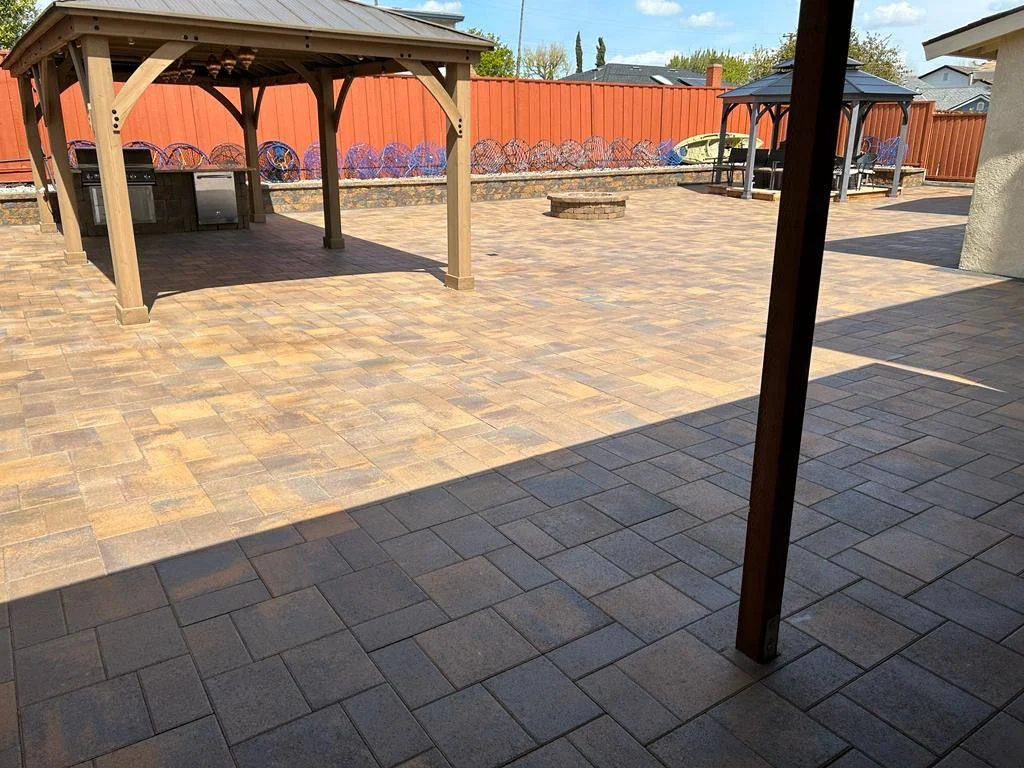
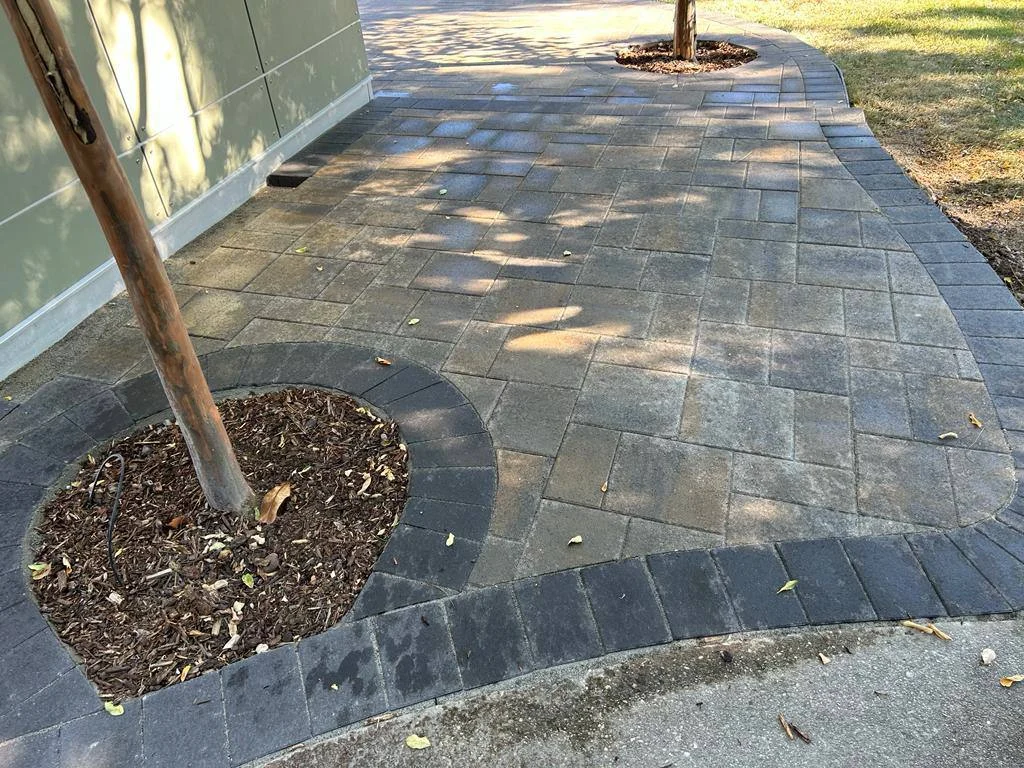
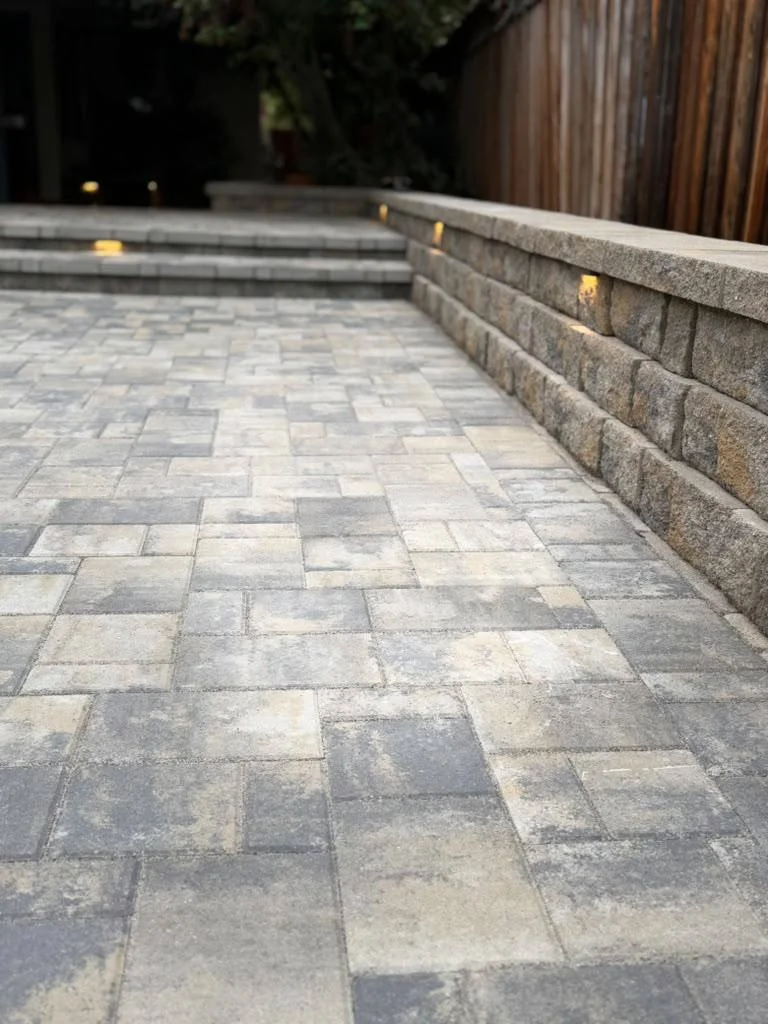
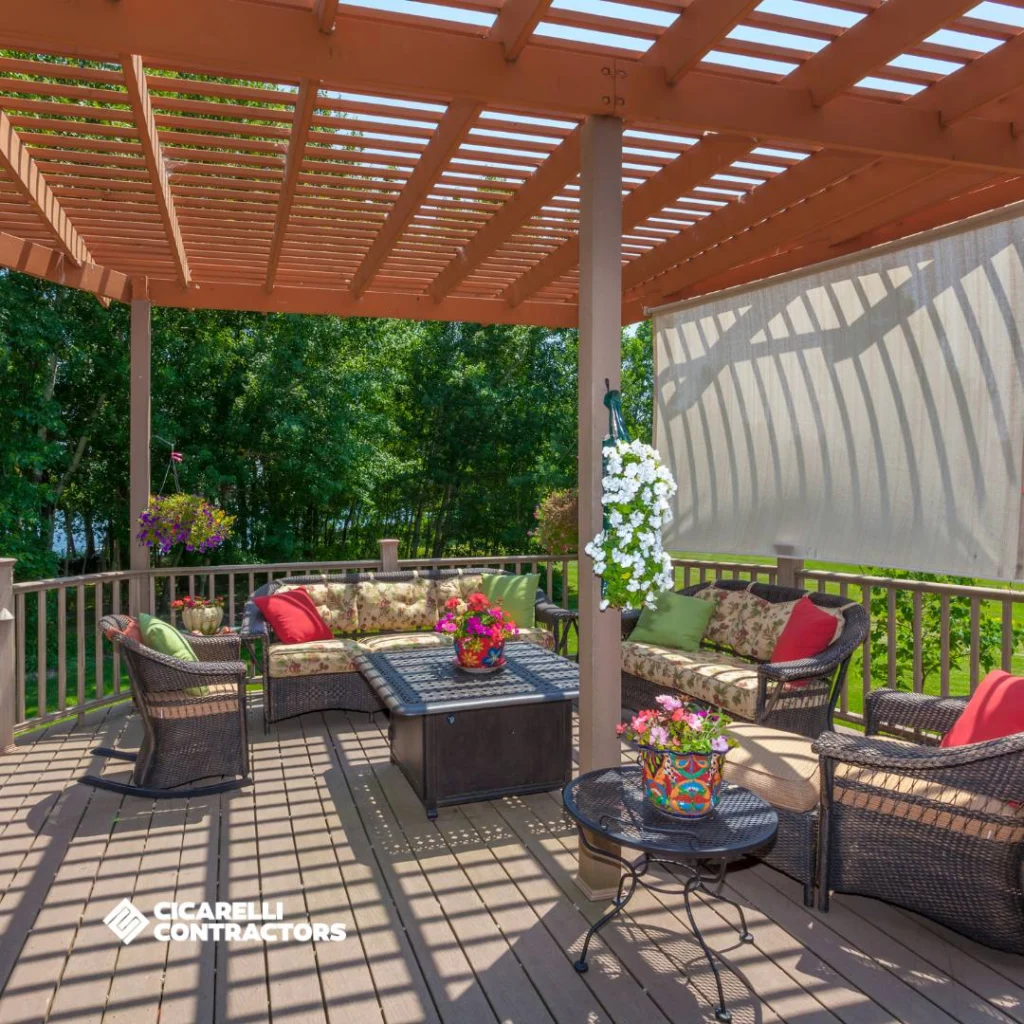
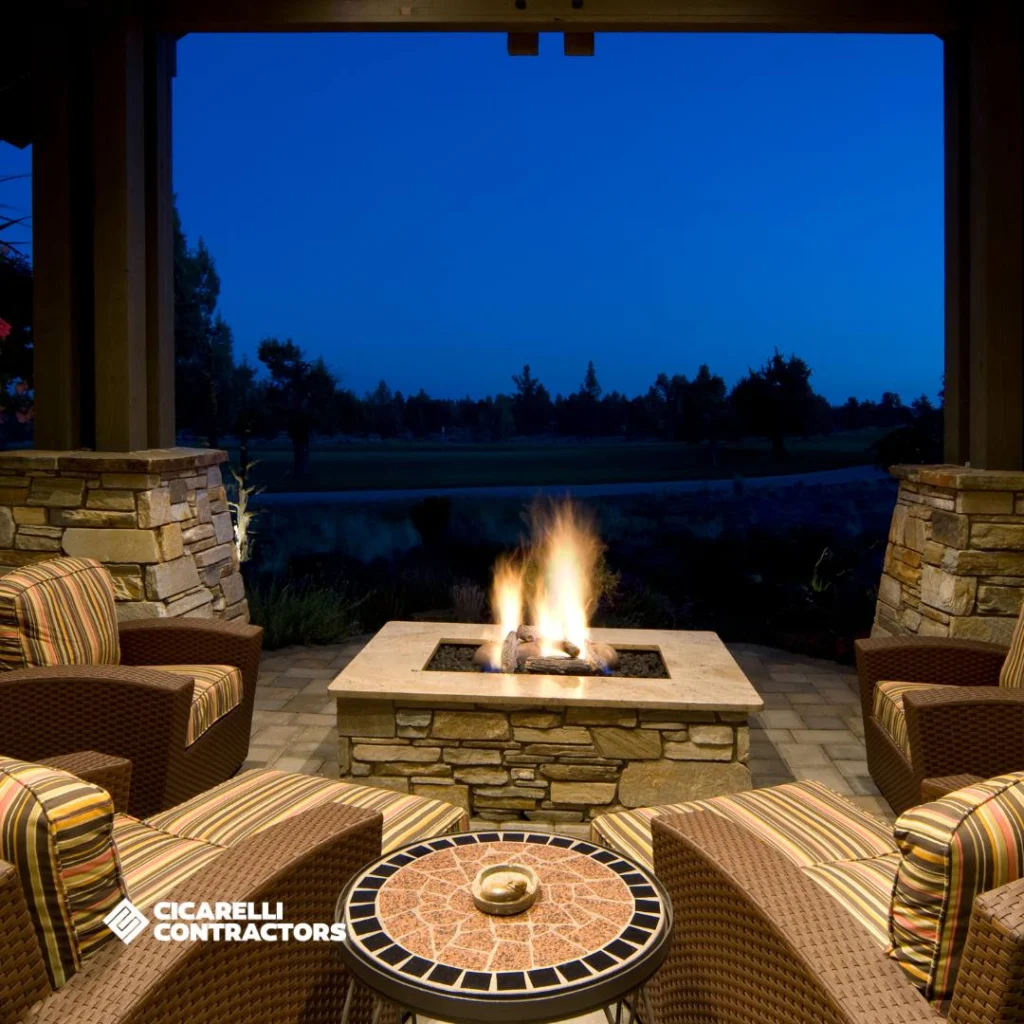
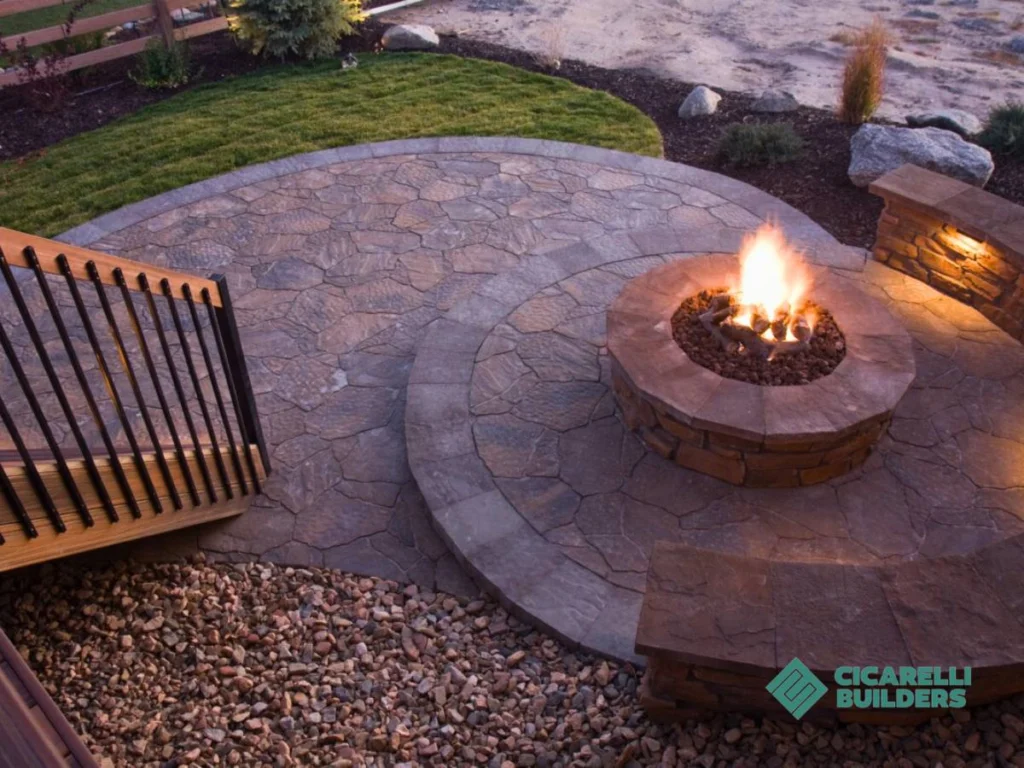
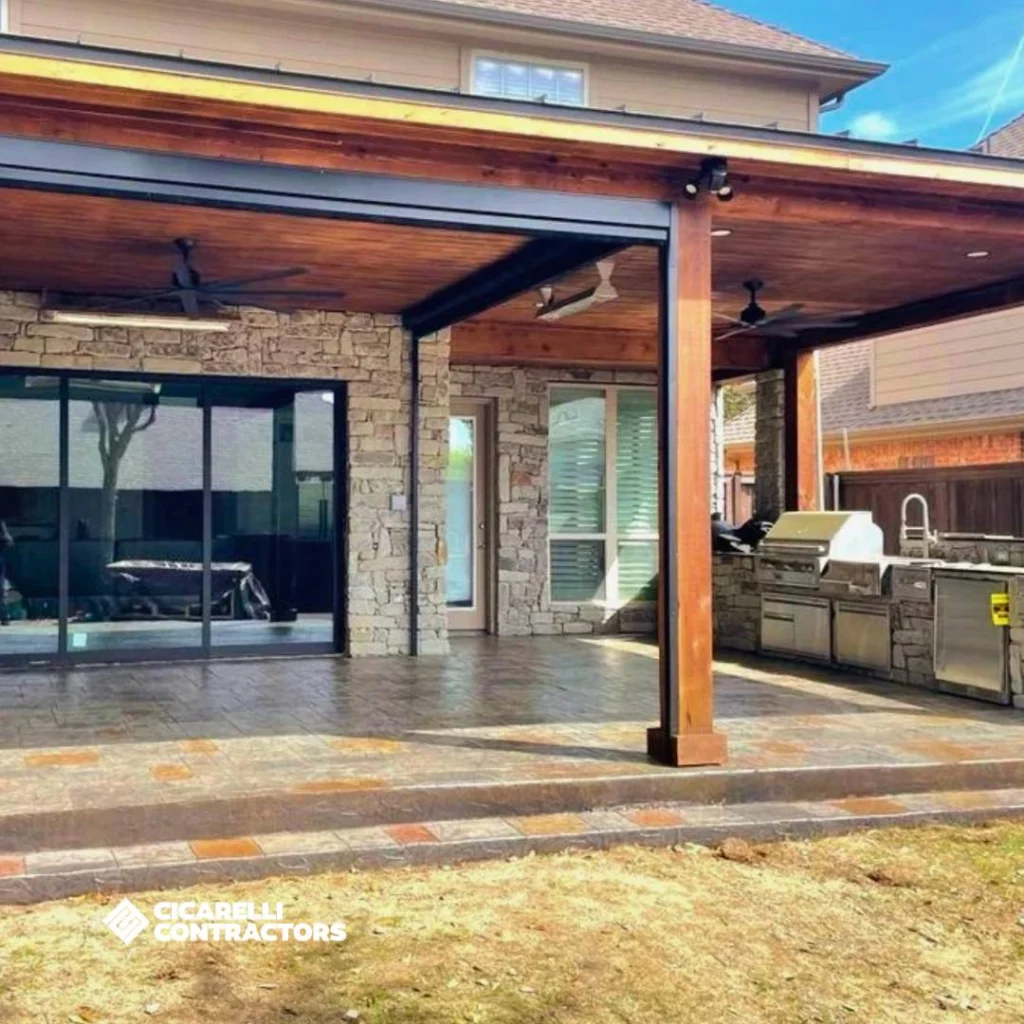
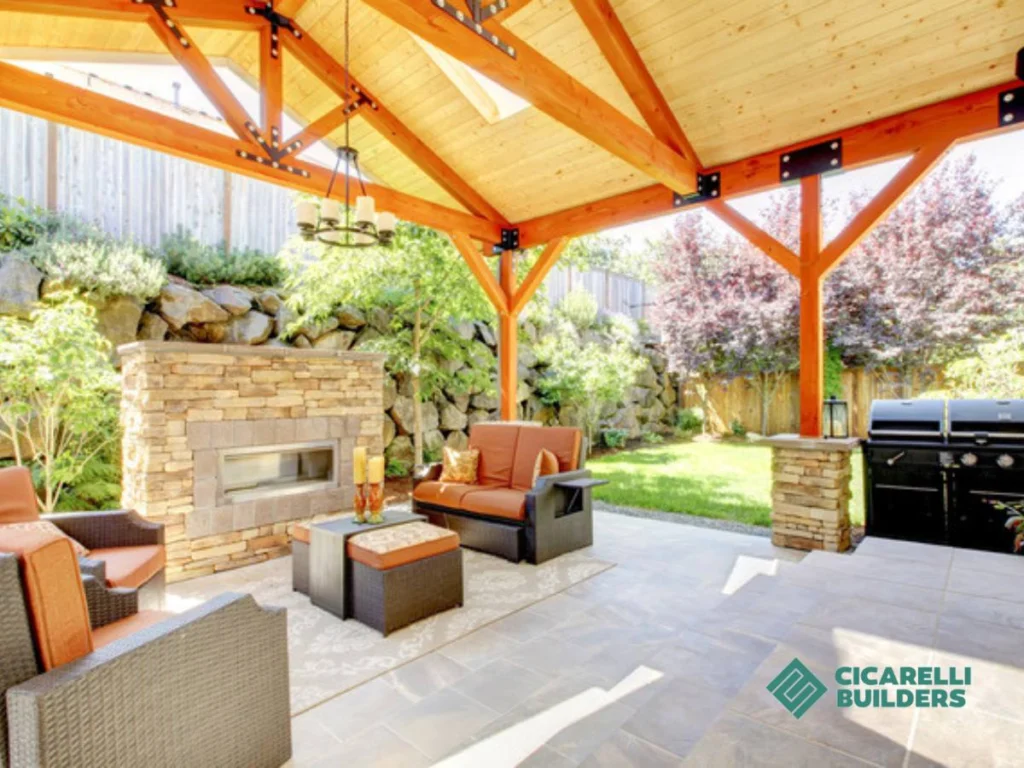
For most Bay Area homes, concrete pavers are the best balance of durability, looks and repairability. They sit on a compacted base, handle minor soil movement and can be lifted and reset if a section settles. Poured concrete costs less up front, but cracks are permanent and repairs rarely match the original surface.
The cheapest patio is usually a simple shape on a flat, well-drained spot that needs little removal or grading. Costs climb with demolition, slopes, retaining walls, drainage and premium materials. Keeping the footprint compact, using a standard paver and placing the patio where the ground is already level keeps the budget down.
Poured concrete usually costs less to install than pavers, but the comparison changes over time. Concrete cracks cannot be fixed invisibly, while pavers can be lifted and relaid. Ask each contractor to price both on the same base and drainage scope, then compare the long-term repair picture, not just the first invoice.
Focus on one well-built zone instead of many small projects. A clean paver patio with good drainage, a few large planters and string lights changes how a yard feels. Add a fire pit, pergola or turf later in phases, and plan their bases and utility runs during the first stage of work.
A paver patio at grade often needs no building permit, but rules vary by city and county. Pergolas, taller retaining walls, gas and electrical work, and significant grading frequently do. The CSLB advises checking with your local building department, and a licensed contractor should tell you which permits your project needs before work begins.
In foggy, windy parts of San Francisco, Pacifica and the coast, choose ideas that add shelter and warmth. A seat wall or retaining wall blocks wind, a pergola frames the space, and a fire pit makes evenings usable. Lighter paver colors also brighten gray days and show less dust and salt residue.
The right patio starts with the site, not the catalog. Send us photos of your yard, a few measurements and the ideas from this list that caught your eye, and our team will map them to a realistic plan. Request your free, written estimate and we will reply within 24 hours.