Concrete Removal and Slab Demolition in the Bay Area
Concrete removal is the breaking, loading and hauling of old slabs, walkways, steps, pads and footings. As a residential concrete removal service, Cicarelli Contractors sizes the equipment to the thickness and the access, cuts the rebar, trucks the broken concrete off site and leaves a graded subgrade, ready for pavers, turf or a new pour.
How Concrete Demolition Works on a Residential Lot
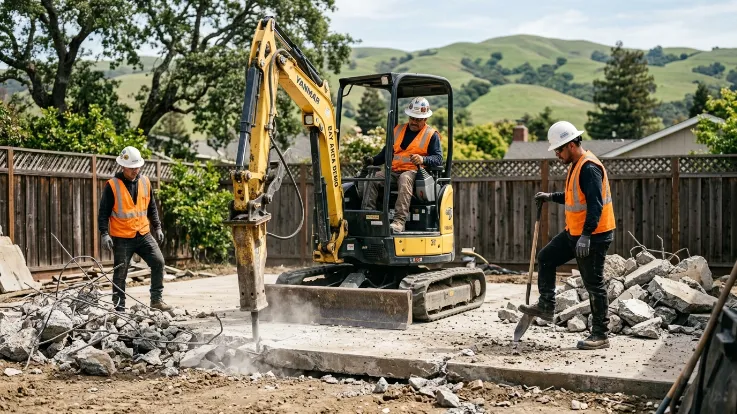
Concrete demolition starts with two measurements: how thick the slab is and whether steel runs through it. For concrete breaking, a thin, unreinforced walkway gives way under a jackhammer; a thick slab tied together with rebar or wire mesh needs a hydraulic breaker and a saw to cut the steel before the pieces can be lifted.
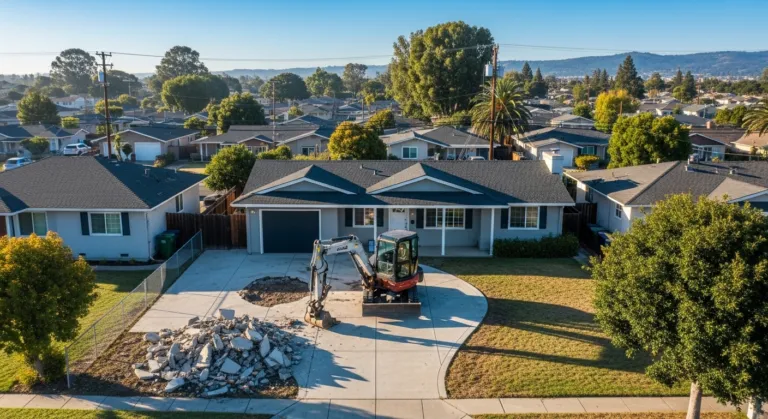
Access decides the rest. When a truck and a machine can reach the slab, the broken concrete is loaded straight into the truck. Behind a house, on steps or along a narrow side yard, a smaller machine or the crew carries it out, which is slower and shows up in the price.
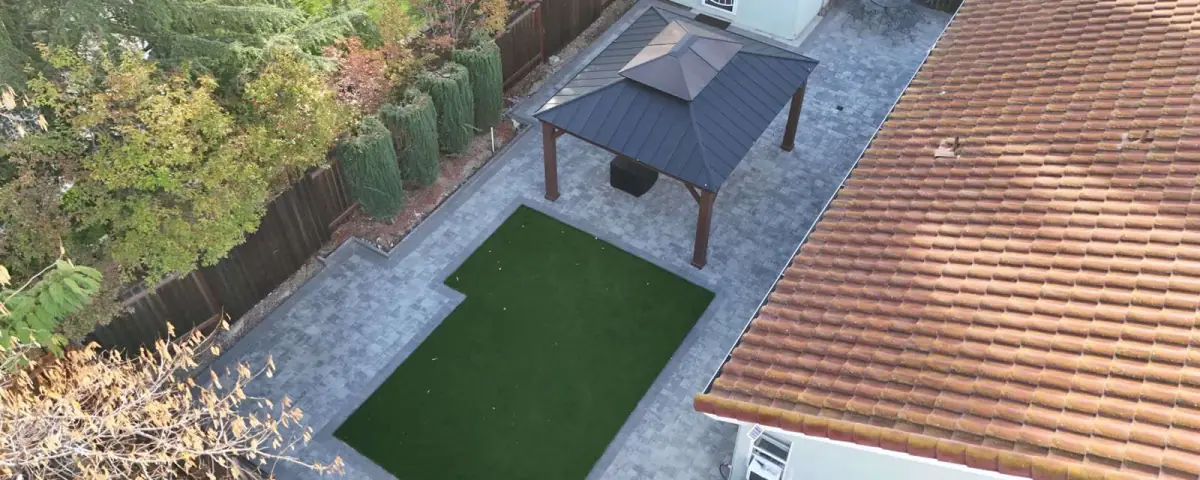
Concrete removal is one of our demolition services, and it is often the first step before new pavers or turf. Where part of the concrete has to stay, such as a driveway next to a removed walkway, the line is saw-cut first so the break stops cleanly. Once the last load leaves, the soil underneath is graded and compacted to the level the next surface needs. We do this work from San Francisco and Oakland to San Jose, Walnut Creek and the rest of the nine Bay Area counties.
Reviews From Our Concrete Demolition Jobs
Six Google reviews quoted exactly, several of them about breaking out concrete pools, the heaviest slab work we do. Swipe or use the arrows.
DDeejConcrete pool removal & pavers
★★★★★
Dec 2025
Couldn’t be happier with how our yard turned out! We had Cicarelli remove an old concrete pool and install pavers around the new garden area. The whole process was smooth, and the crew was polite and professional.
JJim FrizzellPool demolition on a hillside
★★★★★
2025
I recently hired Cicarelli Contractors for demolition of my swimming pool. From our initial discussion to our final completion Athalyson and his crew were true professionals. Our pool is on a hill with limited access. His crew was able to get their equipment in place for the demolition and wheelbarrow fill dirt up hill. Some of those days had 90+ temps.
I was consistently impressed with the quality and professionalism of his crew. His crews seemed to always have a smile. The project was completed in a timely manner. His crew were consistently courteous and respectful of my property and maintained a clean work environment, restoring the site to its original condition.
I highly recommend Cicarelli Contractors for any construction needs. Their commitment to quality, efficiency, and customer satisfaction is commendable.
I wouldn’t hesitate to hire Cicarelli again!
GGigi LimPool demolition
★★★★★
2025
I hired Cicarelli contractor for the demolition of my swimming pool. From the initial consultation through to the final walk through. I was consistently impressed with the quality of their service. Athalyson demonstrated exceptional responsiveness to my inquiries and concerns. The project was completed according to the agreed timeline. Any unforseen issues were addressed promptly and efficiently. The team exhibited a high degree of professionalism throughout the project. They were consistently courteous and respectful of my property. They diligently maintained a clean work environment, restoring the site to its original condition daily. Always on time.
I highly recommend Cicarelli contractors for any construction needs. Their commitment to quality, efficiency, and customer satisfaction is commendable. Furthermore, he can give you a significant discount, making their services even more valuable.
GGloria McLaughlinFinished in 4 days
★★★★★
Dec 2025
Very professional. It was explained what was going to be done.
They were done in 4 days. Other companies gave us a time limit of 2 weeks. Hard workers. We will use this company again. We need more work done.
BBelis EtemPool demolition
★★★★★
2025
Bernard completed our pool demolition job promptly and professionally. I was very pleased that he was able to start so quickly as I had a deadline to meet. I would recommend him. It was especially convenient for me that he was able to text me updates and send me photos along the way as I handled the job remotely. Thank you, Bernard!
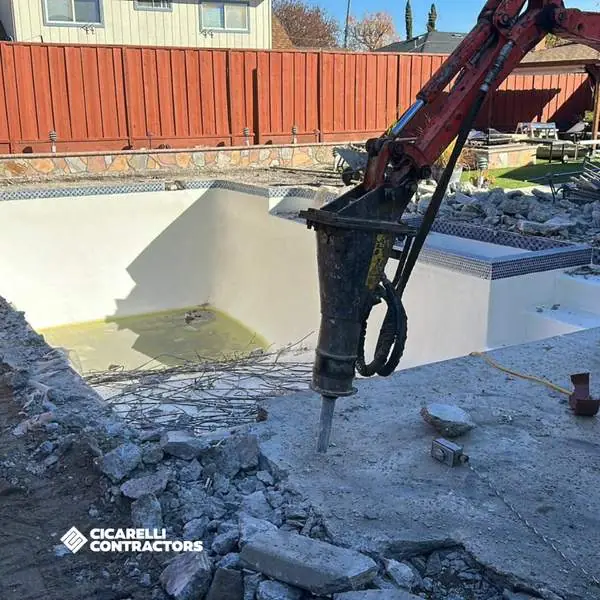
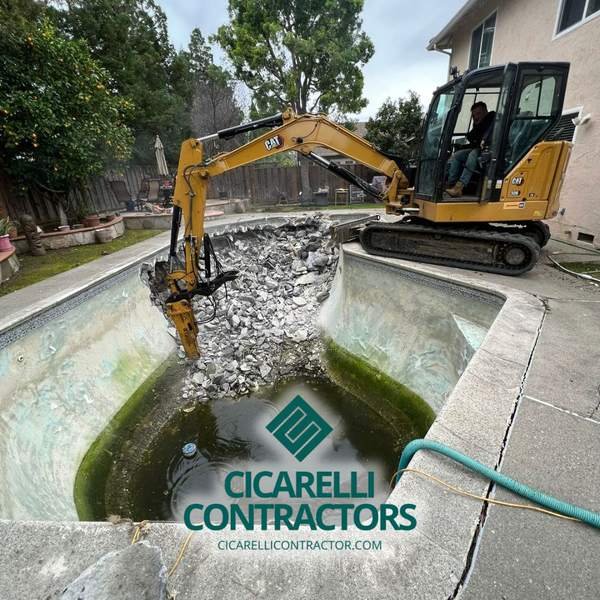
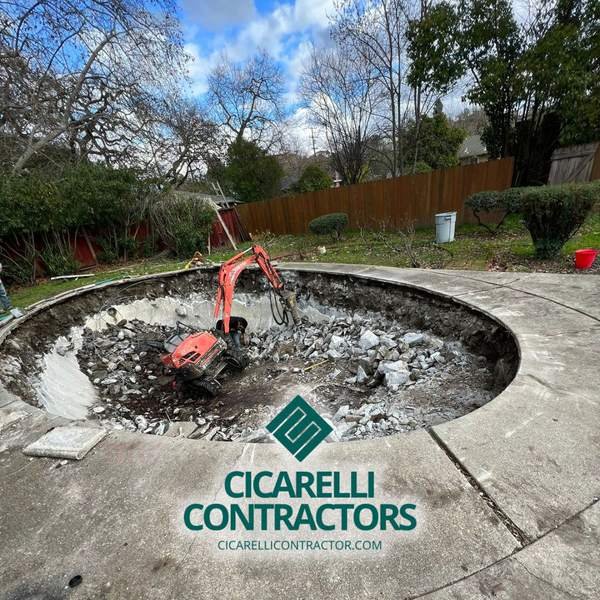
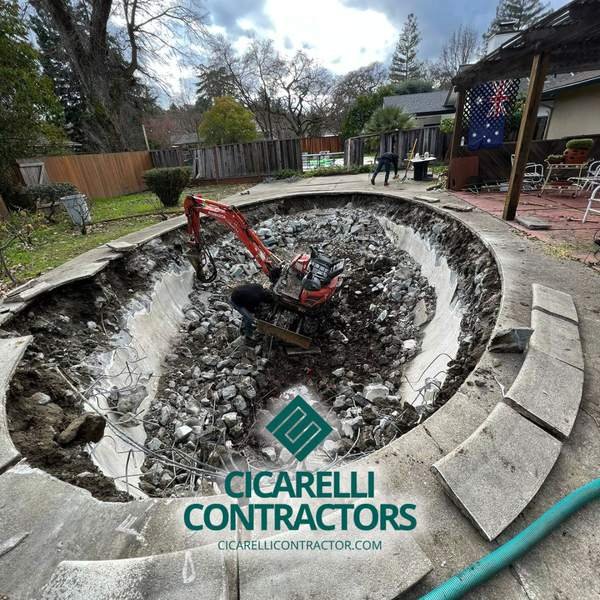
The thickest concrete we break is pool shells, and these clips from Fremont, Vacaville, Hillsborough and San Ramon show the breaker, the mini excavator and the loading that every slab job uses too.
Not every crack means removal. These are the signs that point to taking the slab out, and the cases where it may be worth asking about other options first.
Removal makes sense when
The slab has heaved, sunk or split into separate sections
Water collects on it or runs toward the house
A new patio, pavers, turf or an addition is going in its place
Roots or a failing base have lifted it unevenly
Hidden footings or an old pad sit where you need to dig
Ask about options first when
The cracks are fine surface lines on a level slab
Only one panel of a larger slab is damaged
The surface is worn but the slab is sound and drains well
We check thickness at an edge, look for rebar and plan where the truck can park.
Step 02
Permit and 811
Any permit your city requires is filed, and buried lines are marked before digging.
Step 03
Saw-Cut the Edges
Concrete that stays is separated with a clean saw cut so it does not crack.
Step 04
Break and Cut Steel
The slab is broken into liftable pieces and the rebar or mesh is cut free.
Step 05
Load and Haul
Broken concrete goes to the truck and on to a recycler or disposal site.
Step 06
Grade the Subgrade
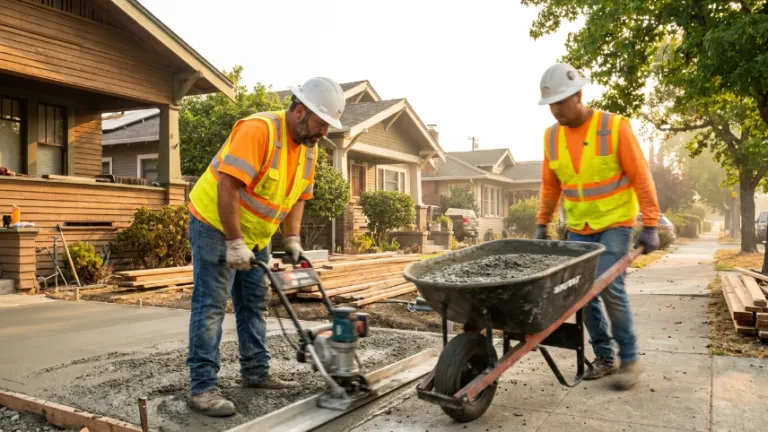
The soil is leveled and compacted to the height the new surface needs.
Tools for the thickness
How We Break Concrete of Every Thickness
The best tool for breaking concrete is the one matched to its thickness, its steel and the space around it. These are our own jobs.
Thick, reinforced concrete
A hydraulic breaker on an excavator handles walls, footings and slabs with rebar.
Tight access
A mini excavator breaks and loads close to the house and through side yards.
Sizing the pieces
Concrete is broken down to pieces the loader and the truck can carry.
Clean loads
Keeping concrete free of soil, wood and trash makes it easier to recycle.
Permits and rules
Does Concrete Removal Need a Permit?
It depends on the city and on what the concrete is part of. A backyard patio often needs no building permit, while work that reaches the sidewalk, the curb or the street usually needs an encroachment permit from Public Works. Slabs tied to a structure, a pool or grading can need more.
Walnut Creek exempts sidewalks and driveways not more than 30 inches above grade from a building permit, according to its work not requiring a permit page.
In Pleasant Hill, ground work such as driveways, pathways and patios needs no building permit, but work that reaches the street, curb or gutter needs an encroachment permit from Engineering, per the city FAQ and its encroachment and grading permits page.
San Pablo sends sidewalk and driveway work to the Public Works Department for its permit, per the city's Work Requiring a Permit handout.
Albany issues encroachment permits for sidewalks and driveway approaches in the public right-of-way only to licensed contractors, according to its exempt work handout.
Statewide, the CSLB tells homeowners to confirm permit needs with the local building department before work starts, in its permit guidance.
Before any digging, USA North 811 needs at least two working days' notice to mark buried lines.
Concrete removal answers
Concrete Removal Cost, Tools and Disposal
Concrete removal cost is the first question most homeowners ask, followed by how the work is done and where the old concrete goes. The answers below rely on official sources and on what actually changes a quote, so you can compare bids line by line.
How much does it cost to break up and remove concrete?
There is no fair flat rate. The price follows the area and thickness of the slab, the rebar or mesh inside it, how a machine and a truck reach it, how many loads go to the recycler, and how finished the ground must be. A written quote that lists each of those lines is the number worth comparing.
Small jobs often cost more per square foot, because the crew, machine and truck come out either way. Our concrete slab removal cost guide explains each line of a quote.
What is the best tool for breaking up concrete?
It depends on the slab. A jackhammer handles thin walkways and small pads; a hydraulic breaker on an excavator is the tool for thick or reinforced slabs, footings and walls. Rebar and wire mesh are then cut so the broken pieces can be lifted.
On a residential lot, the size of the machine is often set by the gate or side yard rather than by the concrete, which is why access matters as much as thickness.
What is the best way to dispose of old concrete?
Recycling. Clean concrete, without soil, wood or trash mixed in, is accepted by recyclers that crush it into aggregate, the process CalRecycle describes for recycled concrete. Keeping the loads clean on site is what makes that possible, so sorting starts during the breaking, not after.
CalRecycle explains the state program on its construction and demolition page. Ask any contractor where the loads will go before you sign.
Can I remove concrete myself?
A small, thin walkway can be broken by hand with a rented jackhammer, but the work is heavy, the debris weighs far more than most people expect, and disposal still has to be arranged. Thick or reinforced slabs, anything near utilities and anything touching the street are better left to a licensed contractor.
Either way, call 811 before digging below the slab, and if you hire out, California requires a written contract for home improvement work over $500, as the CSLB explains.
Concrete removal permits and notices from Bay Area government sources
Rule
Official source
Sidewalks and driveways up to 30 inches above grade
Summarized from the official pages linked above; your city may add steps of its own.
Updated · By Athalyson Bernardo, Owner of Cicarelli Contractors · CSLB #1109419
FAQ
Concrete Removal FAQ
Have a Slab That Needs to Go?
Send a photo of the concrete, a rough size and a picture of the way in, and we will reply with a written estimate. Phones are answered Monday to Saturday, 9 am to 5 pm, and the site FAQ covers other topics.
A patio or walkway on an accessible lot is usually broken, loaded and hauled in a short stretch of continuous work by one crew. Thick or reinforced concrete, hand-carried debris and permit lead times add to the schedule. We put the expected days in the written estimate after seeing the slab.
Do you cut the rebar inside the concrete?
Yes. Reinforced slabs are broken with a hydraulic breaker, and the rebar or wire mesh is cut on site so the pieces can be lifted and loaded. Steel in the concrete is one of the main reasons removal takes longer, so we check for it at an edge or with a test hole before pricing.
Can you remove part of a slab and leave the rest?
Yes. The line between what stays and what goes is saw-cut first, so the break stops cleanly and the remaining concrete is not cracked by the demolition. This is common when a walkway meets a driveway, or when only one section of a patio is being replaced.
What happens to the ground after the concrete is gone?
The soil is graded and compacted to the height the next surface needs. For pavers or turf that means room for a base layer; for new concrete it means a firm, level subgrade. Tell us at the estimate what is going in, so the finish grade is set correctly.
Is concrete removal noisy?
Yes, breaking concrete is loud while the breaker or jackhammer is running, which is why the heavy breaking is done in as short a stretch as possible. We schedule it within the construction hours your city allows and tell you and your neighbors the plan in advance.
How do I get a concrete removal estimate?
Call or text (650) 404-7049, Monday to Saturday, 9 am to 5 pm, or send photos through the free estimate form with a rough size of the slab and the path a machine would take. A written, itemized estimate follows within 24 hours of the photos or the site visit.