French Drain Installation and Yard Drainage in the Bay Area
French drain installation is the most common fix for a soggy lawn, water against the foundation or runoff that will not leave the yard. Cicarelli Contractors finds where the water comes from and where it can go, then digs a sloped trench, lines it with filter fabric, sets gravel and perforated pipe, and regrades the surface around it.
How a French Drain Works and When It Is the Right Fix
A French drain is a trench filled with washed gravel around a perforated pipe, wrapped in filter fabric so soil does not clog it. Groundwater and surface water seep into the gravel, enter the pipe through its holes and flow downhill to an outlet, such as a dry well, a lower part of the lot or an approved discharge point.
It is the right fix when water collects below the surface or along a wall. When the problem is the shape of the yard itself, such as a low spot or ground sloping toward the house, regrading or a surface drain may solve more for less. Many backyard drainage solutions combine both: a regraded surface that sends water to a catch basin or a French drain.
The outlet decides the design. Water has to end somewhere it is allowed to go and that sits lower than the trench, so we plan the route and the fall before digging, whether the yard drainage problem is in San Francisco, Oakland or San Jose. Downspouts, gutters and existing drain lines are checked on the same visit, because a clogged gutter can look like a drainage problem.
Reviews From Our Drainage and Yard Jobs
Six Google reviews quoted word for word, starting with a drainage installation and a gutter job. Swipe or tap the arrows to keep reading.
MMarcos GynDrainage installation
★★★★★
2023
very good work, drainage was perfect, works very well.
JJose CorreiaGutter installation
★★★★★
2023
Found this company through Google actually. Got a quick response for a gutter installation job - they communicated promptly and showed up right on time - same day - made it so easy! I worked really hard and did a great job cutting branches and changing all the gutters. Pay attention to details. Definitely recommend! Will hire again as it is licensed in California with competitive prices and manufactures all types of Builders
IIgor Santiago Godinho e SilvaBackyard project
★★★★★
2023
We had a good experience with the company, the team was professional and made us feel confident about it. The job was done on time. Definetely would recomend their services!
HHurrem SultanaBackyard project
★★★★★
2023
If I had another project, I wouldn't think twice and they would hire them again because they are clean people at work, flexible with hours and very professional.
JJulio GarciaCompleted on time
★★★★★
Jul 2026
Excellent job and ZERO complaint. The project was done on time.
KKazeem AdebiyiCrew & communication
★★★★★
Jan 2026
The team exhibited exceptional performance, demonstrated effective communication, and displayed a commendable work ethic.
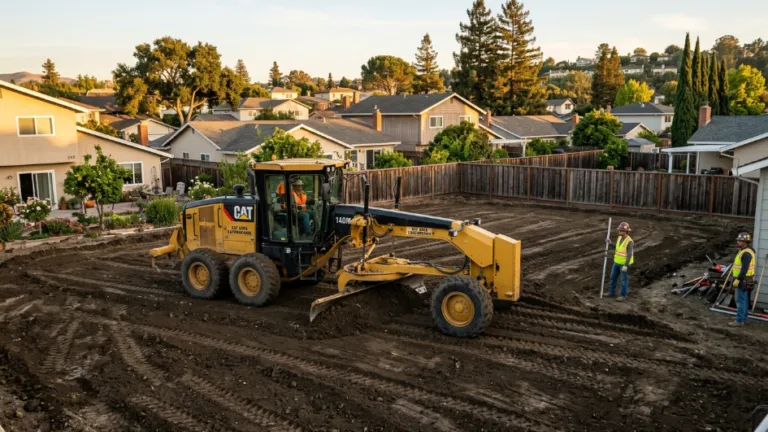
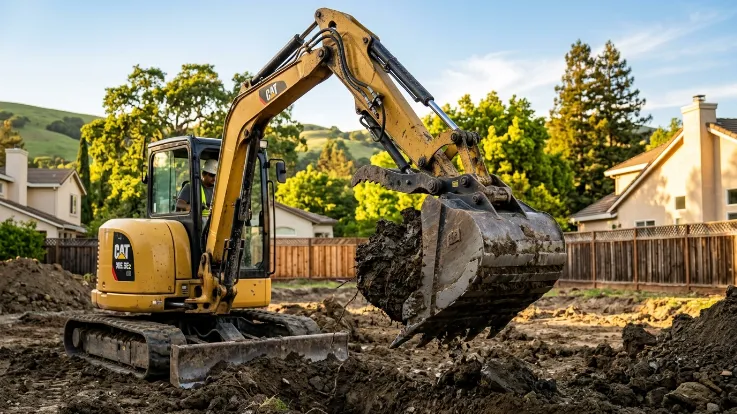
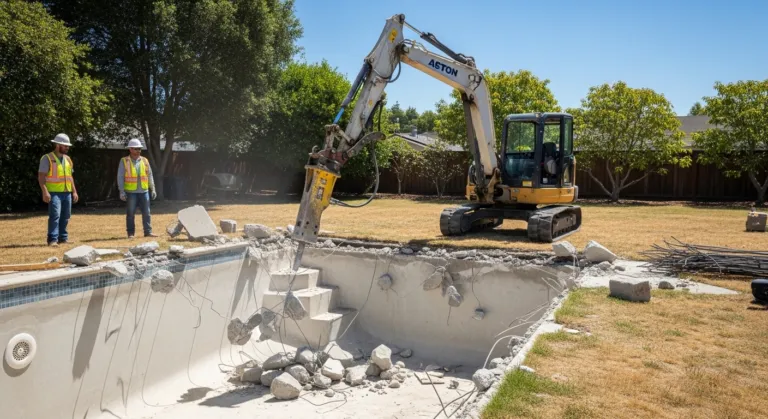
We have not filmed a drain install yet. These clips show our crews and machines on a retaining wall in Walnut Creek and on pool excavations in Fremont, San Ramon and Vacaville.
Rules for drains vary by city. The trench is excavation, so buried lines must be marked first; reshaping the yard can reach grading limits; and anything that crosses the sidewalk or reaches the street needs a permit from the city. We confirm the local rule before quoting.
USA North 811 requires at least two working days' notice before excavation, so drain trenches start only after the marks are down.
In Pleasant Hill, ground work that reaches the street, curb or gutter needs an encroachment permit from Engineering, per the city's encroachment and grading permits page.
San Ramon treats any work in the street as encroachment work needing a permit, per its permit center FAQ, which matters when a drain outlet reaches the curb.
Oakland's wet weather grading moratorium bars grading from October 15 to April 15, which affects drain jobs that also reshape the yard.
Drainage behind new retaining walls is part of the wall work; in San Jose, walls over 2 feet need building and Planning permits, per its fences and retaining walls page.
When the outlet needs the street or the sidewalk, we file the permit before the trench gets there.
French drain answers
French Drain Cost, Depth and Lifespan
French drain installation cost is the first question most homeowners ask, followed by how deep the drain goes and how long it lasts. The answers below use published figures with dates, so you can judge any drainage contractor's quote, including ours, and decide whether a drain is the right fix.
What is the average cost of putting in a French drain?
Yelp's cost guide, updated October 2026, puts trench digging for a French drain at $4 to $16 per linear foot, or $400 to $1,600 for a typical run, before pipe, gravel, fabric and the outlet. The full price depends on the length, depth, soil, what sits along the route and how the water leaves the lot.
That trench figure is national and is not a Cicarelli price. Our estimate lists the trench, materials, outlet and regrading as separate lines.
How deep does a French drain need to be?
Deep enough to catch the water where it moves through the soil, with a bottom that slopes steadily toward the outlet. A drain for a soggy lawn sits shallower than one protecting a foundation or running behind a retaining wall, so the depth is set by the problem, the soil and the outlet height.
We set the depth and fall on site after finding where the water comes from and where the outlet can be.
What is the typical lifespan of a French drain?
There is no fixed number; a French drain lasts as long as it keeps moving water. Filter fabric that keeps fine soil out of the gravel and pipe, a steady slope and a working outlet are what keep it from silting up. Clear gutters and downspouts also help, because less debris reaches it.
If water starts pooling again over a drain, the outlet and the fabric are the first things we check.
How much would a 100 ft French drain cost?
For the trench alone, Yelp's range of $4 to $16 per linear foot works out to about $400 to $1,600 for 100 feet. Pipe, gravel, filter fabric, the outlet, hauling the spoils and restoring the yard come on top, so a complete 100-foot drain costs more than the digging.
We measure the actual run and the fall on site, because the distance to a usable outlet often makes a drain longer than the wet area itself.
What is an alternative to a French drain?
It depends on where the water comes from. Regrading fixes a yard that slopes toward the house; a catch basin or channel drain collects water running across a patio or driveway; downspout extensions or a dry well handle roof water. A French drain is the answer for water soaking into the soil.
Many yards end up with a mix, so we look at every source of water before choosing one fix.
What are the downsides of a French drain?
It means digging a trench across the yard, so lawn, plantings or pavers along the route are disturbed and restored. It needs a lower outlet, which some flat lots lack, and without filter fabric it can clog. It also does nothing for a yard that simply slopes toward the house.
Planned well, those downsides are manageable; the design and the outlet matter more than the trench.
Where should you not put a French drain?
Avoid routes that cannot reach a lower outlet, that would send water onto a neighbor's lot, or that cross buried utilities nobody has marked. A drain also does little for water from a clogged gutter or a yard sloped toward the house; those need repair or regrading first.
That is why the first visit looks at the whole yard, not only the wet spot.
Can I install my own French drain?
A short drain on a gentle slope is a common DIY project, but the heavy part is digging and hauling soil and gravel, and the slope has to stay right the whole length. Call 811 before any digging. Long runs, foundation drains and anything near the street are better left to a contractor.
If you hire out, California requires a written contract for home improvement work over $500.
French drain and earthwork costs published by Yelp (October 2026)
Item
Published figure
Trench digging for a French drain, per linear foot
Updated · By Athalyson Bernardo, Owner of Cicarelli Contractors · CSLB #1109419
FAQ
French Drain and Drainage FAQ
Water Where It Should Not Be?
Send photos of where water collects, the downspouts and the lowest part of the lot, and we will reply with a written estimate. Our line is open Monday to Saturday, 9 am to 5 pm, and the FAQ page answers more.
What is the difference between a French drain and a surface drain?
A French drain collects water that soaks into the ground, through gravel and a perforated pipe below the surface. A surface drain, such as a catch basin or channel drain, collects water running across the top through a grate and carries it away in a solid pipe. Many yards use both together.
Where does the water from a French drain go?
To an outlet lower than the drain: a dry well, a lower part of the property or a discharge point the city allows. It should never be sent onto a neighbor's lot. When the outlet involves the curb or the street, an encroachment permit is usually needed first.
Will a French drain fix water in my crawl space?
It can help when the water comes from saturated soil around the foundation, especially on a slope. Water entering through cracks or from plumbing needs a different repair. We look at where the water comes from before recommending a drain, so you do not pay for the wrong fix.
How long does French drain installation take?
A typical residential run is usually a short job for one crew, but the time depends on the length, the depth, the soil, what has to be removed along the route and whether the yard is regraded. The written estimate gives the expected days once we have walked the route.
Do you install drains behind retaining walls?
Yes. A retaining wall needs drainage behind it so water pressure does not build up against it. Gravel backfill and a perforated pipe along the base carry water to an outlet. On new walls we build it in; on existing walls it can mean excavating behind the wall.
How do I get a French drain estimate?
Call or text (650) 404-7049, Monday to Saturday, 9 am to 5 pm, or send photos of the wet areas and downspouts through the free estimate form. A written, itemized drainage estimate follows within 24 hours of the photos or the site visit.