
Hard Demolition for an ADU or Home Addition in the Bay Area: What to Plan
What hard demolition an ADU or home addition needs in the Bay Area, the permits and notices that come first, and how the cleared…
Quick answer
In the Bay Area, the best season for demolition that involves excavation, grading or pool backfill is the dry season, roughly late spring through early fall. The rainy season, about mid-October to mid-April, can restrict grading in some cities. Use winter for permits and planning so crews can start when the ground dries.
Related service: Demolition services
Timing a demolition project is not only about the weather on the day the machine arrives. In the Bay Area, it is about rain, soil, city rules, permit review and what has to happen after the old structure, slab or pool is gone.
This guide is for homeowners in Contra Costa, Alameda, San Francisco, San Mateo, Santa Clara and the North Bay counties who are planning a house, garage, slab or pool demolition. It covers how the seasons affect the work, which rules to check, and how to plan backward from your ideal start date.
Cicarelli Contractors handles demolition, excavation and grading with the same crew that installs the new surface, so we plan every project around the full sequence, not just the tear-out.

For most residential projects, the best season for demolition in the Bay Area is the dry stretch from late spring through early fall. Dry soil supports heavy equipment, trucks stay off muddy yards, and grading and compaction can be completed without rain delays. Demolition of a structure alone can happen year-round, but earthwork depends heavily on the weather.
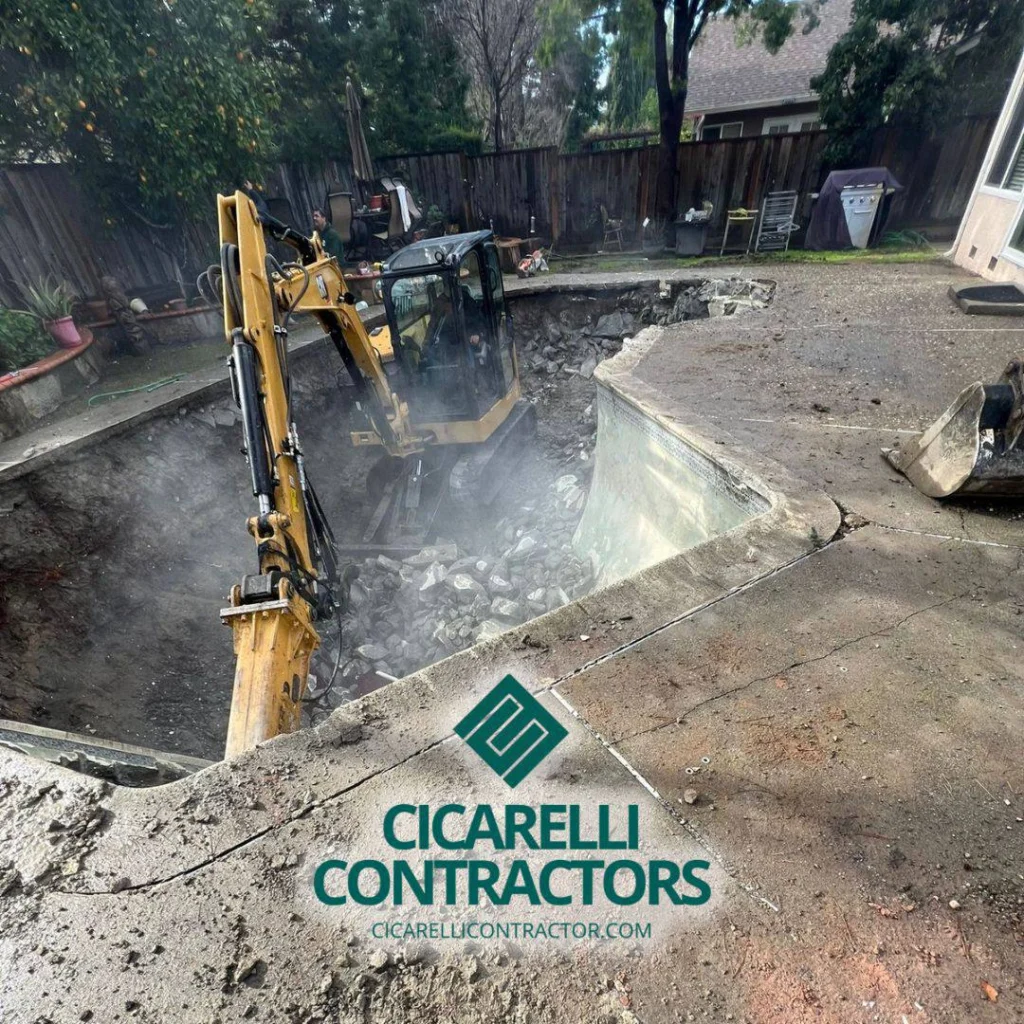
The key is to separate two kinds of work. Tearing down a building or breaking out a slab is less sensitive to weather. Excavation, grading, backfilling a pool and preparing a pad for an ADU are very sensitive, because wet soil is hard to move, hard to compact and easy to wash into the street.
If your project includes both, which most do, plan around the earthwork.
The Bay Area rainy season runs roughly from mid-October to mid-April. During those months, saturated soil slows excavation, muddy access damages yards and driveways, and erosion control becomes more demanding. Some cities go further and restrict grading during the wet season, which can stop the earthwork part of a demolition project entirely.
Oakland is a clear example. The city runs a wet weather grading moratorium from October 15 to April 15, and its building department says approval for grading is normally not granted in that period except for emergency stabilization. Anyone wanting to grade during the moratorium must submit a request with compelling reasons, a geotechnical engineer’s letter and a schedule. See the City of Oakland wet weather grading page.
Not every Bay Area city has the same rule, so check with your local building department. Larger sites face extra stormwater rules too: the San Francisco Bay Regional Water Quality Control Board says construction activities that disturb one acre or more must comply with the state Construction General Permit.
| Season | Typical conditions | Good for | Watch for |
|---|---|---|---|
| Winter (Dec to Feb) | Most rain, wet soil | Design, permits, bids, utility planning | Grading limits in some cities, muddy access |
| Spring (Mar to May) | Rain tapering off | Interior and structure demolition, late-spring earthwork | Early-spring storms, wet-season rules until mid-April in some cities |
| Summer (Jun to Aug) | Dry ground | Excavation, grading, pool backfill, new surfaces | Heat for crews, busy contractor schedules |
| Fall (Sep to mid-Oct) | Usually dry, cooler | Finishing earthwork, stabilizing soil | Getting grading done before the wet season returns |
Yes, but with limits. Interior demolition, structure tear-down and some slab removal can often proceed in winter between storms. Excavation, grading and pool backfill are harder: wet clay is difficult to compact, rain can damage open excavations, and some cities restrict grading in the wet season. Winter is ideal for permits and planning.
A practical approach many Bay Area homeowners use: apply for permits and finalize the scope in winter, then schedule the earthwork for when the ground is dry and city rules allow it. That way you are ready when the window opens instead of starting the paperwork then.

Before demolition starts, you need the right permits, any required air district notification, utility shutoffs, an 811 locate for digging, and a plan for debris and the finished surface. Several of these steps have fixed lead times measured in days or weeks, so they set your earliest start date more than the weather does.
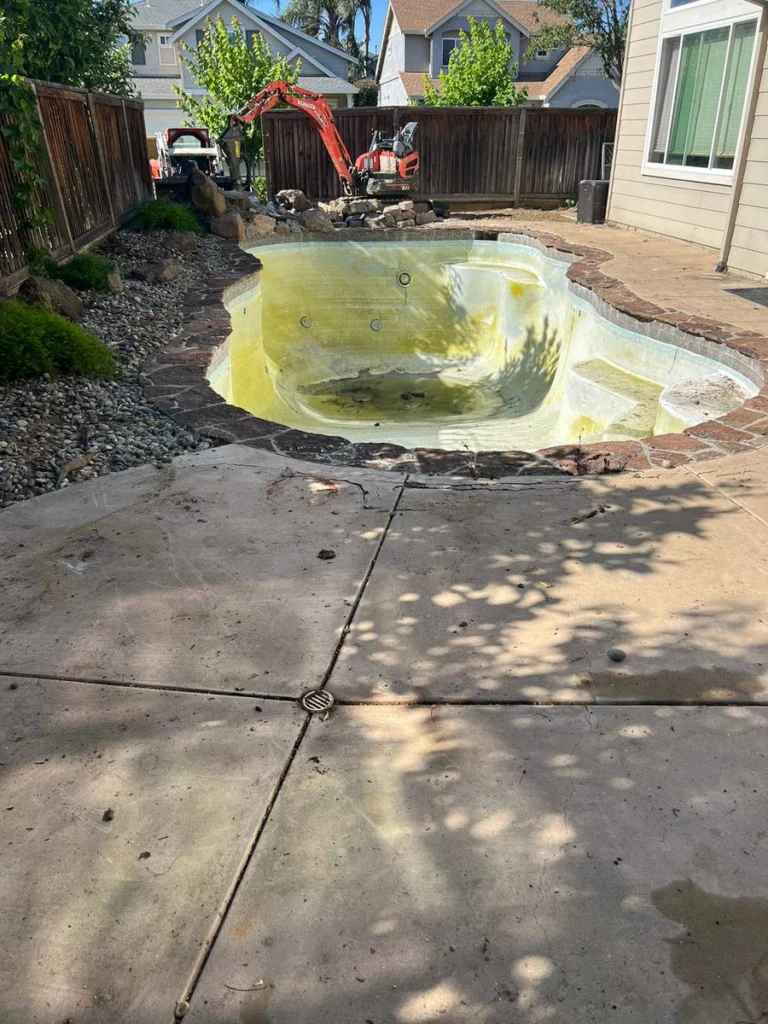
Projects that end with soil work are the most weather-sensitive: pool removals, house demolitions followed by a new foundation, ADU site preparation and driveway or patio replacement. Each needs excavation, backfill or compaction after the tear-out, and those steps depend on soil moisture, inspection timing and, in some cities, wet-season grading rules.

Plan backward from when you want the earthwork done, not from when you want to start. Permit review, air district notification, utility shutoffs and contractor scheduling all take time, and each city moves at its own pace. Starting the paperwork several months before the dry season gives you the best chance of using it fully.
A simple planning rhythm for a Bay Area homeowner:
These are planning guidelines, not promises; weather and permit timing vary. For the difference between digging and shaping the site, see our guide to excavation vs grading, and for budgeting read house demolition cost.
For outdoor work involving soil, such as excavation, grading, pool backfill and new foundations, the drier months from late spring through early fall are usually best. Interior work can happen year-round. Some cities restrict grading during the rainy season, roughly mid-October to mid-April, so check local rules before scheduling earthwork.
Not necessarily. Some contractors may have more open schedule in winter, but rain delays, erosion control, muddy access and wet-season grading rules can add time and cost to projects that include earthwork. For a simple structure tear-down, winter can work well. Compare written estimates that state the planned schedule and weather assumptions.
Demolition makes sense when repair costs approach the cost of rebuilding, when the structure has serious foundation or structural problems, or when the lot is better used for a new home or ADU. An inspection and written estimates for both paths help you decide. Our house demolition vs renovation guide covers this in detail.
Yes. Beyond your city’s demolition permit, the Bay Area Air Quality Management District must be notified at least 10 business days before every building demolition, whether or not asbestos is present. You must also request an 811 utility locate at least two working days before any excavation. Your contractor can coordinate these steps.
Sometimes, but it is harder. Pool removal involves breaking the shell, drilling drainage holes, backfilling and compacting in layers, and wet soil makes proper compaction difficult. Some cities also limit grading in the wet season. Many homeowners get permits approved in winter and schedule the removal for the dry months.
The tear-out itself is often the shortest phase. Permits, air district notification, utility shutoffs, hauling, grading and inspections usually take longer than the demolition day. A small slab or shed can be removed quickly, while a house or full pool removal involves more steps. Ask for a written schedule covering every phase.
Cicarelli Contractors is a licensed general contractor based in Richmond, CA, CSLB License #1109419, working in nine Bay Area counties. We pull the demolition or building permit, schedule city inspections and, on full pool removals, provide the engineering compaction report when the city requires it. One Google reviewer noted our crew finished in 4 days when others quoted 2 weeks.
Start planning now so your project is ready when the ground is. Request your free, written estimate within 24 hours.