
Hard Demolition for an ADU or Home Addition in the Bay Area: What to Plan
What hard demolition an ADU or home addition needs in the Bay Area, the permits and notices that come first, and how the cleared…
Quick answer
Hard demolition is the removal of structural or concrete elements, such as slabs, foundations, pool shells, retaining walls, garages or a whole house, using heavy equipment like excavators and hydraulic breakers. In California you need it when something solid must come out completely, and most hard demolition requires a local permit first.
Related service: Demolition services
This guide is for California homeowners, especially in the Bay Area, who have been told a project needs “hard demo” and want to know what that means, when it applies and which rules come with it.
The answers draw on how Cicarelli Contractors handles demolition, pool removal and site preparation across nine Bay Area counties, and on state and local rules from sources you can check, including the Contractors State License Board and the Bay Area Air District.
Hard demolition is the part of a project that removes the solid structure: concrete, masonry, foundations, framing and anything else too heavy or too strong to take apart by hand. It relies on machines such as excavators, skid steers, hydraulic breakers and jackhammers, and it produces heavy debris that must be loaded, hauled and disposed of or recycled.
The term is trade language, not a legal category. California has no permit called a “hard demolition permit”; your building department simply sees it as demolition. Contractors use the phrase to separate structural removal from soft demolition, which strips interior finishes and keeps the structure standing.
| Soft demolition | Hard demolition | |
|---|---|---|
| What comes out | Drywall, cabinets, flooring, fixtures, insulation | Slabs, foundations, walls, pool shells, whole structures |
| Tools | Hand tools, small power tools | Excavators, breakers, skid steers, dump trucks |
| Structure | Stays standing | Partly or fully removed |
| Debris | Light, mixed materials | Heavy concrete, masonry, rebar, soil |
| Typical use | Kitchen or bath remodel | Pool removal, slab removal, teardown, ADU site clearing |

Residential demolition generally falls into three groups. Interior or soft demolition removes finishes inside a building. Selective or partial demolition removes specific structural elements, like a slab, a wall or a garage, while the rest stays. Total demolition removes an entire structure, often including its foundation. The last two involve structural removal.
Most homeowner projects in the Bay Area are selective. A pool comes out but the house stays; a patio is broken up but the fence and trees are protected; a detached garage is cleared to make room for an ADU. Total demolition is the less common case, usually a teardown ahead of a rebuild.
You need hard demolition when a solid element must be removed rather than repaired or covered: an old pool shell, a cracked driveway or patio, a failing retaining wall, a garage or shed in the way of new construction, or a house that will be rebuilt. If concrete or structure has to leave the site, it belongs in this category.
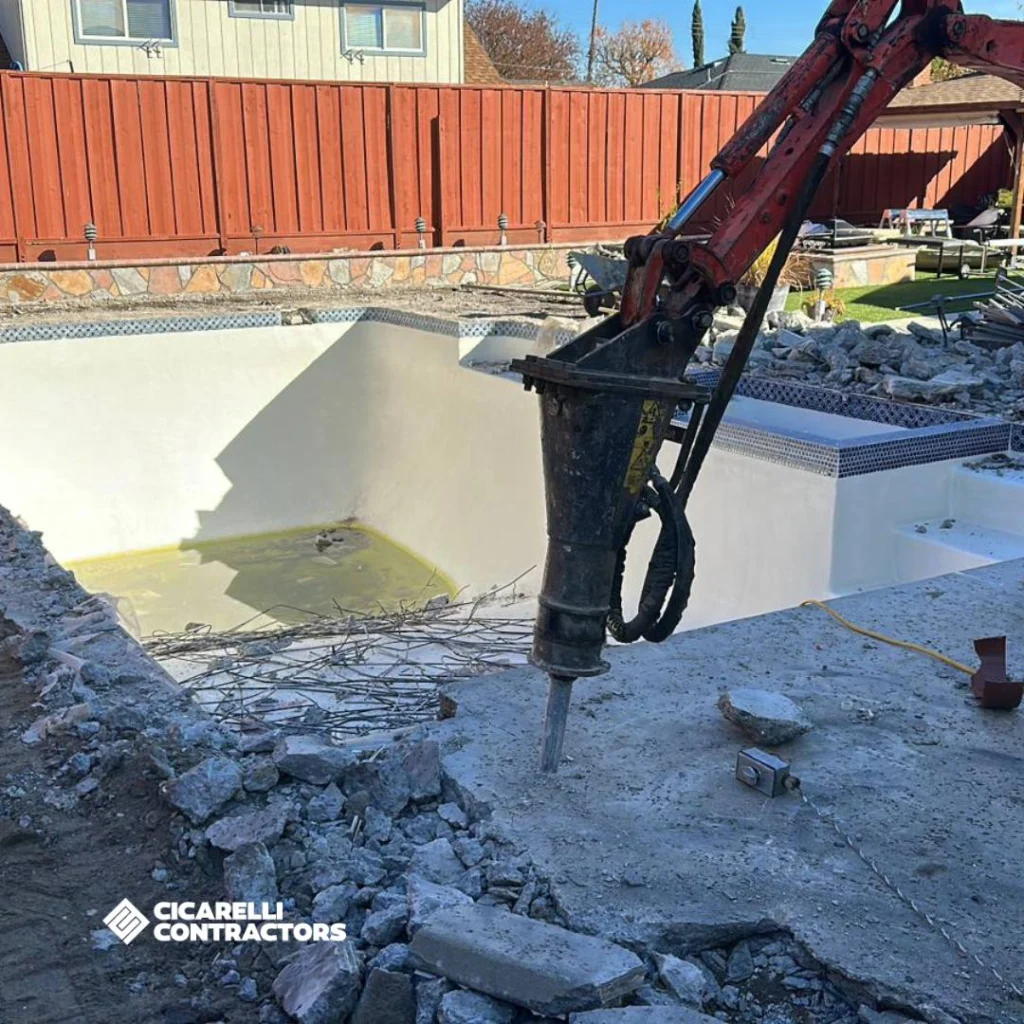
All of these sit under our demolition services, and the same crew can prepare the ground for what comes next, whether that is pavers, turf, a new foundation or a garden.

Usually, yes. The CSLB explains that, under the California Building Standards Code, no building or structure may be removed or demolished without a separate permit from the building official. What triggers a permit, and which inspections follow, depends on your city or county, so check locally before work begins.
The CSLB points homeowners to their local building department, and Bay Area rules do differ:
On pool removals, Cicarelli Contractors pulls the demolition permit, schedules the city inspections and, on full removals, provides the engineering compaction report when the city requires it.
Beyond the permit, structural demolition in the Bay Area brings three recurring obligations: notify the air district before demolishing a structure, shut off and cap utilities, and have buried lines marked before digging. Pools add a fourth: drain the water properly, never into the street or storm drain.
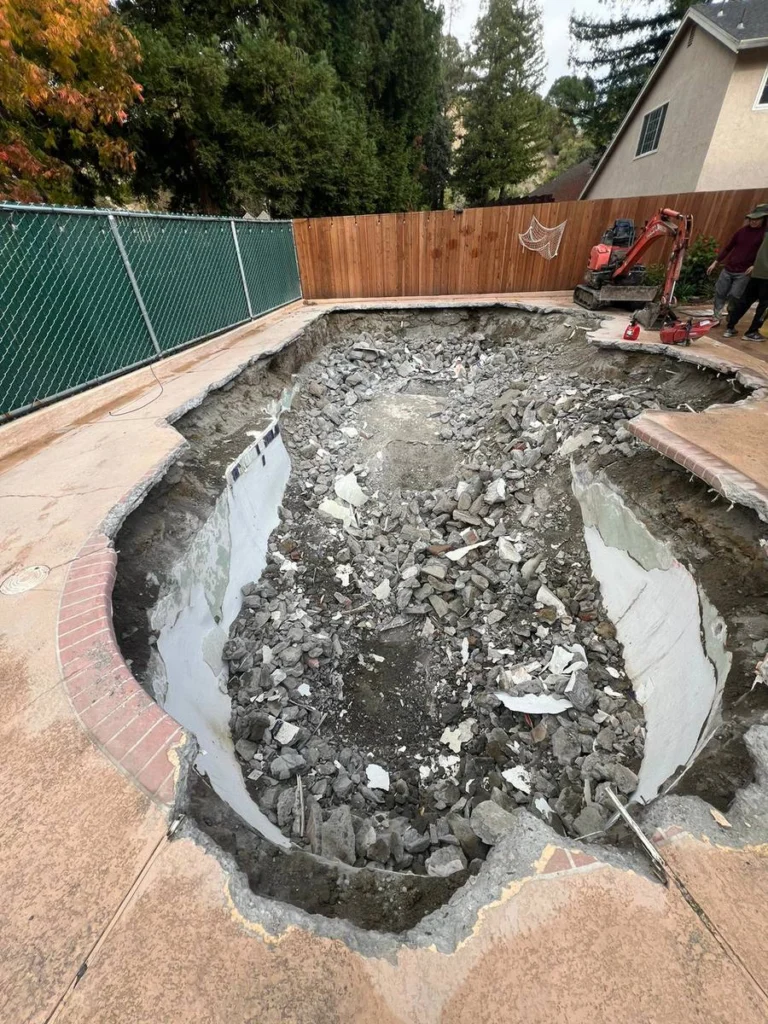

Most residential projects follow the same order: scope and estimate, permits and notices, utility shut-offs and 811 marks, demolition and hauling, then grading, compaction or backfill and final inspection. The order matters because each step depends on the one before it, and skipping ahead is how projects get stopped.
Access shapes the schedule more than anything else. One Google reviewer described our team finishing in four days when other contractors had quoted two weeks; another noted text photo updates throughout the job. Neither is a promise for your project, but both show why it helps to ask how a contractor plans the work.

Check the license, the written contract and who handles permits. California requires a written contract for home improvement work over $500, and that contract must say who obtains the permits. Confirm the license is active on the CSLB website and keep any down payment within the state limit of 10% or $1,000, whichever is less.
Those limits come from the CSLB prescreening checklist and its guidance on home improvement contracts. Cicarelli Contractors holds CSLB License #1109419 (B, General Building), which you can check on the CSLB license lookup. If budget is your next question, read our breakdown of what drives hard demolition cost.
Soft demolition removes interior finishes such as drywall, cabinets, flooring and fixtures while the structure stays standing. Hard demolition removes the structure itself or heavy elements like concrete slabs, foundations, walls and pool shells, using excavators and breakers. Many remodels need only soft demolition, while teardowns and pool removals need hard demolition.
The three common types are interior or soft demolition, selective or partial demolition, and total demolition. Interior work strips finishes. Selective demolition removes specific elements, like a slab, wall or garage, while the rest stays. Total demolition removes an entire structure, usually including its foundation. Selective and total demolition both remove structure.
Demolition is part of construction, not a separate field. California building rules treat removing or demolishing a structure as work that needs a permit, just like building one. In practice, demolition is the first phase of many projects, clearing slabs, pools or structures so grading, foundations and new surfaces can follow.
Demolishing a whole house is usually called a teardown, total demolition or complete demolition. When the goal is to build a new home on the same lot, people often call it a knockdown rebuild. Taking a house apart piece by piece to salvage materials is called deconstruction, which is slower but keeps more material out of landfills.
In most cases, yes. The CSLB notes that the California Building Standards Code requires a separate permit before any building or structure is removed or demolished. Thresholds and inspections vary by city and county, so confirm with your local building department and file any required air district notice before work starts.
Keep the scope clear and compare written bids that include the same items: permits, utility capping, hauling, disposal and final grade. Good equipment access lowers labor, and separating clean concrete for recycling can reduce disposal costs. Avoid unpermitted work, because fines and redone inspections usually cost more than doing it right.
If you are not sure whether your project needs hard demolition, send a few photos of what needs to go and what you plan to do with the space. We will reply with a free, written estimate within 24 hours that spells out scope, permits and cleanup. Request your free estimate.
Cicarelli Contractors (CSLB #1109419) does hard demolition of slabs, walls, footings and pool shells from its Richmond base for homes in Contra Costa, Alameda, Marin and the other Bay Area counties, with permits and air district rules checked before work starts.