
Hard Demolition for an ADU or Home Addition in the Bay Area: What to Plan
What hard demolition an ADU or home addition needs in the Bay Area, the permits and notices that come first, and how the cleared…
Quick answer
Concrete demolition cost in the Bay Area depends on what you are removing and where it sits: the area and thickness of the concrete, rebar or mesh inside it, equipment access, hauling and disposal weight, permits and the finished grade you need. Compare written quotes that list the same scope, not a single per-square-foot number.
Related service: Demolition services
This guide is for Bay Area homeowners pricing the removal of solid, heavy elements: patios, driveways, garage slabs, footings, retaining walls, steps and pool shells. If you are pricing the teardown of an entire house, our separate guide to house demolition cost covers that larger job.
We do not publish price ranges, because two slabs of the same size can price very differently once access, reinforcement and disposal are known. Instead, this article explains what moves concrete demolition cost, drawing on how Cicarelli Contractors estimates demolition across nine Bay Area counties, so you can read and compare quotes with confidence.
Six things drive most of the price: how much concrete there is, how thick and reinforced it is, how easily equipment reaches it, how far and how heavy the debris haul is, which permits or inspections apply, and what condition the ground must be left in. Change any one of these and the quote changes.
| Cost driver | Why it matters | What to ask |
|---|---|---|
| Area and volume | More concrete means more breaking time and more truckloads | Is the quote based on measured area and estimated thickness? |
| Thickness and reinforcement | Thick slabs and rebar or mesh slow breaking and add cutting | Was the edge checked or a test hole made? |
| Equipment access | Narrow side yards or hillsides may mean smaller machines or hand loading | What equipment fits, and where will trucks park? |
| Hauling and disposal | Concrete is heavy; loads, distance and facility fees add up | Is hauling included, and is clean concrete recycled? |
| Permits and inspections | Structures and pools usually need permits; some need inspections and reports | Who pulls the permit and books inspections? |
| Finished ground | Rough cleanup costs less than graded, compacted or base-ready ground | What will the area look like when the crew leaves? |
Our demolition services include concrete and slab removal and patio and driveway removal, and every estimate is written to show these items line by line.

Thin, unreinforced concrete such as an old walkway breaks quickly and loads easily. Thick slabs, driveways built for vehicles, footings and retaining walls take longer because the breaker has to work through more material and the crew may need to cut rebar or wire mesh. Pool shells add their own steps, including breaking walls and floors.
Material matters too. Concrete and gunite pools, masonry walls and stone pathways each behave differently under a breaker. A hidden layer, like a second slab poured over an old one, is a common reason a final invoice differs from an estimate, so ask how the contractor will handle surprises before work starts.
For a slab-only project, our dedicated guide to concrete slab removal cost goes deeper into that single case. This article stays with mixed hard demolition, where a yard might include a patio, low walls, steps and footings in one job.
Access often matters more than size. When an excavator and dump truck can drive close to the work, the job moves quickly. When the only path is a narrow side yard, a gate or a hillside, the crew may need smaller equipment, extra trips or hand loading, and every load costs more labor.
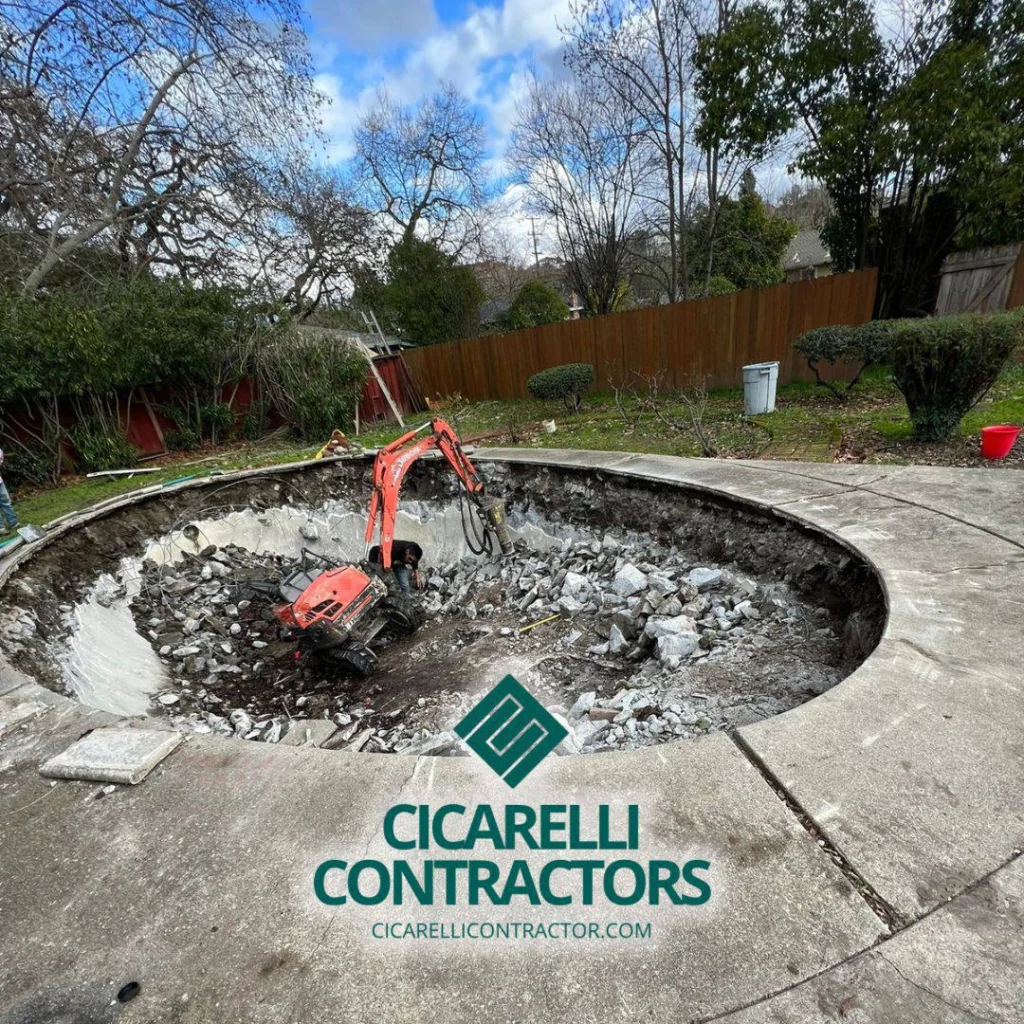
Bay Area properties make this a real issue, from hillside lots in Contra Costa and Marin to tight urban side yards in San Francisco and San Mateo counties. We can often quote from photos, but when access is unclear we offer a free site visit before writing a number down.
One Google reviewer described our crew moving fill by wheelbarrow on a hillside pool job in 90°F heat. That kind of access shows up in labor time, and a quote that ignores it is a quote likely to change later.

Permit costs depend on the city and on what you remove. Demolishing a structure, such as a garage or a pool, usually needs a permit, and some cities require inspections and compaction reports. A flat patio slab may need less paperwork. Either way, the quote should say who pulls the permit and books inspections.
On pool removals we pull the demolition permit, schedule the city inspections and, on full removals, provide the engineering compaction report when the city requires it. One reviewer mentioned that we handled the permit and delivered the compaction report, and felt the price compared well with other quotes.
Hauling is usually priced by truckloads, which depend on the volume and weight of the debris, the truck size that fits your street and the distance to the disposal or recycling facility. Clean concrete without soil, wood or trash mixed in is often easier to recycle, so separating material on site can help.
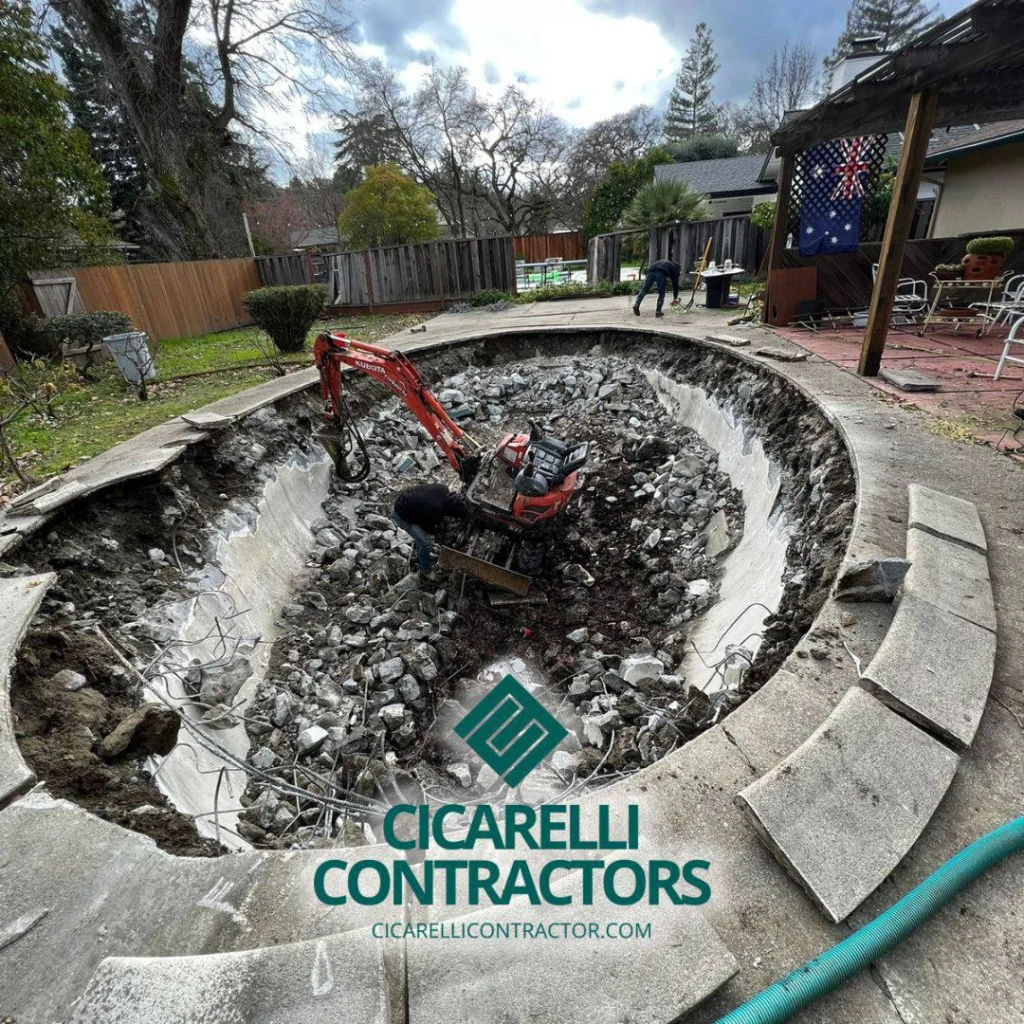
Ask whether disposal fees are inside the quote or billed later, and whether soil excavation is included. Breaking a slab is one task; digging out the base rock or soil beneath it to reach a new grade is another, and it can add several more loads.

Line the quotes up item by item. The lowest total is not the cheapest if it leaves out hauling, permits, compaction or the finished grade. Ask each contractor for a written scope with the same items, then compare like for like, including what is excluded and how unexpected conditions will be priced.
Think about what comes after demolition, too. One reviewer wanted new concrete for a carport and was advised to use pavers instead; the job stayed on schedule. Since one crew handles both demolition and the new surface, combining the two in one estimate can avoid paying twice for mobilization and grading. Our comparison of concrete vs. pavers can help you decide.

It depends on size, thickness, reinforcement, access and hauling distance more than on the patio itself. A thin, unreinforced patio near a driveway is a straightforward job, while a thick slab behind the house with only a narrow side-yard path takes far more labor. Ask for a written quote that includes hauling and the finished grade.
Contractors estimate the labor hours to break and load the material, the equipment needed, the number of truckloads and disposal fees, plus permits and final grading. Access and reinforcement change the labor hours the most. That is why a reliable price needs photos or a site visit rather than a single square-foot rate applied to every yard.
Broken concrete is loaded into trucks and taken to a disposal or recycling facility. Clean concrete, free of soil, wood and trash, can often be crushed and reused as aggregate. Keeping materials separated on site helps recycling and can reduce disposal costs, so ask your contractor where the debris will go.
Not always. Some quotes cover breaking only, leaving the debris on site or billing hauling and disposal fees separately. Others include breaking, loading, hauling, disposal and final cleanup. Read the scope line by line and confirm whether soil excavation, base rock removal and grading are included before comparing totals between contractors.
It depends on your city and the slab. Removing a structure, a pool or work tied to grading often needs a permit, while a small flat patio may not. The CSLB advises checking with your local building department, because requirements vary by city and county across the Bay Area and the rest of California.
Clear the work area, give the crew the easiest equipment path possible, and combine items into one mobilization, such as the patio, steps and walkway together. Planning the new surface with the same crew avoids paying twice for grading. Compare written quotes with matching scopes so savings are real, not missing items.
Send photos of the concrete, walls or structures you want gone and a note about access. We will reply with a free, written estimate within 24 hours that lists what is removed, hauled and left behind, so you can compare it line by line. Request your free estimate.
Whether the concrete is a cracked driveway in Alameda County or an old pool deck in Marin County, Cicarelli Contractors (CSLB #1109419) quotes the breaking, the haul-off and the base for what comes next in one written estimate.