
Hard Demolition for an ADU or Home Addition in the Bay Area: What to Plan
What hard demolition an ADU or home addition needs in the Bay Area, the permits and notices that come first, and how the cleared…
Quick answer
Concrete slab removal cost depends mainly on slab area, thickness, rebar or wire mesh, site access, hauling and disposal fees, and what you build next. National cost guides publish wide per-square-foot ranges, but Bay Area jobs vary with access and local rules, so compare itemized written quotes for your specific slab.
Related service: Demolition services
Old patios, cracked driveways, pool decks and shed pads are some of the most common demolition jobs in Bay Area backyards. The question homeowners ask first is always the same: what will it cost to take it out?
This guide is for homeowners in Contra Costa, Alameda, San Mateo, Santa Clara, Marin and the other Bay Area counties. It explains the published national figures, the factors that move the price for your slab, how removal works step by step, and how to compare quotes without surprises.
Cicarelli Contractors handles concrete and slab removal as part of our demolition work, often followed by a new surface installed by the same crew.

There is no reliable single price for slab removal, because the same footprint can be thin and open or thick, reinforced and hard to reach. Your price depends on your slab and your site, which is why the factors below matter more than any national average.
When you compare quotes, check what each one leaves out. Permit and inspection fees, hauling, disposal and the finished grade are the items most often missing from a low number.
The takeaway: use national numbers only to understand the scale. Your real number comes from contractors who have seen your slab, your access path and your plans for the space.
Seven factors drive most of the price: area, thickness, reinforcement, access, hauling and disposal, what is under or attached to the slab, and the work that follows. A thin, unreinforced patio next to a driveway is a very different job from a thick, rebar-reinforced pad behind a house with a narrow side yard.
| Factor | Lower effort | Higher effort |
|---|---|---|
| Area | Small pad or walkway | Large driveway, patio or pool deck |
| Thickness | Thin patio or walkway slab | Thick driveway or structural slab |
| Reinforcement | No rebar or mesh | Rebar or wire mesh that must be cut |
| Access | Truck and machine can reach the slab | Narrow side yard, steps or hillside |
| Hauling | Short haul to a recycler | Many loads, long haul, hand carrying |
| Below the slab | Clean soil | Buried pipes, old footings, a second layer of concrete |
| Next step | Leave as dirt | Grading, base rock and a new surface |

Concrete removal costs more than people expect because the material is heavy, reinforced slabs resist breaking, and every ton must be loaded, trucked and disposed of or recycled. Labor, equipment, trucking and disposal fees all stack up, and tight Bay Area access can turn a one-machine job into hours of hand work and wheelbarrow trips.
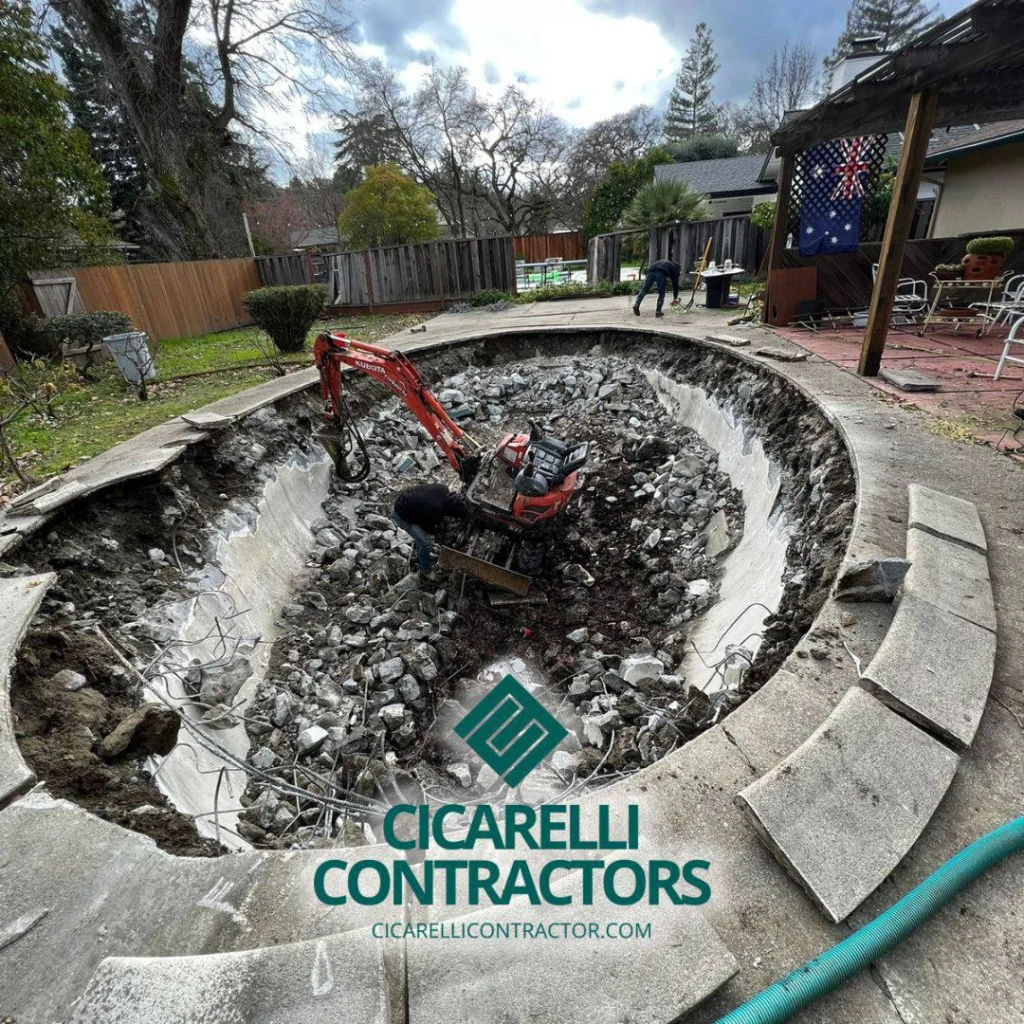
Small jobs can also cost more per square foot because the crew, machine and truck still have to come out, no matter how small the slab is. Ask whether a quote includes a minimum charge.
Disposal is a real line item. Broken concrete is often recycled rather than landfilled. CalRecycle explains that recycled aggregate is produced by crushing concrete, and its main market is road base. See CalRecycle’s construction and demolition page.
A professional slab removal follows a predictable sequence: confirm the scope and permits, locate utilities, saw-cut any edges that must stay, break the slab, cut reinforcement, load and haul the debris, then grade and compact the soil. On most residential jobs this runs as one continuous process with the same crew.

It depends on your city and what the slab is part of. Removing a simple backyard patio may not need a permit in some cities, while slabs tied to a structure, a pool, a retaining wall or grading changes often do. The CSLB advises homeowners to check permit requirements with their local building department before work starts.
Read the CSLB building permit guidance for the general rule. When a permit is required on our jobs, Cicarelli pulls the demolition or building permit and schedules city inspections. Your contract should state clearly who handles permits.
If the slab is a pool deck and the pool is also coming out, rules are stricter. Our pool demolition permit guide covers Bay Area examples.
Compare concrete removal quotes only when each one prices the same area, thickness and finished condition. Check whether hauling, disposal, saw-cutting, grading and compaction are included, and whether the contractor is licensed. The cheapest quote often leaves out hauling or final grading, which you then pay for separately later.
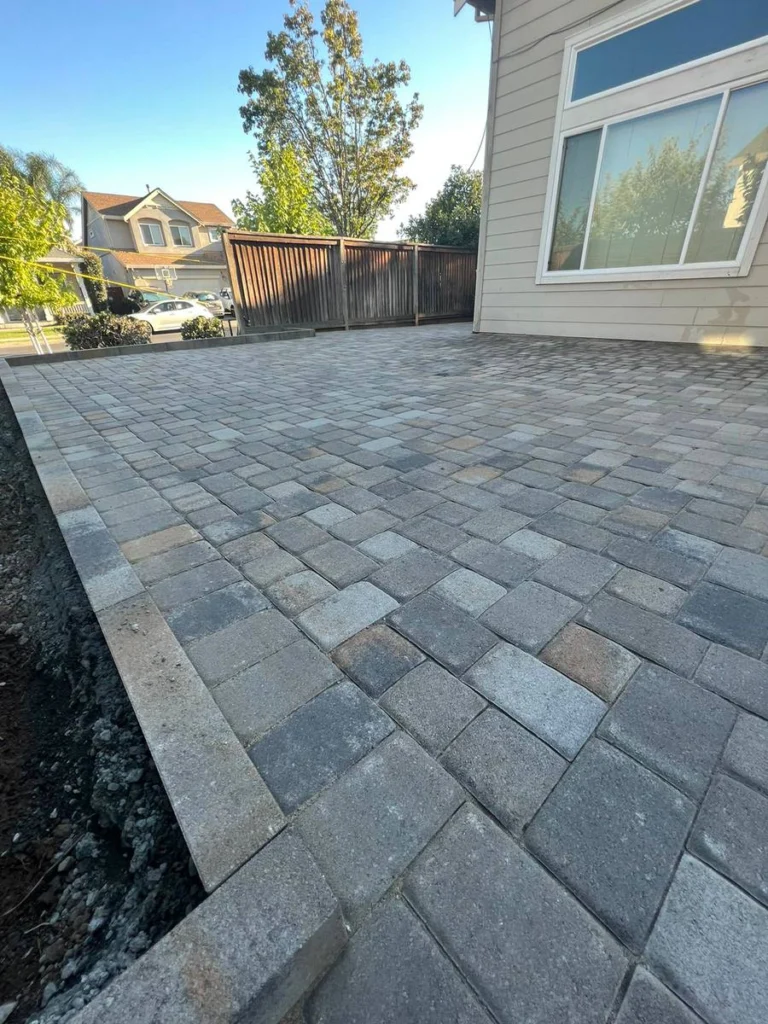
If you plan to replace the slab, get removal and the new surface on the same estimate. One Google reviewer who wanted new concrete for a carport was advised to use pavers instead, and the job stayed on schedule. Our guide to concrete vs pavers compares both options.

A 20 by 20 foot slab is 400 square feet, so multiply that area by the per-square-foot price in each quote, then add any minimum charge, hauling and grading. Thickness, rebar and access change the total more than size alone. Ask contractors for an itemized written quote based on photos or a site visit.
The lowest out-of-pocket option is usually breaking small, thin slabs yourself and taking the pieces to a concrete recycler, if one near you accepts them. That takes real labor, tools and a truck. For larger or reinforced slabs, a contractor with a breaker and haul trucks is often more practical and safer.
A thin, unreinforced walkway can be broken with a jackhammer in a day. Thick or reinforced slabs, driveways and pool decks need heavier equipment, rebar cutting and multiple truckloads. Dust, noise, flying debris and buried utilities make it physically demanding and risky, which is why most homeowners hire a licensed contractor.
Local factors often push the job harder than national examples suggest: narrow side yards, hillside lots, longer haul times in traffic and city permit requirements. Published national figures do not reflect those conditions. The only reliable number for your property is an itemized written quote from a contractor who has reviewed your site.
Yes. Broken concrete is commonly crushed into recycled aggregate, which CalRecycle says is mainly used as road base. Many demolition contractors take clean concrete to recyclers instead of landfills. Ask where your contractor will take the material, and whether rebar and other debris need to be separated first.
Many residential patio or driveway removals take one to a few days, depending on area, thickness, reinforcement, access and how many truckloads are needed. Permits, inspections and the new surface add time. Ask your contractor for an estimated written schedule that covers removal, grading and the replacement surface if you are adding one.
Cicarelli Contractors is a licensed general contractor based in Richmond, CA, CSLB License #1109419, working in nine Bay Area counties. One crew handles demolition, grading and the new surface, whether that is lawn, turf or paver patios. Send photos of your slab and access path for a free, itemized quote.