
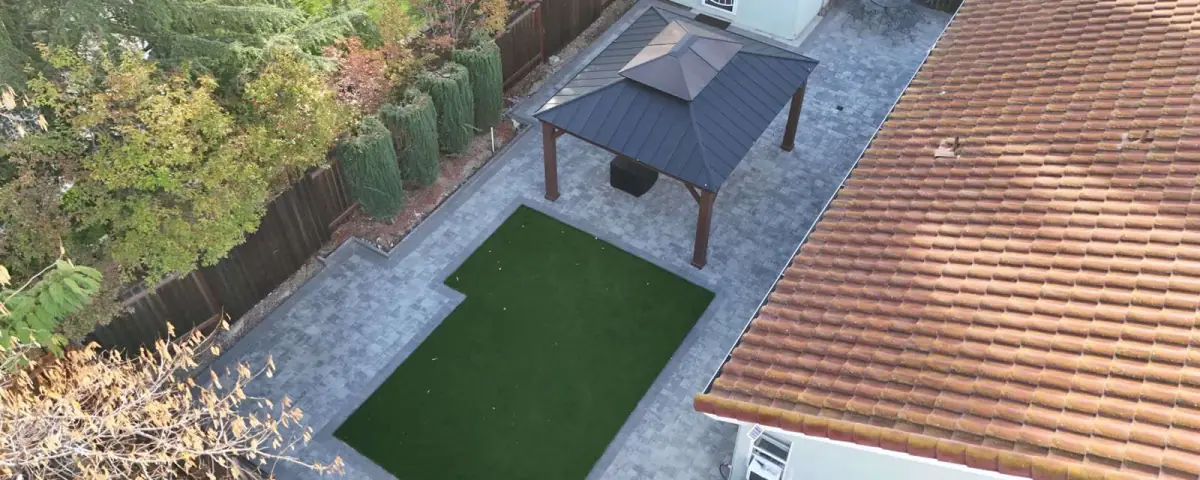
Drainage Solutions
French drains, regraded low spots and drain lines that move water away from the house and out of soggy lawns.
- French drain installation
- Regrading low spots
- Downspout and drain lines
Cicarelli Contractors is an excavation contractor and grading contractor for Bay Area homeowners: we dig footings and trenches, cut and fill slopes, compact building pads and shape yards so water drains away from the house. The grading permit, the 811 call and the haul-off are part of the job, and so is the patio, turf or wall that comes next.
Excavation and grading
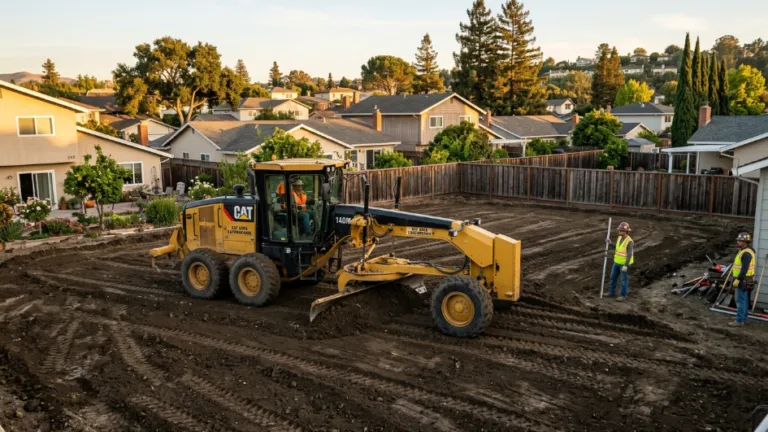
Excavation takes soil out to make room below the surface: footings for an ADU or a retaining wall, a trench for a drain line, or the hole left by an old pool. Grading works on the surface itself, cutting high spots, filling low ones and compacting the soil to a planned height and slope.
Most residential projects need both, in that order. The excavator opens what has to go below ground, then the grading crew rebuilds the surface in compacted layers and sets the fall, so rainwater runs toward a drain or the street instead of the foundation or a neighbor's yard.
Access shapes every job. On the narrow side yards and hillside lots common from Oakland and Berkeley to San Jose, a mini excavator and a skid steer do work a full-size machine cannot reach. Earthwork sits alongside our demolition services and outdoor living work, so one crew can take a yard from old concrete to finished grade, where many excavation contractors stop at the dirt.
Six Google reviews quoted word for word, including a drainage installation and a hillside job with limited access. Swipe or use the arrows.
very good work, drainage was perfect, works very well.
Very professional. It was explained what was going to be done.
They were done in 4 days. Other companies gave us a time limit of 2 weeks. Hard workers. We will use this company again. We need more work done.
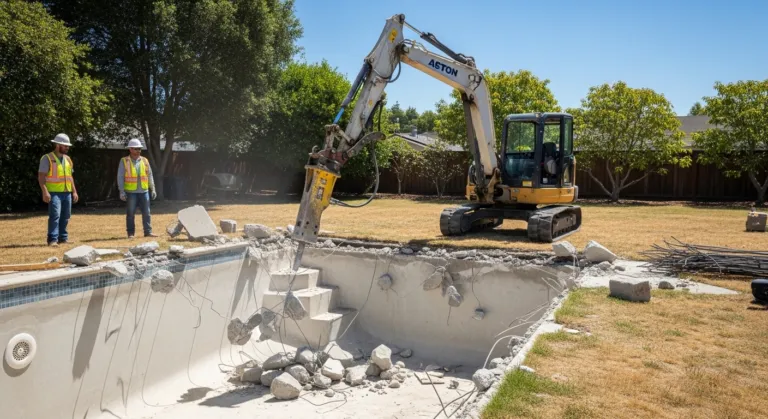
I recently hired Cicarelli Contractors for demolition of my swimming pool. From our initial discussion to our final completion Athalyson and his crew were true professionals. Our pool is on a hill with limited access. His crew was able to get their equipment in place for the demolition and wheelbarrow fill dirt up hill. Some of those days had 90+ temps.
I was consistently impressed with the quality and professionalism of his crew. His crews seemed to always have a smile. The project was completed in a timely manner. His crew were consistently courteous and respectful of my property and maintained a clean work environment, restoring the site to its original condition.
I highly recommend Cicarelli Contractors for any construction needs. Their commitment to quality, efficiency, and customer satisfaction is commendable.
I wouldn’t hesitate to hire Cicarelli again!
Excellent job and ZERO complaint. The project was done on time.
The team exhibited exceptional performance, demonstrated effective communication, and displayed a commendable work ethic.
Great Job. Good communication. Hard working crew.
Earthwork on video
Clips from our own jobs: a retaining wall in Walnut Creek, a pool yard turned into outdoor living in Vacaville, and pool excavations in San Ramon and Fremont.
Watch On YouTubeEarthwork services
Three jobs bring most homeowners to us. Each has its own page with the steps, the rules and the questions to ask before work starts.
French drains, regraded low spots and drain lines that move water away from the house and out of soggy lawns.
Old structures out, the footprint excavated and a graded, compacted pad handed to your ADU or addition builder.
The earthwork behind a pool removal: fill placed in thin lifts, compacted and graded so the yard stays level.
Need old concrete out first? See concrete removal.
Earthwork step by step
Grades and drainage are planned before the first scoop, because fixing them later means digging again.
Start With A Free EstimateWe note slopes, access, soil and anything buried, and agree on finished heights.
Grading or building permits are filed where needed and buried lines are marked.
Footings, trenches or pads are dug to the plan with the right-sized machine.
Spoils are hauled off, or reused as fill where the plan allows.
Fill goes in thin layers, each compacted, up to the planned elevation.
The surface is shaped to drain away from buildings and handed over.
Equipment for tight lots
Bay Area lots are often small and steep, so the machine is chosen for the access as much as for the volume. Photos from our own jobs.
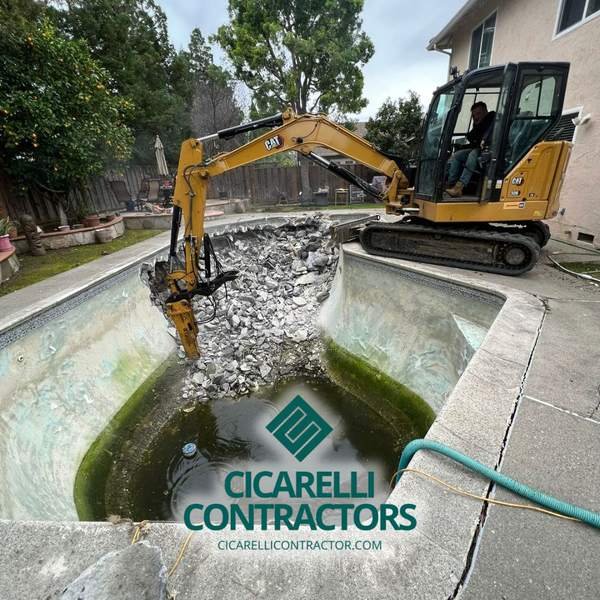
Digs footings and trenches close to the house and through side yards.
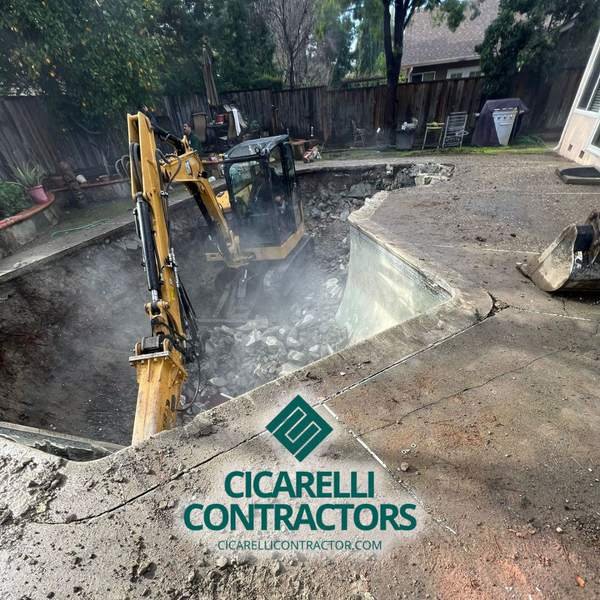
Moves larger volumes quickly when the lot is open enough.
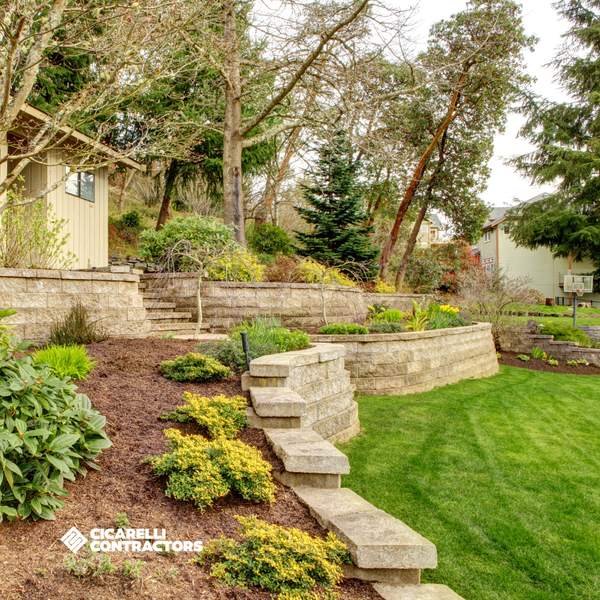
Hillside cuts are held by retaining walls built on excavated footings.
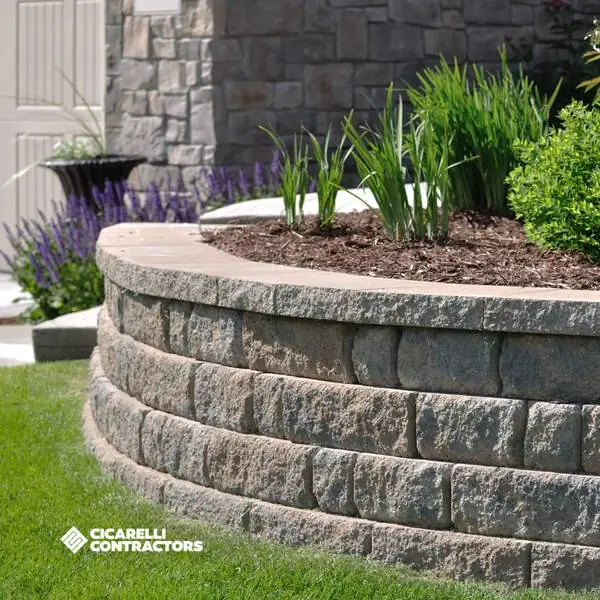
The last step is a surface shaped and compacted for planting, turf or pavers.
Grade changes
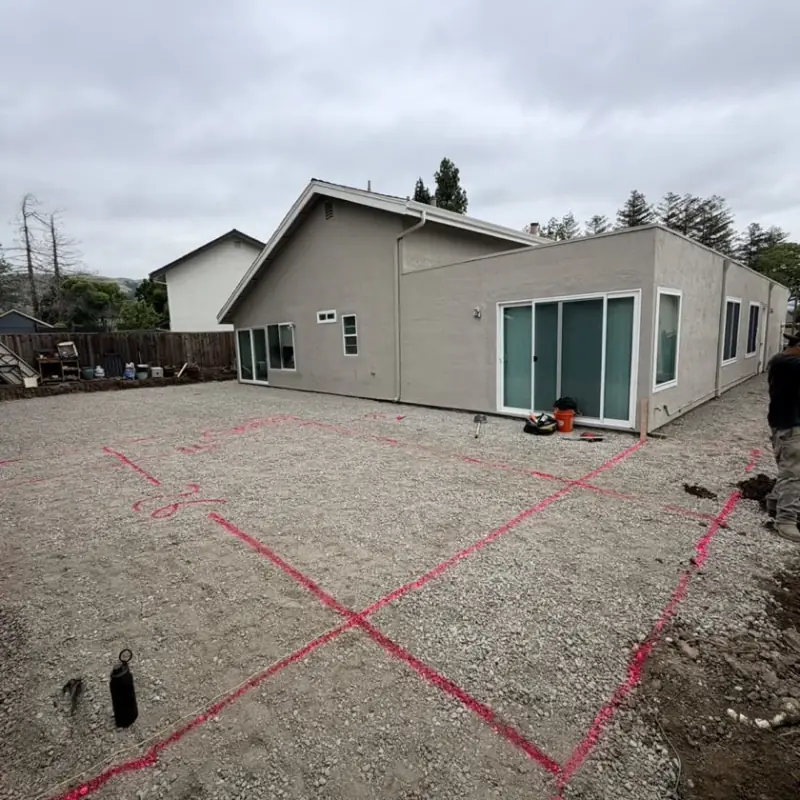
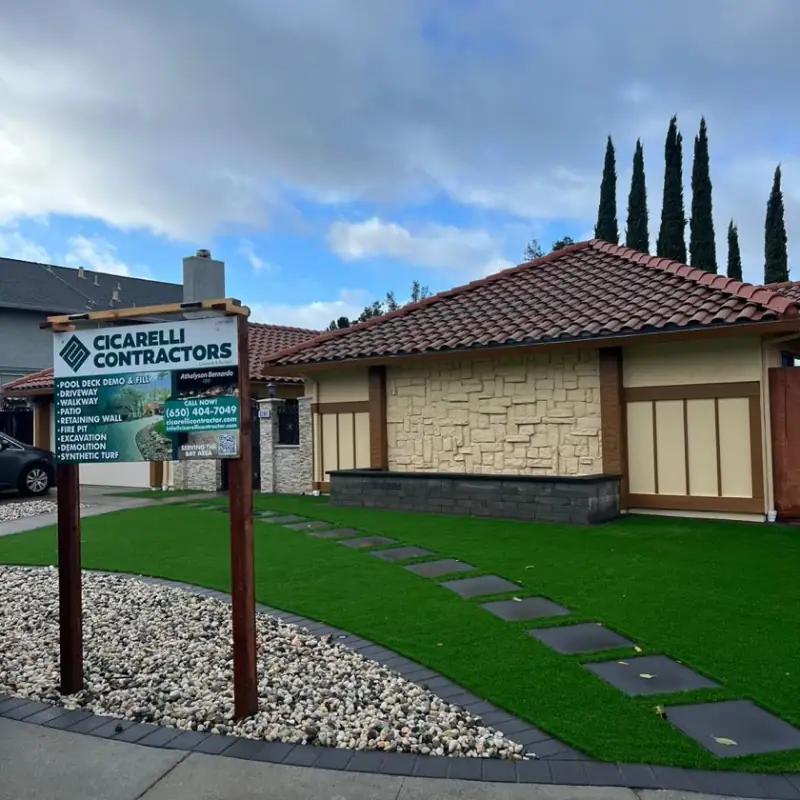
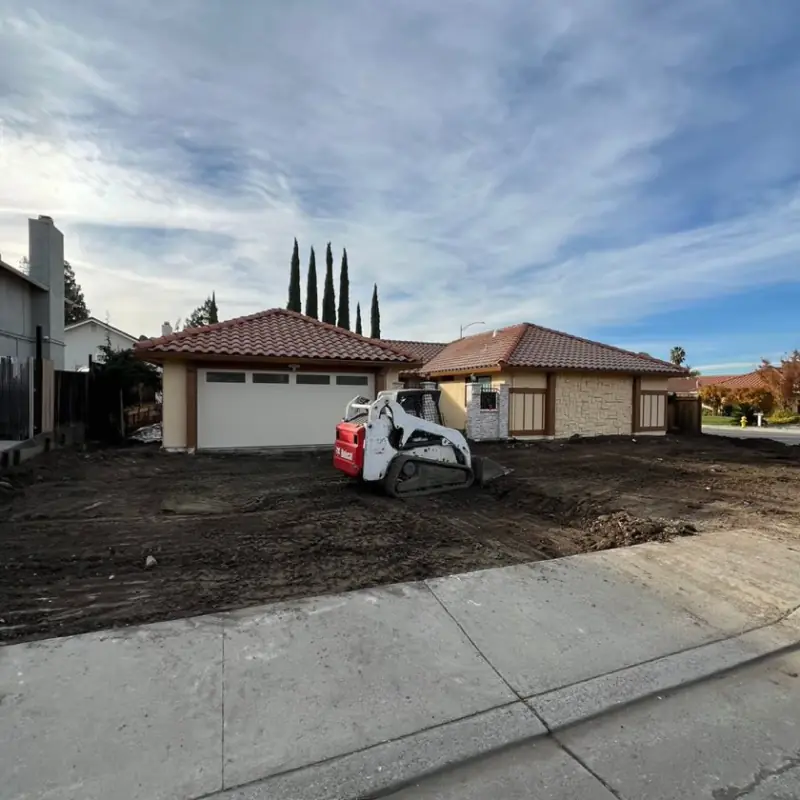
Drag each slider to compare the same yard before and after. Each one started with base preparation and grading before the new surface went in.
See All Projects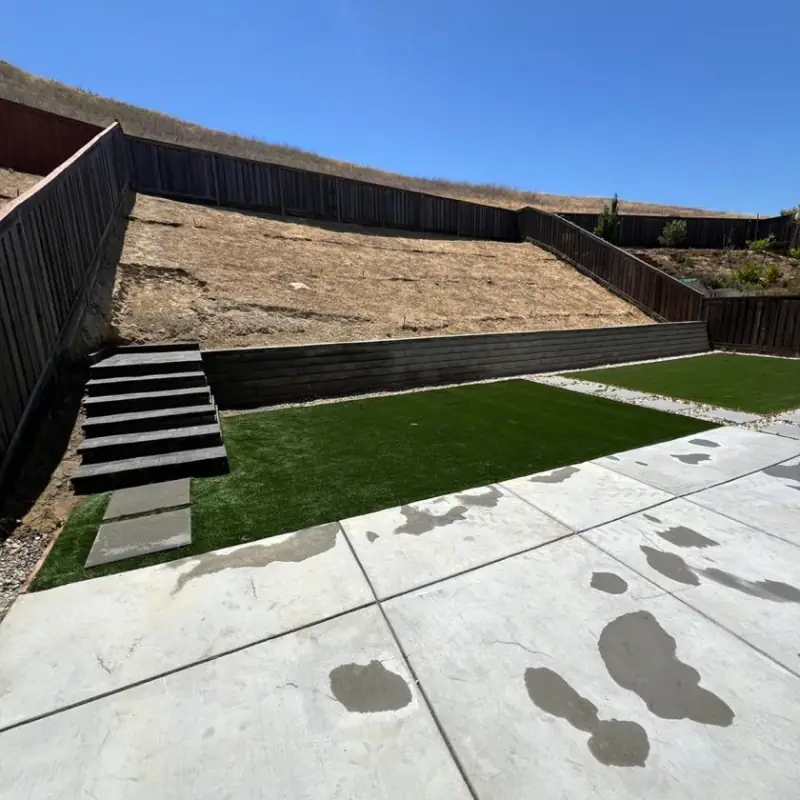
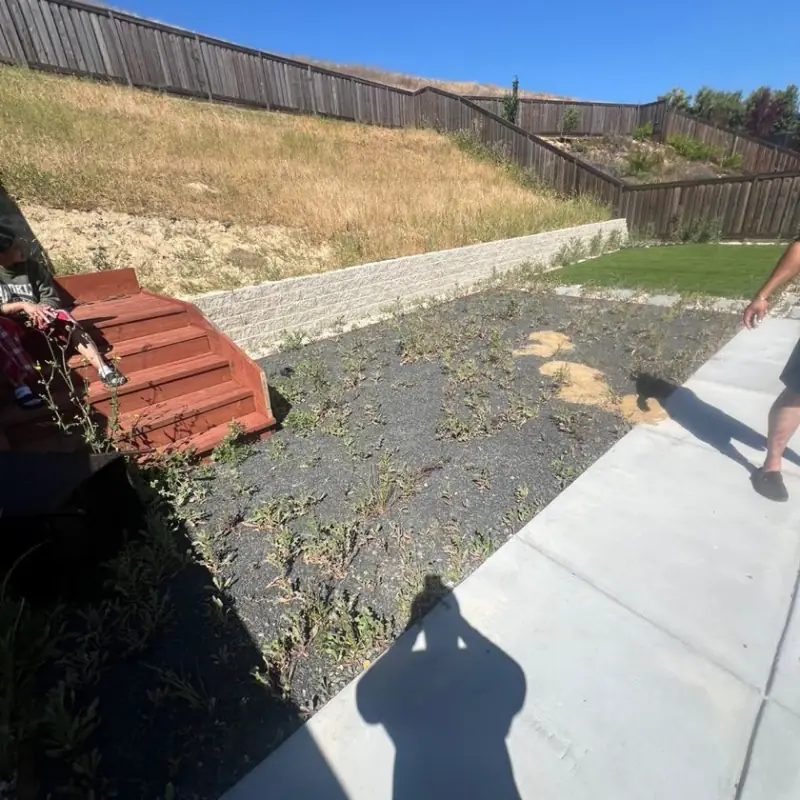 BeforeAfter
Hillside yard · Steps and turf
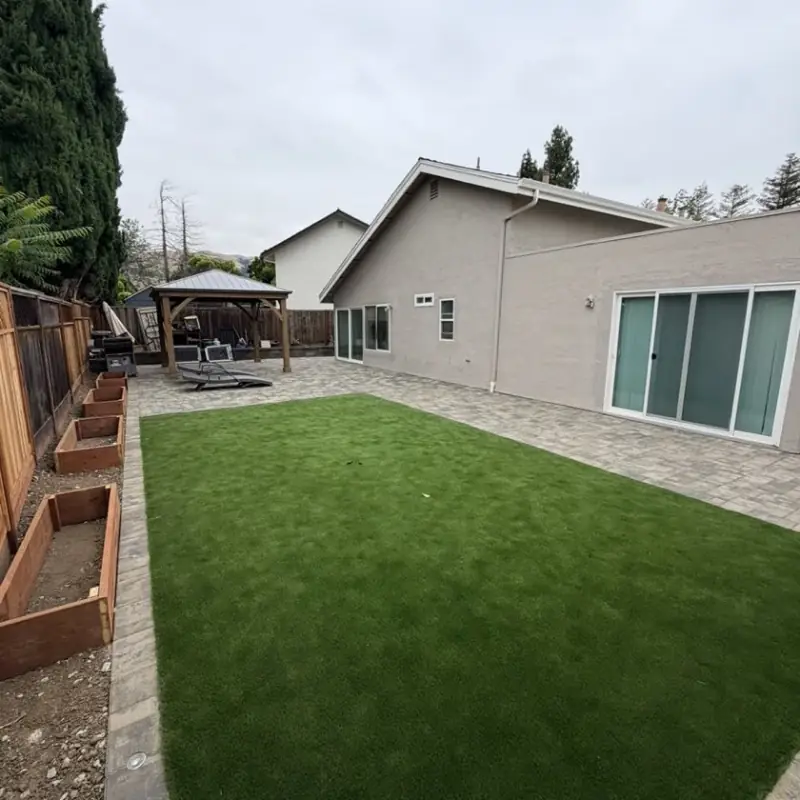
 BeforeAfter
Gravel yard · Turf and pavers
 BeforeAfter
Front yard · Turf and stepping stones
Pricing
Excavation contractors price earthwork by volume, access and what happens to the soil. These are the items we measure before writing a number.
Length times width times depth in feet, divided by 27, gives the cubic yards that move.
Clay, rock and buried debris dig slower and can call for a breaker.
Trucking soil off site, plus dump fees, can be a large share of the bill.
Side yards and hillsides mean smaller machines and more hours per yard.
Grading permits, soils reports or retaining walls add scope on some lots.
Fill placed in compacted layers and a fine grade take time but prevent settling.
Our excavation cost guide walks through a sample volume calculation, or send photos for a written quote. Get a written quote
Permits and rules
Whether earthwork needs a grading permit depends on the city, the volume of soil and the depth or slope. Several Bay Area cities draw the line around 50 cubic yards, and some limit grading in the rainy season. Excavation for a footing under a valid building permit is often covered by that permit.
Before any excavation, USA North 811 needs at least two working days' notice to mark buried lines.
Earthwork answers
Hiring an excavation company usually comes down to three questions: what the work will cost, whether a permit is needed and how the soil volume is measured. These answers use published cost data and the rules Bay Area cities post.
Yelp's cost guide, updated October 2026, puts excavation services at $825 to $6,500 nationally and soil removal at $50 to $180 per cubic yard. Leveling a 1,600-square-foot lawn runs $2,000 to $6,400, and steep slopes cost 75 to 200 percent more to dig or regrade.
Those figures are not our price. Bay Area access, soil and hauling move a job within or beyond them, which is why our estimate lists volume, hauling and compaction as separate lines.
ProMatcher reports California landscape grading at $127.35 per hour with the machine and operator, within a range of $110.10 to $144.60. Renting an excavator alone runs about $2,200 per day there. Hourly rates suit short or uncertain jobs; larger digs are usually priced by volume instead.
ProMatcher does not date its figures, and they are not our rates. Our written estimate states whether a job is priced by the hour or by the scope, before work begins.
Volume in cubic yards is length times width times depth, all in feet, divided by 27. A pad 20 feet by 30 feet, cut one foot down, holds 600 cubic feet, roughly 22 cubic yards in the ground. Dug soil loosens and takes more room in a truck than it did in place.
Knowing the volume lets you compare bids line by line and see whether a grading permit threshold, often 50 cubic yards in Bay Area cities, applies to your project.
Excavation is digging down: it opens room below ground for footings, trenches or a pool hole. Grading is shaping across: it raises, lowers and compacts the surface to a set elevation and slope so water runs off. On most home projects the digging comes first and the grading finishes the job.
Our guide to excavation vs grading covers which one your project needs and the equipment each uses.
Often only above a set volume or depth. San Rafael exempts grading under 50 cubic yards, San Ramon requires a permit at 50 cubic yards or a 5-foot cut, and Oakland adds slope limits and a winter moratorium. Retaining walls and hillside cuts can trigger permits on their own.
We check the rule for your address before quoting and file the permit when one applies.
| Item | Published figure |
|---|---|
| Excavation services, national | $825 to $6,500 (Yelp) |
| Soil removal, per cubic yard | $50 to $180 (Yelp) |
| Leveling a 1,600 sq ft lawn | $2,000 to $6,400 (Yelp) |
| Steep-slope premium | 75% to 200% more (Yelp) |
| California landscape grading, per hour | $127.35 with machine and operator (ProMatcher) |
| California excavator rental, per day | $2,200 (ProMatcher) |
Third-party figures from Yelp's excavation cost guide and ProMatcher's California excavation report, checked October 24, 2026; ProMatcher gives no date for its data. Not a Cicarelli price.
Updated · By Athalyson Bernardo, Owner of Cicarelli Contractors · CSLB #1109419
FAQ
Send photos of the area, rough measurements and the way in, and we will reply with a written estimate. We take calls Monday to Saturday, 9 am to 5 pm, and the site FAQ covers the rest.
Call (650) 404-7049An excavation contractor digs, moves and compacts soil so a project can be built: footings, utility and drain trenches, building pads and yard grading. The work includes marking utilities, choosing equipment that fits the site, hauling or reusing the soil and leaving the ground at the elevation and slope the plan calls for.
Yes. Many Bay Area lots only fit a mini excavator or a skid steer through the side yard, and some spots need hand digging. Smaller machines move less per hour, so access is one of the first things we check, and it shows up in the written estimate.
The dry season, roughly late spring to early fall, works best for grading and compaction, because wet clay is hard to compact. Some cities also restrict grading in winter; Oakland bars it from October 15 to April 15. Winter is a good time to plan and file permits.
It is either reused on site as fill, where the plan and the soil allow, or loaded and hauled away. Clean soil reused on the lot saves trucking, while clay, debris or extra volume usually leaves. The estimate shows which, because hauling is often a large share of the cost.
Yes. Fill is placed in thin layers and each one is compacted before the next, so the surface does not settle under a patio, turf or a foundation. Where the city or an engineer requires it, compaction is tested and documented in a report.
Call or text (650) 404-7049, Monday to Saturday, 9 am to 5 pm, or send photos of the area, rough measurements and the way in through the free estimate form. A written, itemized earthwork estimate follows within 24 hours of the photos or the site visit.
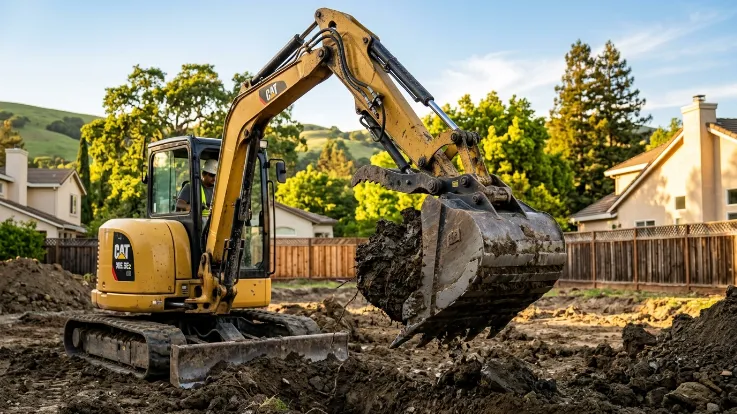 GuideExcavation Cost in the Bay Area: What Drives the Price in 2026
 GuideExcavation vs. Grading: The Difference for Bay Area Projects
 GuideThe Best Season for a Demolition Project in the Bay Area
Updated · By Athalyson Bernardo, Owner of Cicarelli Contractors