
Hard Demolition for an ADU or Home Addition in the Bay Area: What to Plan
What hard demolition an ADU or home addition needs in the Bay Area, the permits and notices that come first, and how the cleared…
Quick answer
Excavation and grading are two different earthwork steps. Excavation digs soil out to create space below the surface, such as footings, trenches or a pool hole. Grading reshapes the ground surface by cutting, filling and compacting soil so it sits at the right height and drains away from buildings. Most Bay Area projects need both.
Related service: Demolition services
Homeowners across the Bay Area often get two bids for the same yard and find one says “excavation” while the other says “grading.” The words are related, but they describe different work, different equipment and sometimes different permits.
This excavation vs grading guide is for owners in Contra Costa, Alameda, San Mateo, Santa Clara and the other Bay Area counties who are planning an ADU pad, a pool removal, a new patio or a drainage fix. It explains what each service does, when you need one or both, and how local rules change the plan.
At Cicarelli Contractors we handle excavation and grading as part of demolition, pool removal and outdoor living projects, so the same crew that digs is usually the crew that sets the final grade.
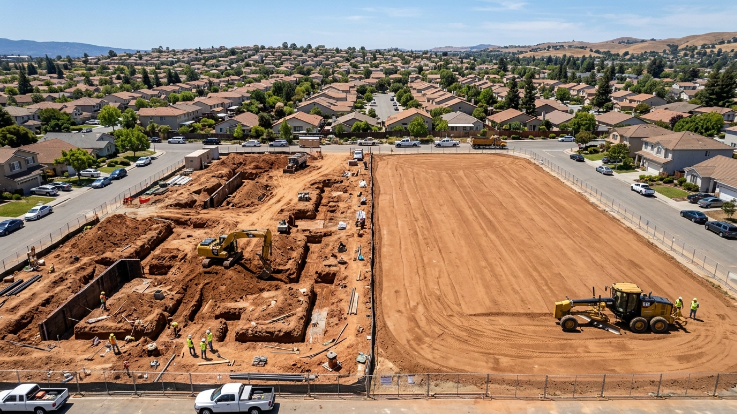
Excavation removes soil, rock or old fill to open space below the existing ground, for foundations, utility trenches, basements or retaining wall footings. Grading works on the surface. It moves soil from high spots to low spots, adds or removes fill, and compacts it to a planned elevation and slope so water runs where it should.
The simplest way to remember excavation vs grading: excavation is about depth, grading is about shape. Excavation answers “how deep and how wide?” Grading answers “how high, how flat and which way does water flow?”
| Factor | Excavation | Grading |
|---|---|---|
| Main purpose | Create space below the surface | Set surface elevation, slope and drainage |
| Typical work | Digging footings, trenches, pool holes, removing unsuitable soil | Cut and fill, leveling, sloping, compaction |
| Common equipment | Excavators, mini excavators, backhoes, dump trucks | Skid steers, dozers, graders, plate and roller compactors |
| Main risks | Buried utilities, unstable trench walls, hauling volume | Poor drainage, settling from weak compaction |
| Typical result | Open footing, trench or hole ready for the next trade | Building pad, patio or driveway base, sloped yard |
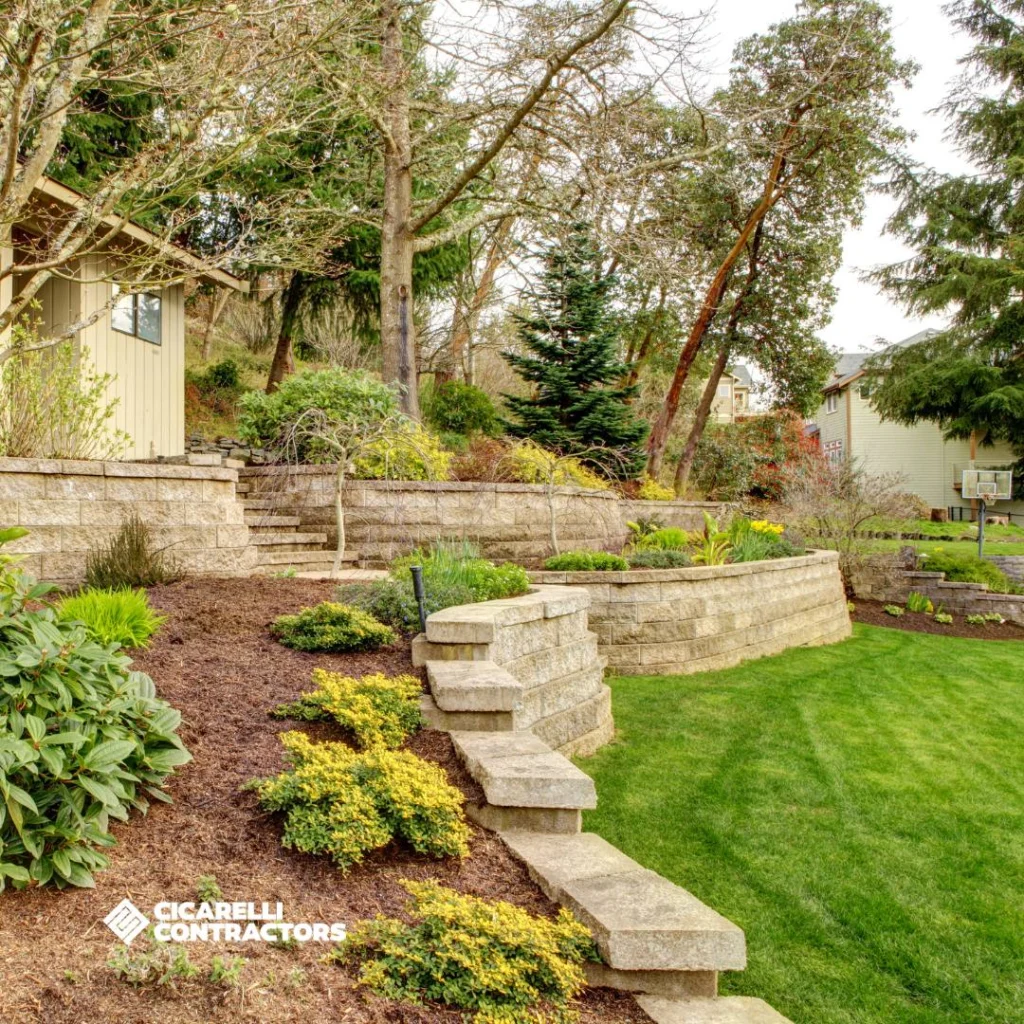
Grading in construction is the work of shaping the ground to a planned elevation and slope. Crews cut high areas, fill low ones, then compact the soil in layers so it can carry a slab, pavers or a lawn. Good grading also directs rainwater away from foundations and toward approved drainage, which matters during Bay Area winters.
There are two stages. Rough grading sets the general shape of the site after demolition or excavation. Fine or finish grading brings the surface to its final height, often within an inch or so, right before pavers, turf, concrete or topsoil go down.
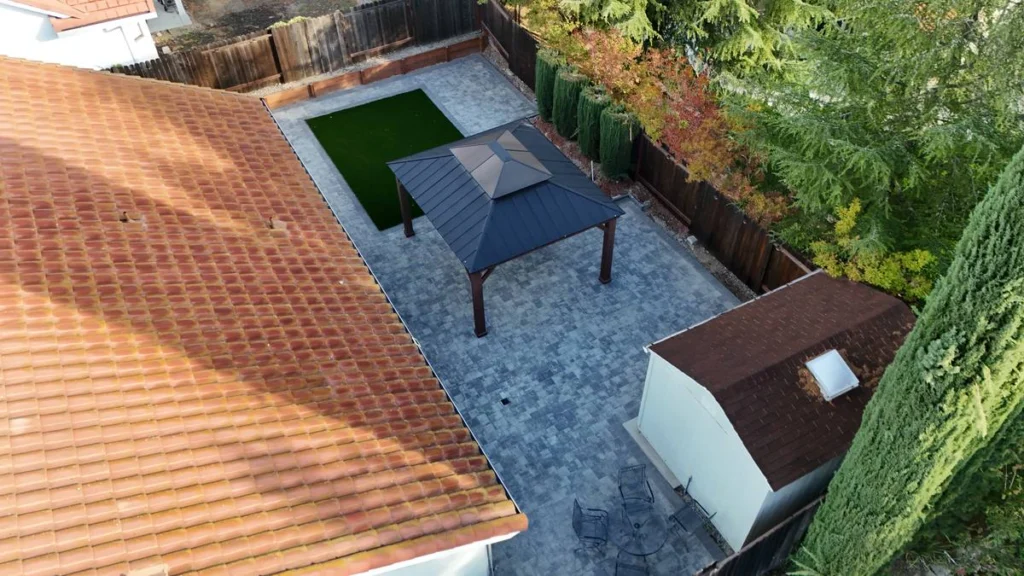
Compaction is the part homeowners rarely see but always feel later. Loose fill settles, and settling shows up as sunken pavers, cracked slabs or water pooling against the house.
You need excavation when something has to go below the surface: footings, a utility trench, a drain line or a pool shell that is coming out. You need grading when the surface itself is wrong: too high, too low, sloped toward the house or uneven. Most residential projects need excavation first and grading after.
Often, yes, but the trigger depends on your city or county. Many jurisdictions require a grading permit once soil volume, depth or slope passes a set threshold, while excavation for a footing or pool under a valid building permit may be covered by that permit. Always confirm with your local building department before work starts.
Oakland is a clear example. Its grading permit page lists triggers that include excavation or fill over 50 cubic yards where the slope exceeds 20% or the depth exceeds five feet, and combined excavation and fill over 500 cubic yards. The same page exempts excavation for a basement, footing, retaining wall or swimming pool covered by a valid building permit, within volume limits. You can read the full list on the City of Oakland grading permit page.
Other cities set different numbers, so a project that needs no grading permit in one town may need one a few miles away. The CSLB building permit guidance gives the same advice: check with your local building department. On our jobs, Cicarelli pulls the demolition or building permit and schedules the city inspections.
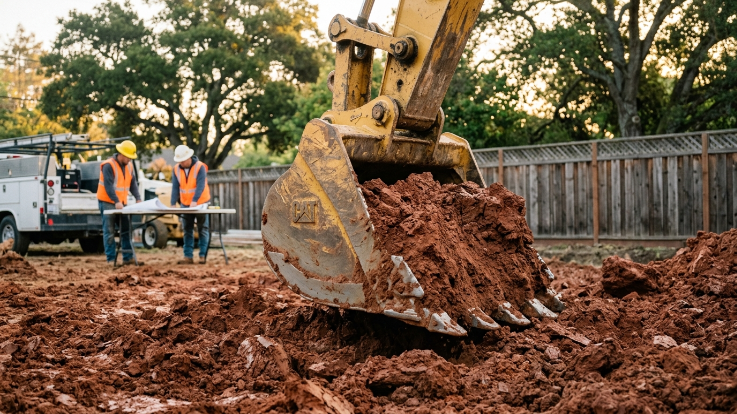
Before any excavation, the contractor should confirm the permit path, mark the work area and request a utility locate through 811. In Northern California, USA North 811 requires at least two working days’ notice before excavation begins. Skipping this step risks hitting gas, water, power or communication lines that are buried in almost every Bay Area yard.
Bay Area soils vary from sandy fill near the shoreline to heavy clay and rock in the hills. Clay holds water and is hard to compact when wet, and hillside lots often need retaining walls and engineering. Rain also matters: some cities restrict grading in the wet season, which can push earthwork to the dry months.
Oakland, for example, runs a wet weather grading moratorium from October 15 to April 15, and its building department says grading approval is normally not granted in that period except for emergency stabilization. Details are on the City of Oakland wet weather grading page. Not every city has the same rule, but planning earthwork for the dry season is a safe habit across the region. Our post on the best season for a demolition project goes deeper on timing.
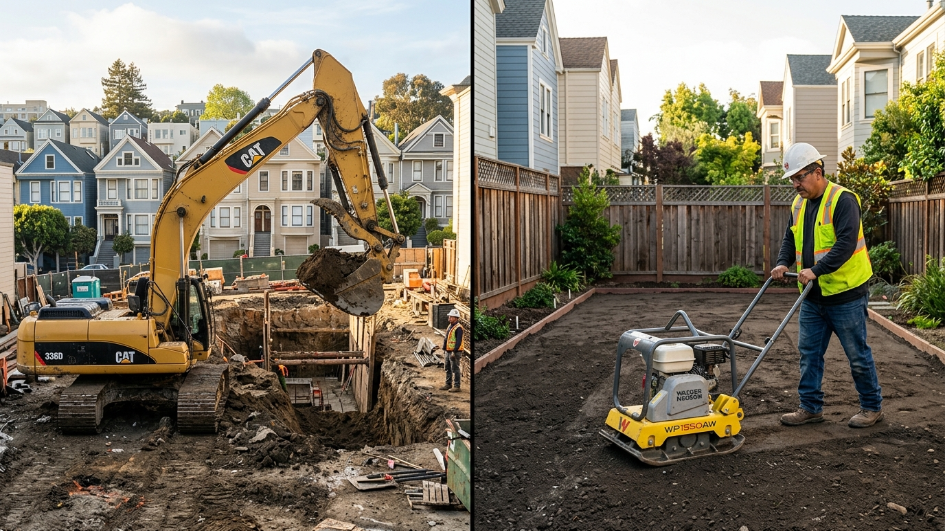
Excavation cost is driven mostly by volume, depth, soil type, access and how much material must be hauled away. Grading cost is driven by area, how far the surface must change, imported fill and the compaction standard required. Many bids combine both, so ask for each item listed separately to compare quotes fairly.
When you compare bids, check whether each one includes:
A bid that says “excavation” may not include finish grading, and a bid that says “grading” may not include hauling. For a full breakdown of what drives price, see our guide to excavation services cost in the Bay Area.
Excavation usually comes first. Crews remove old surfaces, soft soil or material for footings and trenches, then rough grading shapes the site. After utilities, footings or backfill are in place, finish grading sets the final height and slope. On small patio jobs both can happen within the same week with the same crew and equipment.
Yes. Earthwork is the general term for moving soil on a site, and it includes excavation, filling, grading and compaction. Grading is the part of earthwork that sets the final shape and slope of the ground. Permit rules in many Bay Area cities use these terms, so ask your contractor how your local code defines them.
There is no single average that fits Bay Area yards, because cost depends on area, how much soil must move, imported fill, access and compaction requirements. A flat yard needing light leveling costs far less than a sloped lot needing cut and fill. Ask for a written, itemized estimate based on your actual site conditions.
It depends on your city and how much soil moves. Many Bay Area cities exempt minor leveling but require a grading permit once volume, depth or slope passes a local threshold. Oakland, for example, uses 50 and 500 cubic yard triggers. Check with your building department or ask your contractor to confirm before work begins.
Yes, and it is often better. When one contractor handles demolition, excavation, grading and the new surface, there is no gap between trades and one party is responsible for compaction and drainage. Make sure the contractor holds a valid California license that covers the work, and that the written contract lists every stage.
Small jobs like a patio base can take a few days, while an ADU pad or full pool removal can take longer, depending on volume, access, soil, weather and inspection scheduling. Permit review adds time before work starts. A good contractor will give you an estimated schedule in writing and explain what could change it.
Cicarelli Contractors is a licensed general contractor based in Richmond, CA, CSLB License #1109419, classification B General Building. Our team brings 20+ years of experience and works in nine Bay Area counties. One crew handles demolition, excavation, grading and the new surface, so the finished grade matches what goes on top.
On full pool removals, we break out the shell, backfill and compact the hole, and provide the engineering compaction report when the city requires it. One Google reviewer noted that our team handled the permit and delivered the compaction report on their fiberglass pool removal. Another described a drainage job that “came out perfect.”
You can check our license on the CSLB license lookup and browse finished work in our project gallery.
If you are not sure whether your project needs excavation, grading or both, start with a site review. Cicarelli Contractors can often quote from photos, and we offer a free site visit when access is unclear. Request your free, written estimate within 24 hours.