
Hard Demolition for an ADU or Home Addition in the Bay Area: What to Plan
What hard demolition an ADU or home addition needs in the Bay Area, the permits and notices that come first, and how the cleared…
Quick answer
Excavation cost in the Bay Area depends on how many cubic yards come out, soil and rock conditions, depth, site access, hauling and disposal, permits and the finished grade required. A tight hillside backyard in clay can cost far more per yard than an open, flat lot, so an itemized written estimate is the only reliable number.
Related service: Demolition services
Searching online for excavation prices usually returns national averages, old data or ranges so wide they do not help you budget. Bay Area sites add their own variables: narrow side yards, hillside lots, heavy clay, strict city rules and a rainy season that can shut down earthwork.
This 2026 guide is for homeowners in Contra Costa, Alameda, San Francisco, San Mateo, Santa Clara and the North Bay counties who are planning an ADU pad, pool removal, drainage work or a new patio. It explains what drives excavation cost, how to estimate your own volume, and how to compare bids line by line.
Cicarelli Contractors provides excavation and grading together with demolition and pool removal, so the advice below comes from how we scope these jobs every week.

There is no honest single price for excavation in the Bay Area, because two jobs with the same footprint can differ in depth, soil, access and hauling. The most useful way to budget is to estimate the volume in cubic yards, list the site conditions that slow the work, and ask each contractor for an itemized, written estimate.
Many published cost guides use national data, and some local pages rely on figures that are several years old. Treat any range you find online as a rough starting point, then let site-specific quotes set your real budget.
We do not publish a price list for the same reason. A yard with open driveway access and sandy soil and a hillside lot reached only by wheelbarrow are completely different jobs, even if they look similar on paper.
Six factors drive most of the price of a residential digging job: volume, soil type, depth, access, hauling and disposal, and what happens after the digging. Volume sets the baseline. The other five decide how fast the crew can work, which machines fit, how many truckloads leave the site and how much finishing work follows.
| Cost driver | Why it matters | What to ask |
|---|---|---|
| Volume (cubic yards) | More material means more machine hours and more truckloads | How many cubic yards did you estimate? |
| Soil and rock | Clay, rock and old buried concrete dig slower and may need a breaker | What happens if you hit rock or debris? |
| Depth | Deeper cuts may need shoring, benching or engineering | Does the depth require shoring or an engineer? |
| Site access | Narrow side yards limit machine size and slow loading | What equipment fits, and is hand work included? |
| Hauling and disposal | Trucking and dump or recycling fees can be a large share of the bill | Are hauling and disposal fees included? |
| Backfill, grading and compaction | Imported fill, compaction in layers and testing add cost | Is finish grading and compaction included? |

The conditions that raise digging and hauling prices most often in the Bay Area are limited access, slopes, heavy clay, hidden debris and buried utilities. Many older lots in Oakland, Berkeley, San Francisco and the Peninsula have narrow side yards, so crews use mini excavators, skid steers or even wheelbarrows, which adds hours to every cubic yard moved.
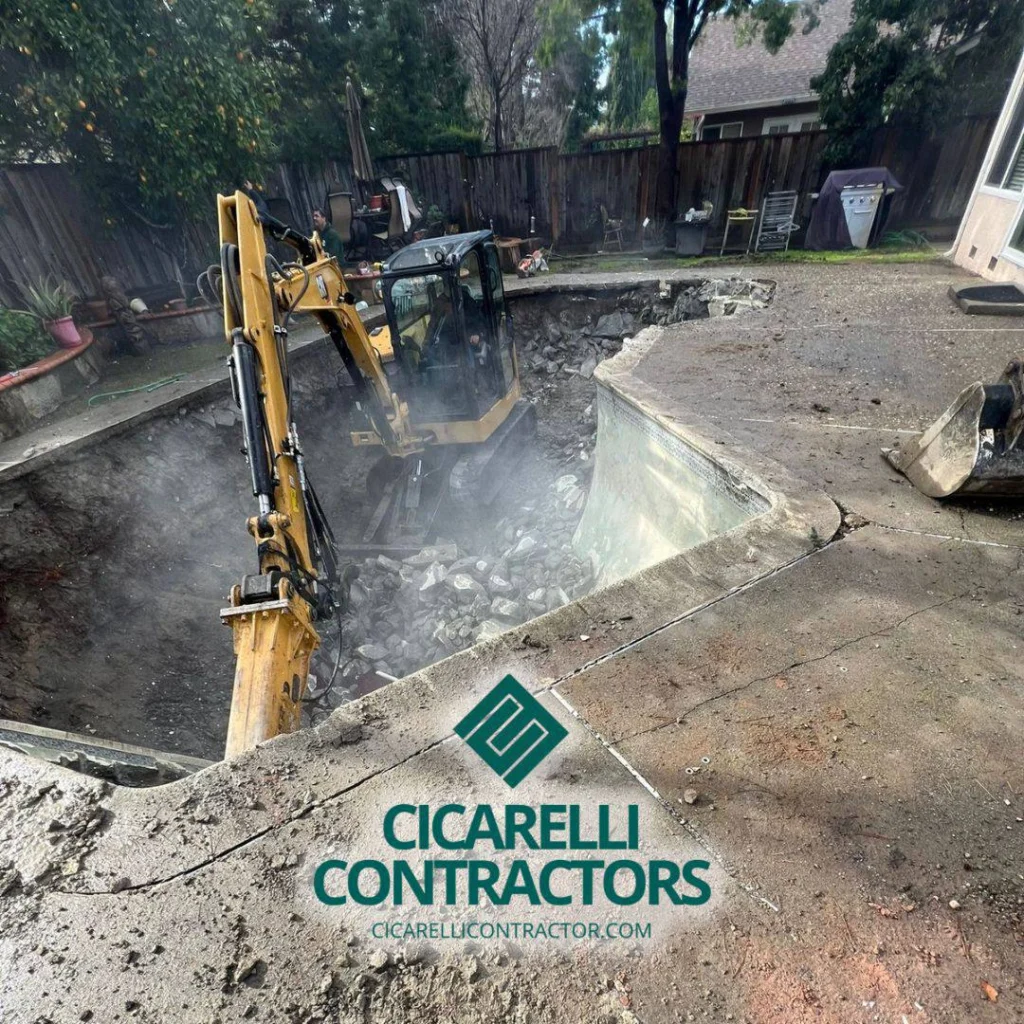
Start by estimating volume. Multiply length by width by depth in feet, then divide by 27 to get cubic yards. Add the site conditions from the table above, decide what soil stays on site and what leaves, and use that information to request comparable, itemized bids from at least three licensed contractors.
For pool removals, our pool demolition cost guide walks through similar inputs.

A complete excavation quote should list the scope, estimated volume, equipment, hauling and disposal, backfill or import material, compaction, finish grading, permits, inspections and cleanup. It should also say what happens if the crew finds rock, debris or water. Missing items are the most common reason a low bid ends up costing more.
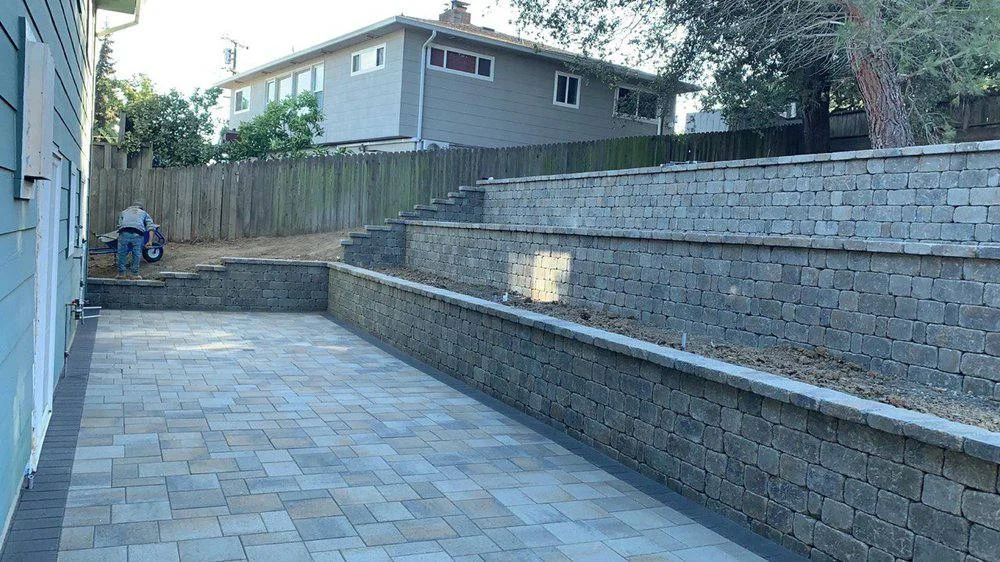
Broken concrete does not always go to landfill. CalRecycle notes that recycled aggregate is produced by crushing concrete, so ask where your contractor takes material. See CalRecycle’s construction and demolition recycling page. Our guide to concrete slab removal cost covers that part of the job.
Permits, utility locating and weather affect the price mostly through time. A grading permit may require plans or engineering, utility marking must happen before digging, and some cities restrict grading in the rainy season. Each step can move your start date, so build them into the schedule before comparing contractor timelines.
Permit triggers vary by city. Oakland’s grading permit rules, for example, list triggers such as excavation or fill over 50 cubic yards on slopes over 20% or deeper than five feet, and combined excavation and fill over 500 cubic yards. Read them on the City of Oakland grading permit page. Your city may use different numbers.
Before digging, the contractor must request a locate through USA North 811, which requires at least two working days’ notice. Oakland also runs a wet weather grading moratorium from October 15 to April 15, so earthwork there is planned for the dry months. For the full timing picture, see the best season for a demolition project.
Compare excavation bids only after each contractor prices the same scope, the same volume and the same finished condition. Then check the license, the written contract and the payment schedule. The lowest number is not a better deal if it leaves out hauling, compaction or permits that another bid includes.
Check every contractor’s license with the CSLB. California law also limits the down payment on a home improvement contract to 10% or $1,000, whichever is less, according to the CSLB prescreening checklist. Get the scope, schedule and any warranty in writing.
For more on the difference between digging and shaping a site, read our guide to excavation vs grading.
It depends on depth, soil, shoring, access and how much soil must be exported. In the Bay Area, basement digs under or next to existing homes usually involve engineering, shoring and city review, which often cost as much attention as the digging itself. Get an engineer’s plan first, then ask for itemized excavation bids.
Both methods are common. Small or uncertain jobs are often priced by machine hour with an operator, while larger jobs with a clear volume are priced per cubic yard or as a lump sum. Whatever the method, ask the contractor to state the estimated volume, the equipment and what is included in writing.
Not always. Some quotes cover digging only and price trucking, dump or recycling fees separately, while others include everything. Hauling can be a large share of the total on Bay Area jobs, especially where trucks cannot get close. Ask each contractor whether hauling and disposal are included before you compare prices.
Often, but the rules vary by city and county. Many cities require a grading permit above certain volumes, depths or slopes, while excavation for footings or a pool may fall under the building permit. Check with your local building department, and make sure your contract says who pulls permits and schedules inspections.
Quotes vary because contractors make different assumptions about volume, soil, access, hauling and finishing work, and some leave items out. One bid may include compaction and finish grading while another stops at digging. Ask every bidder to price the same written scope and list exclusions, so you are comparing the same job.
For many residential jobs, yes. Clear photos of the work area, the access path and any existing concrete or structures, plus rough measurements, are often enough for a written estimate. When access, slope or buried conditions are unclear, a site visit gives a more reliable number. Cicarelli offers both options free.
Cicarelli Contractors is a licensed general contractor based in Richmond, CA, CSLB License #1109419, serving nine Bay Area counties. Our team brings 20+ years of experience, and one crew handles demolition, excavation, grading and the new surface. That means one written estimate covers the whole scope, from breaking out old concrete to the compacted, finished grade.
Send photos and rough measurements, or ask for a free site visit when access is unclear. Request your free, written estimate within 24 hours.