
Building an ADU on a Former Pool Site in the Bay Area: What the Ground Needs
Planning an ADU where your pool is or was? Here is what the ground needs: full removal, engineered fill, a compaction report and the…
Quick answer
Yes. Bay Area cities and counties require a pool demolition permit before you remove or fill in a pool, and San Mateo notes the California Building Code requires permits to demolish any structure, including pools. The permit covers the removal method, fill, capped utilities, an inspection before backfill, a final inspection and, in many cities, a soils engineer’s report.
Related service: Pool removal services
Pool removal is not just a demolition job. It is permitted construction, with plans, inspections and a final sign-off that stays with your property. Getting the paperwork right is what lets you sell or build later without surprises.
This guide is for Bay Area homeowners who want to understand the permit before hiring anyone. It compares published requirements from San Mateo, Millbrae, Menlo Park, Mountain View, Danville and Contra Costa County, and explains how we handle permits on our pool removal jobs at Cicarelli Contractors.
In practice, yes. The City of San Mateo states that a permit is required to fill or remove an existing swimming pool, because the California Building Code requires building permits to demolish any structure. Contra Costa County, Mountain View, Danville, Millbrae and Menlo Park publish their own pool demolition requirements, and permits must be issued before work starts.
Filling a pool with soil counts. San Mateo’s Pool and Spa Abandonment and Demolition Guide says the requirement includes removing pools or filling them with fill material. Contra Costa County states that a permit is required to demolish or abandon a pool and that a grading permit is often required too, on its pools and spas page.
Each city sets its own details, so the CSLB advises checking with your local building department, as explained in its building permit guidance.
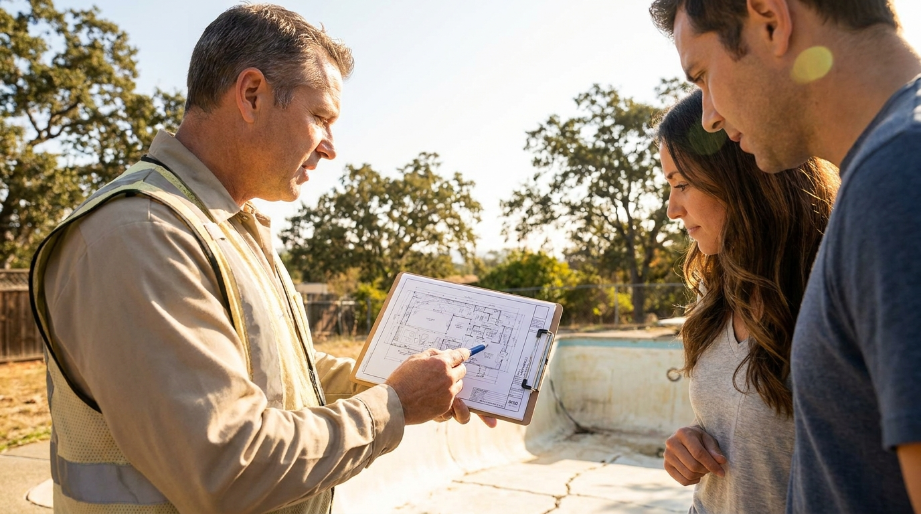
Most Bay Area applications need a written scope of work, a site plan showing the pool’s size and distance to property lines and buildings, the removal method, and the fill material. When the shell stays, cities want the demolition depth and drainage openings shown. Some also ask for HOA approval, an engineer’s plan or a grading permit.
Mountain View’s list is a good example. Its swimming pool demolition page asks for plans signed by the designer, licensed architect, licensed contractor or homeowner who prepared them, showing:
San Mateo asks for plan sets with a written scope, the owner’s name, address and parcel number, and the designer’s contact details. We prepare and submit this package as part of our pool removal work.
The method you choose changes what the permit requires and what the land can be used for afterward. Partial removal, often called abandonment, usually means drainage openings, inspected fill and a landscaping-only restriction. Full removal means the whole shell comes out, fill is compacted to a set standard, and a soils engineer often reports before final.
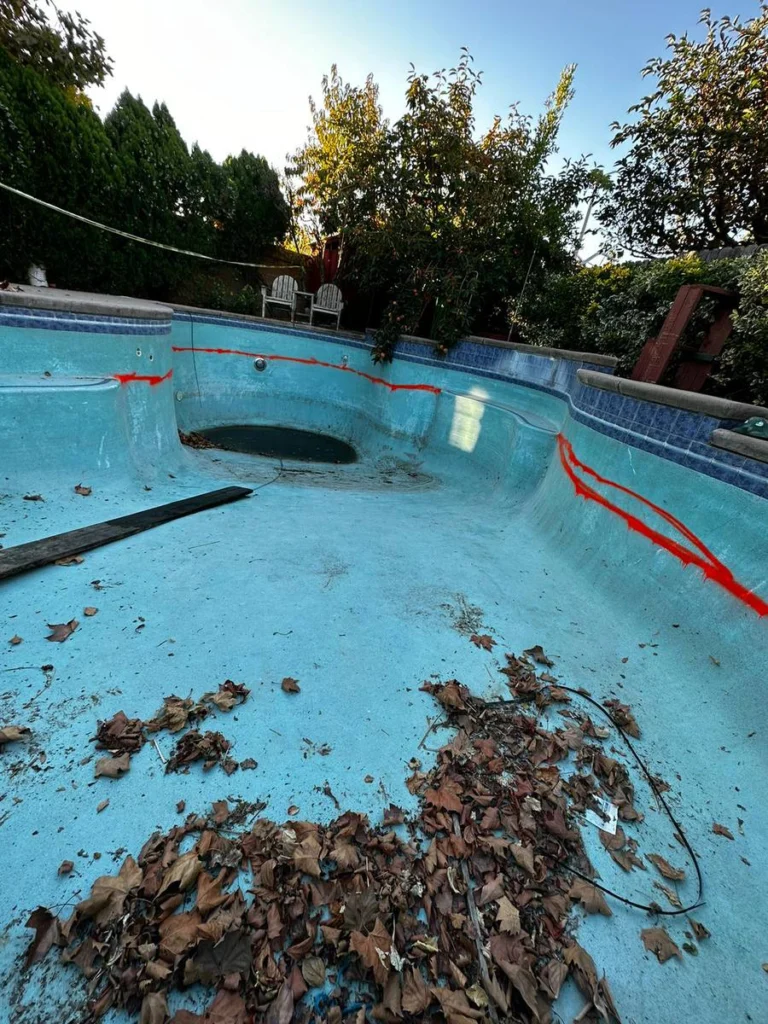
San Mateo shows the difference clearly. For abandonment, the site plan must label the outline of the abandoned shell as “UNBUILDABLE SPACE,” and the floor must be broken out to expose an opening at least 24 inches in diameter at the lowest point. For complete removal, fill goes in 6 to 12 inch lifts compacted to 90 percent, and a report from a California licensed geotechnical or soils engineer must confirm complete shell removal and proper compaction.
Millbrae goes further. Its partial pool demolition acknowledgement asks owners to declare the area will be used only for open space, garden or landscape, and to disclose the partial demolition upon sale or transfer of the property. For a fuller comparison, read what you can build after partial pool removal.
Expect at least two inspections: one in progress, with the shell broken and drainage openings visible before any fill goes in, and a final inspection after grading. Some cities also require a soils engineer’s report at final. Skipping the in-progress inspection can mean extra fees or digging the fill back out.
We schedule the city inspections and meet the inspector on site. On full removals, we provide the engineering compaction report when the city requires it.
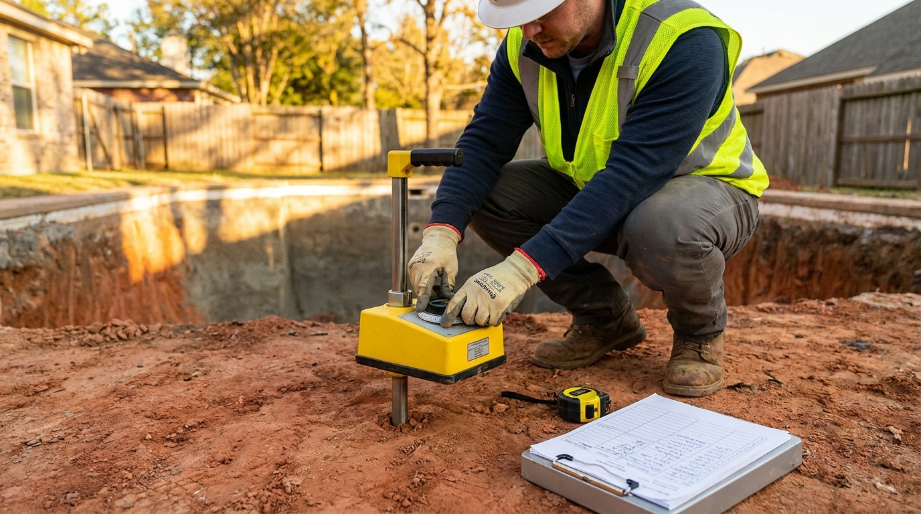
The basics match across the region: permit first, drained pool, capped utilities, inspection before fill, final sign-off. The details do not: demolition depth, drainage openings, compaction standards and engineering reports all vary, and some cities restrict what goes on a partially removed pool. Start with the table, then read your city’s handout.
| Jurisdiction | Partial removal (shell stays) | Compaction and reports |
|---|---|---|
| San Mateo | Single family and duplex only; at least a 24-inch floor opening; area marked “unbuildable space” | Full removal: 90 percent in 6 to 12 inch lifts; geotechnical report at final |
| Millbrae | Remove upper 24 inches; at least four drainage openings; landscape or garden use only | Complete removal required under a structure, driveway, patio or deck |
| Menlo Park | Bond beam and top 3 feet of walls removed when the floor is punctured | 90 percent; geotechnical report from a licensed engineer |
| Mountain View | At least 12 inches removed; at least 20 percent of the floor punched out | Compaction report from a licensed soils engineer at final |
| Danville | 2-inch drainage holes about 2 feet apart | 90 percent in 12-inch layers; at least two inspections |
| Contra Costa County (unincorporated) | Permit required to abandon a pool | Grading permit often required |
Menlo Park’s details come from its pool demolition permit requirements, and Millbrae’s main rules from its pool and spa demolition requirements.
Before demolition, the pool must be drained the approved way and its gas, water and electrical lines terminated. Pool water should never go to a street gutter or storm drain. Depending on the site, you may also need a grading permit, HOA approval and an 811 utility locate before any digging starts.

Either the owner or a licensed contractor can usually apply, but most homeowners let the contractor handle it because the contractor is doing the work and meeting the inspectors. Skipping the permit can leave you with re-inspection fees, an unfinaled pool on record, and delays when you sell or apply for a future building permit.
San Mateo, for example, says an owner or contractor can choose either option. Menlo Park says the demolition permit must have passed its final inspection before a permit for new construction over the pool area is issued. An unpermitted fill-in can therefore hold up a future ADU or addition.
At Cicarelli Contractors, we pull the demolition or building permit, schedule the inspections and keep the paperwork moving. One Google reviewer noted that we handled the permit and delivered the compaction report on their fiberglass pool removal. You can check our license, CSLB #1109419, B General Building, and see our questions to ask a pool demolition contractor.
Yes, in Bay Area cities and counties. San Mateo states that a permit is required to fill or remove an existing pool, and that this includes filling it with fill material. Contra Costa County, Danville, Millbrae, Menlo Park and Mountain View also publish pool demolition requirements. Get the permit before any demolition or filling begins.
It depends on the city and how complete the application is. Mountain View lists a typical 5 to 8 business days to receive a permit, with staff comments within 5 business days. Cities that require grading permits, engineering plans or plan corrections can take longer, so ask your building department.
Fees vary by city and project scope. Mountain View, for example, lists a permit fee of $200 including inspection on its pool demolition page. Other jurisdictions charge differently, and grading permits or engineering reports add their own costs. Ask your contractor whether permit fees are included in the quote or billed separately.
Usually the property owner or a licensed contractor. San Mateo says an owner or contractor can choose either removal option, and Mountain View accepts plans signed by the designer, licensed architect, licensed contractor or homeowner who prepared them. Most homeowners let the contractor apply because the contractor schedules and attends the inspections.
Often, especially for full removal. San Mateo requires a California licensed geotechnical or soils engineer’s report for complete removal, Menlo Park requires a geotechnical report, and Mountain View requires a compaction report at final inspection. Even where not required, an engineer’s report helps if you plan to build on the spot later.
The work may need to be permitted after the fact, which can mean exposing the fill for inspection or bringing in a soils engineer. An unpermitted fill-in can also slow a sale or a future building permit. Contact your building department about how it handles unpermitted pool work at your address.
The permit is easier when the same team plans the method, prepares the site plan, does the demolition and meets the inspector. Tell us your city and your plans for the space, and send a few photos of the pool and access.
We serve all nine Bay Area counties, including San Mateo County and Contra Costa County. Request your free, written estimate and we will send it within 24 hours.