
Building an ADU on a Former Pool Site in the Bay Area: What the Ground Needs
Planning an ADU where your pool is or was? Here is what the ground needs: full removal, engineered fill, a compaction report and the…
Quick answer
After a partial pool removal, the old pool footprint is usually limited to landscaping such as lawn, artificial turf, planting beds or a garden. Many Bay Area cities do not allow structures over a buried shell, and some, like Millbrae, also exclude patios, driveways and decks. If you might build there, full removal with engineered compaction is the safer route.
Related service: Pool removal services
Partial removal is the most common way Bay Area homeowners close an unwanted pool, because it costs less and moves faster than taking the whole shell out. The catch is what it means for the ground afterward.
This guide is for homeowners who are planning a partial removal, or already have one in their yard, and want to know what they can build on that spot. It draws on Bay Area city rules from Millbrae, Menlo Park, Mountain View and Danville, and on how we plan these jobs at Cicarelli Contractors. Our partial pool removal service page explains the work itself.
Partial pool removal leaves the lower walls and floor of the pool in the ground. The crew breaks out the top section of the walls and the bond beam, punches drainage openings through the floor, and fills the remaining shell with compacted material. The surface looks like normal yard, but a concrete basin still sits underneath.
How much is removed depends on your city. Mountain View asks for a demolition depth of at least 12 inches below finish grade and at least 20 percent of the pool bottom punched out when the shell stays. Millbrae requires removal of the upper 24 inches and at least four drainage openings. Menlo Park calls for demolition of the bond beam and the top 3 feet of the walls when the bottom is punctured.
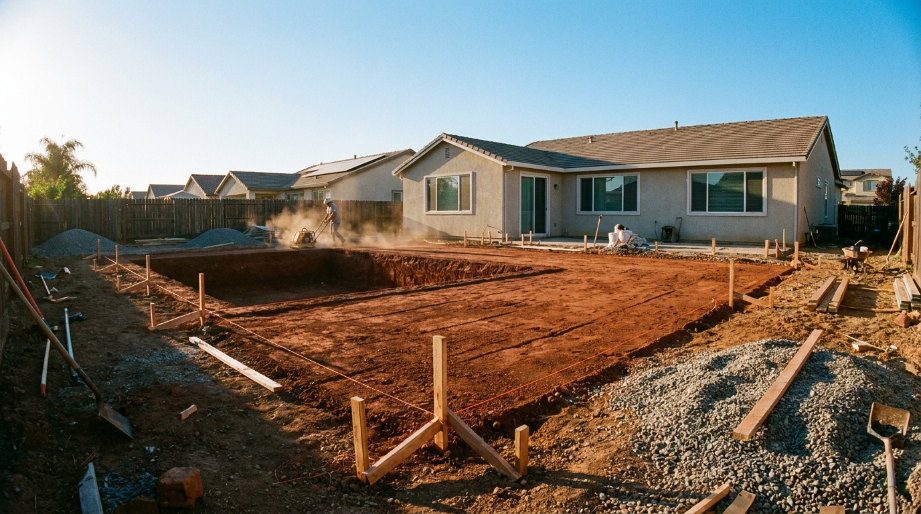
Those drainage openings matter. Without them, the buried shell can hold water like a bathtub, which softens the fill and can lead to settling at the surface. That is why every city above sets a minimum and why inspectors look at the broken shell before any fill goes in.
Soft landscaping is the safe answer almost everywhere: lawn, sod, artificial turf, planting beds and garden areas. Anything that carries weight or needs a footing, such as an ADU, addition, garage, deck footings or a slab, is usually not allowed over a buried shell. Patios and driveways fall in between and depend on your city’s rules.
| Planned use over the old pool | Typical status after partial removal | What to check |
|---|---|---|
| Lawn, sod or planting beds | Generally allowed | Topsoil depth and drainage away from the house |
| Artificial turf | Usually treated as landscaping | Base preparation and drainage |
| Garden paths, stepping stones | Often allowed | Whether your city counts them as hardscape |
| Paver patio or concrete slab | Depends on the city; Millbrae requires full removal under a patio | Your city’s partial removal rules |
| Driveway | Restricted in some cities; Millbrae requires full removal | Load and city rules |
| Deck on footings, pergola, shed | Often restricted over the shell | Footing locations and city rules |
| ADU, addition, garage | Generally needs full removal and engineered fill | Soils engineer and building department |
These are typical outcomes, not rules for every city. Always confirm with your building department before you design anything over the footprint. The CSLB’s building permit guidance gives the same advice: check with your local building department.
The concern is uneven support. A buried shell creates a hard concrete edge next to softer fill, and fill inside the old basin can settle differently from the native soil around it. A foundation or slab spanning both can crack or tilt. Poor drainage makes it worse, which is why cities control depth, openings and compaction.
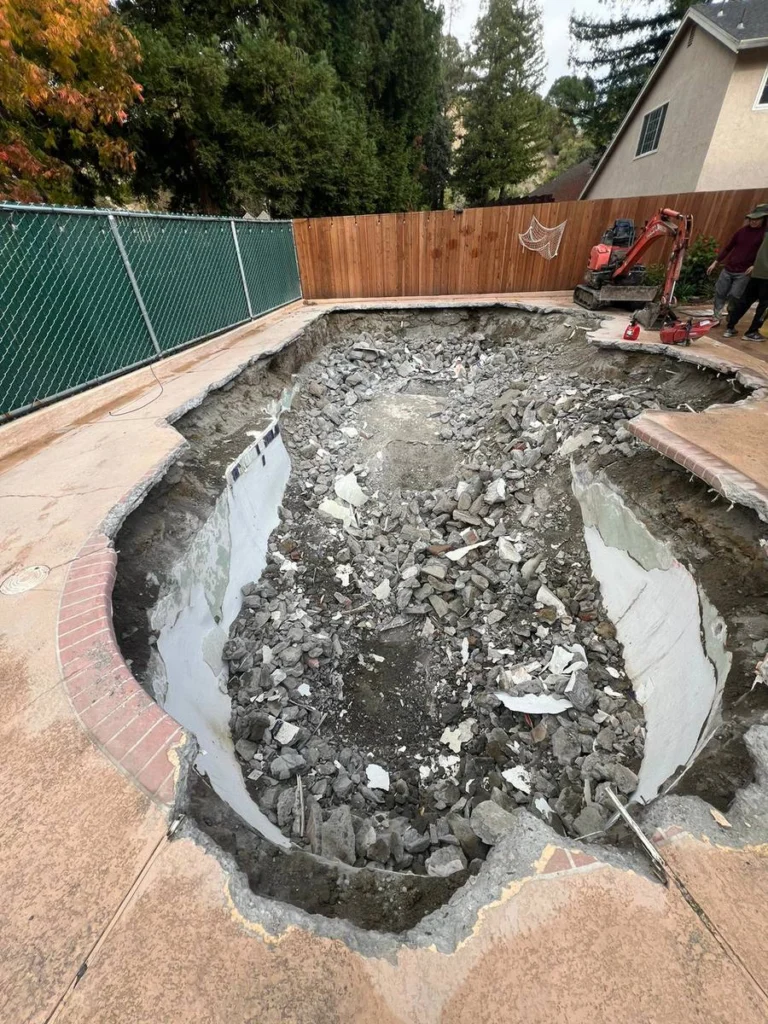
Water is the other issue. Bay Area winters can bring heavy rain, and if the floor openings are too few or too small, water can collect inside the basin. Saturated fill loses strength, and the surface above it can sag over time.
Full removal avoids both problems because the excavation is filled entirely with compacted soil. That is why cities that allow partial removal usually reserve building sites for full removal with engineered fill and, often, a soils engineer’s report.
Bay Area cities generally allow partial removal for landscaped areas but set their own minimums for demolition depth, drainage openings, compaction and inspections. Some also spell out what cannot go on top. Check your own city’s handout before choosing a method, because the rules decide what the space can become later.
Unincorporated areas follow county rules; Contra Costa County, for example, requires a permit to demolish or abandon a pool. Our pool demolition permit guide covers more cities.
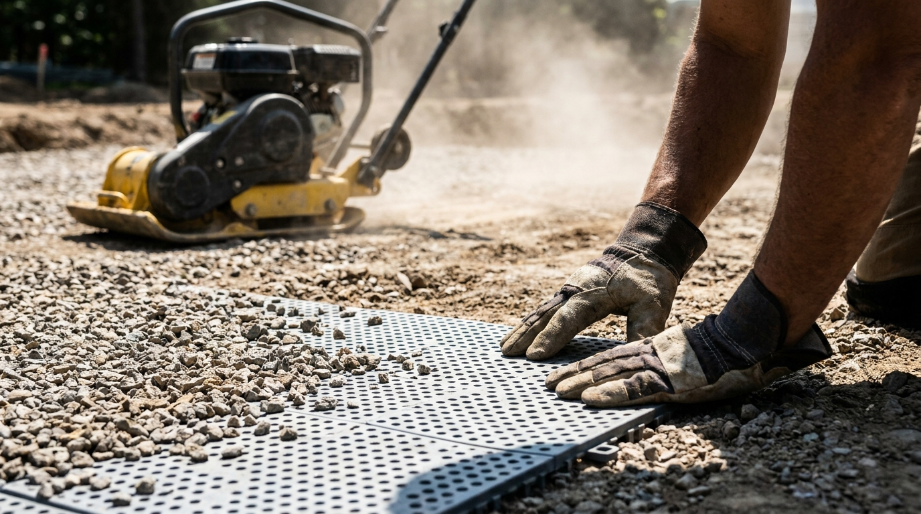
Stability comes from three things: enough drainage openings in the floor, fill placed and compacted in layers, and a finished grade that sheds water away from the house. Get those right and a partial-removal area makes a dependable lawn, turf or garden. Skip them and the surface can settle into a shallow dip.
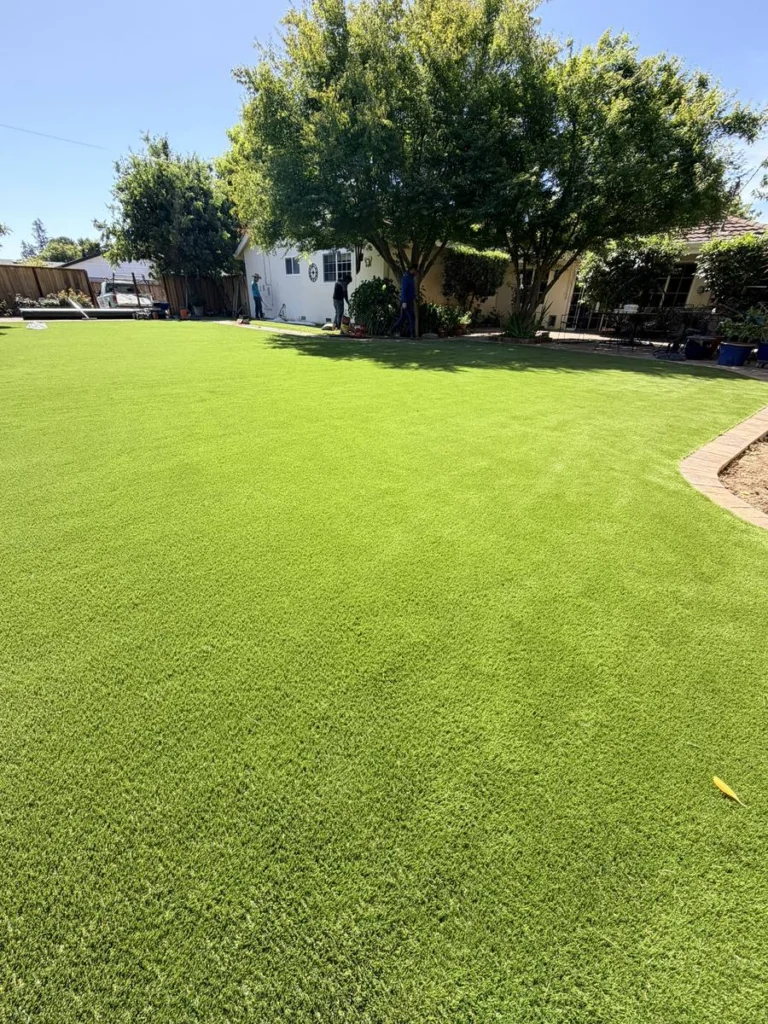
On our partial removals, we follow the city’s minimums for demolition depth and drainage openings, hold for the inspector before backfilling, and compact fill in layers. Because one crew handles demolition and the new surface, we set the final grade with the finish in mind, whether that is artificial turf, planting or garden paths.
If the yard already has drainage problems, deal with them at the same time. Our drainage solutions work is often paired with pool removal. One Google reviewer had an old pool removed alongside a drainage job; another had a concrete pool removed and pavers installed around a new garden.
If an ADU, addition or other structure might go where a partially removed pool sits, expect your city to require the remaining shell to come out and the excavation to be refilled with engineered, tested fill. Doing that years later, under a finished lawn or turf, is usually more disruptive than choosing full removal in the first place.
Before you design anything, find the original permit and final inspection record. They tell you whether the area was approved as landscaping only and what was left underground. Menlo Park, for instance, will not issue a construction permit over the old pool until the demolition permit has passed final inspection.
If you are already planning an ADU, read our guide to building an ADU on a former pool site and see our ADU site preparation service. Full removal details are on our full pool removal page.
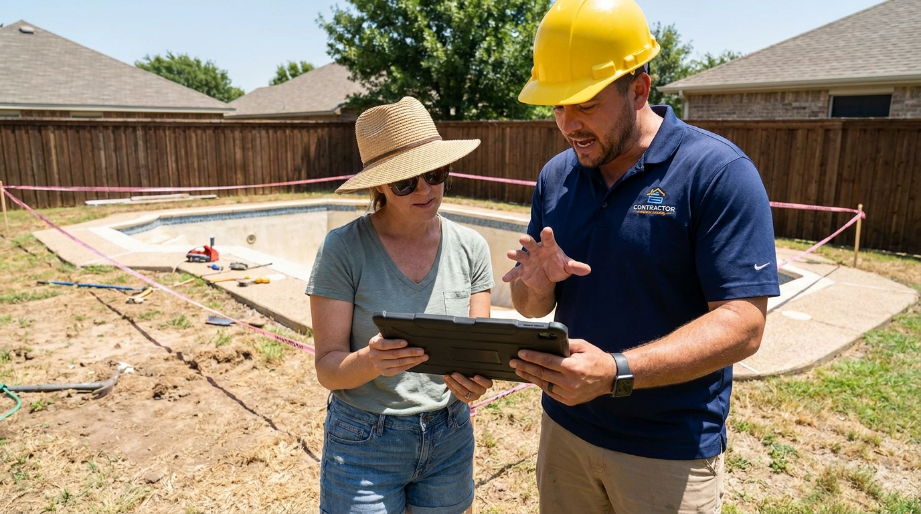
Decide by the most demanding use the spot could ever have, not by what you plan this year. If the answer is only ever lawn, turf or garden and your city allows it, partial removal fits. If a patio, driveway, deck or building is possible, or your city restricts partial removal, full removal is the better long-term choice.
For a side-by-side comparison, see pool demolition or fill-in.
Usually not with a structure. Many Bay Area cities limit a partially removed pool area to landscaping, and Millbrae requires complete removal under any structure, driveway, patio or deck. Building there generally means removing the remaining shell and refilling with engineered, compacted fill. Confirm with your building department before you design anything over the footprint.
It depends on the city. Mountain View requires at least 12 inches below finish grade, Millbrae requires the upper 24 inches removed, and Menlo Park calls for the bond beam and top 3 feet of the walls when the floor is punctured. Check your own city’s pool demolition handout for its minimum.
Yes, if the finished surface has enough good topsoil over the compacted fill and drains properly. Lawn, sod and planting beds are the most common finishes after a partial removal. Ask your contractor how deep the topsoil layer will be and how the grade will direct water away from the house.
In most cases, yes. Artificial turf is usually treated as landscaping, so it suits a partial removal well. The base still needs proper preparation and drainage so water does not pool on the surface. Confirm your city’s rules, especially if the turf area will also include hardscape edges or paths.
Never drain pool water into the street, gutter or storm drain. The West Valley Clean Water Program explains approved methods, and local rules vary by city. Draining is normally handled by your contractor as the first step of the demolition, before utilities are capped and the shell is broken out for removal.
It is meant to be permanent for landscaping use. Reversing it later, to build or to restore a pool, means excavating the fill and dealing with the remaining shell. That is why it pays to think about every possible future use of the space before you choose partial removal over full removal.
The best time to decide what the old pool area will become is before demolition starts. Tell us your plans for the space, send a few photos, and we will recommend the method that fits your city’s rules and your goals.
Cicarelli Contractors (CSLB #1109419) checks your city’s partial removal rules before quoting, whether the pool is in San Mateo County, where Millbrae limits partial removal to landscape areas, or in Contra Costa County, where Danville sets its own compaction and inspection steps.
We serve all nine Bay Area counties, including San Mateo County. Request your free, written estimate and we will send it within 24 hours.