
Building an ADU on a Former Pool Site in the Bay Area: What the Ground Needs
Planning an ADU where your pool is or was? Here is what the ground needs: full removal, engineered fill, a compaction report and the…
Quick answer
Choose a pool fill-in (partial removal) when the old pool area will stay lawn, garden or turf and a lower upfront cost matters most. Choose full pool demolition when you might build there, want no buried concrete left behind, or your city requires it. Both methods need a permit, drainage, compacted fill and inspections.
Related service: Pool removal services
Bay Area homeowners who decide to get rid of a pool face one real decision: leave part of the shell in the ground, or take all of it out. The choice affects cost, schedule, paperwork and what you can build on that spot for as long as you own the house.
This guide compares both methods the way we explain them during estimates at Cicarelli Contractors, using published rules from Bay Area cities such as Danville, Millbrae and Mountain View. If you already know you want the pool gone, our pool removal service page covers both options.
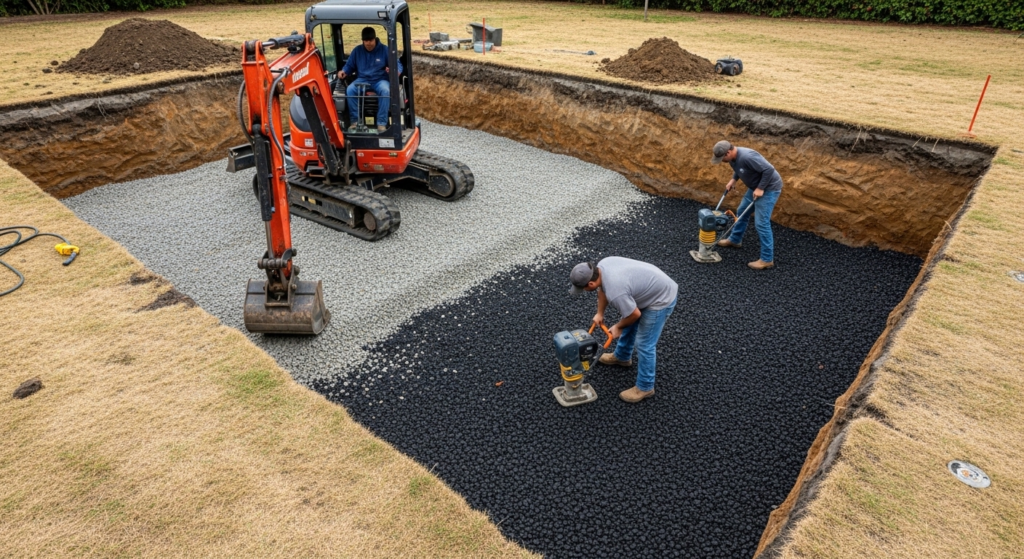
A pool fill-in breaks out the upper part of the shell, punches drainage openings through the floor, and fills the remaining shell with compacted material. Full pool demolition removes the entire shell, floor and walls, hauls the concrete away, and backfills the empty excavation in compacted layers. The first leaves concrete underground; the second does not.
Contractors and cities use several names. A fill-in is also called partial removal or pool abandonment. Full demolition is also called complete or full removal. The labels matter less than one question: will any part of the shell stay buried?
| Factor | Pool fill-in (partial removal) | Full pool demolition |
|---|---|---|
| What stays underground | Lower walls and floor, with drainage openings | Nothing from the pool shell |
| Typical future use | Lawn, turf, planting beds | Patios, decks, ADUs, additions, any use your city allows |
| Hauling | Less concrete leaves the site | All concrete leaves the site |
| Fill needed | Less, since the lower shell stays | More, to fill the full excavation |
| Engineering report | Required by some cities | Often required, especially if you plan to build |
| Upfront cost | Usually lower | Usually higher |
| Future flexibility | Limited | Greatest |
A fill-in makes sense when you are confident the area will stay soft landscaping, such as lawn, artificial turf or a garden, and you want the lower-cost option. It works best on concrete or gunite pools, where drainage openings let water pass through the remaining floor, and in cities that allow partial removal for landscaped areas.
The key is drainage. If the floor of a buried shell is not opened up properly, water can collect inside it like a bathtub. That is why cities set minimums. Mountain View, for example, asks for at least 12 inches of demolition below finish grade and at least 20 percent of the pool bottom punched out when the shell stays, according to its swimming pool demolition page.
A fill-in is also a sensible choice for owners who plan to stay put and simply want a safe, usable yard. Read more about the method on our pool fill-in and backfill page.
Full pool demolition is the better choice when anything heavier than lawn may go where the pool sits: an ADU, a room addition, a garage, a deck on footings, or in some cities even a patio or driveway. It removes the buried shell, so future builders and inspectors deal with compacted soil rather than old concrete.
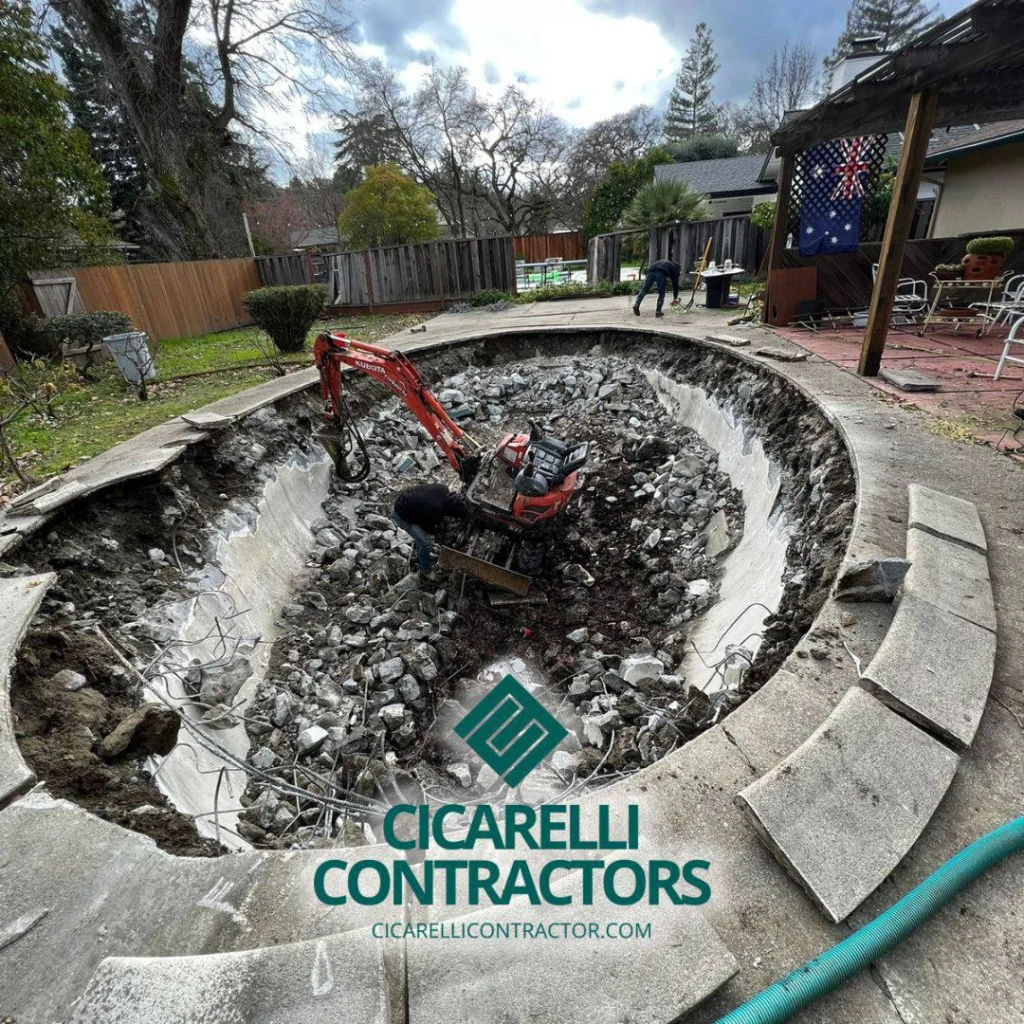
Some Bay Area cities make this decision for you. The City of Millbrae allows partial removal only for landscape or garden areas and requires complete removal under a structure, driveway, patio or deck, according to its pool and spa demolition requirements.
Full removal also keeps options open for a future owner. If you think an ADU is possible within a few years, removing everything now avoids digging up a buried shell later. Our full pool removal page explains the process, and our post on building an ADU on a former pool site goes deeper.
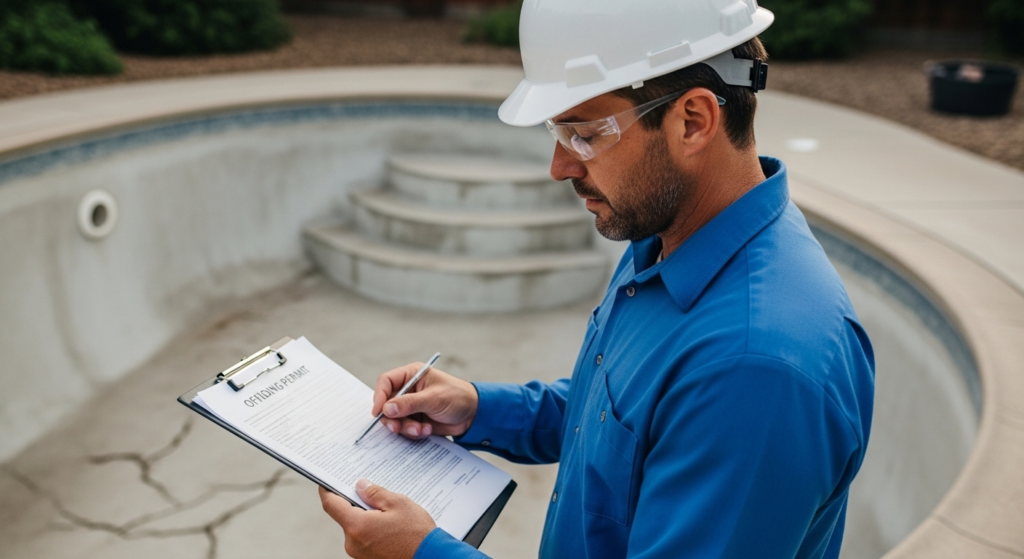
Bay Area cities and counties generally require a permit for either method, but details differ: how deep the shell is broken, how many drainage openings are needed, how fill is compacted, and whether a soils engineer must sign off. Check your own building department before choosing, as the CSLB’s building permit guidance advises.
Published examples show how much the rules vary:
We pull the permit, schedule the inspections and, on full removals, provide the engineering compaction report when the city requires it. Our pool demolition permit guide covers the paperwork city by city.
It can. A buried shell becomes part of the property’s history, and a future buyer, lender or building department may ask how the pool was closed. A finaled permit and, where required, a compaction report are the documents that answer that question. Full removal generally leaves fewer questions, because no concrete remains underground.
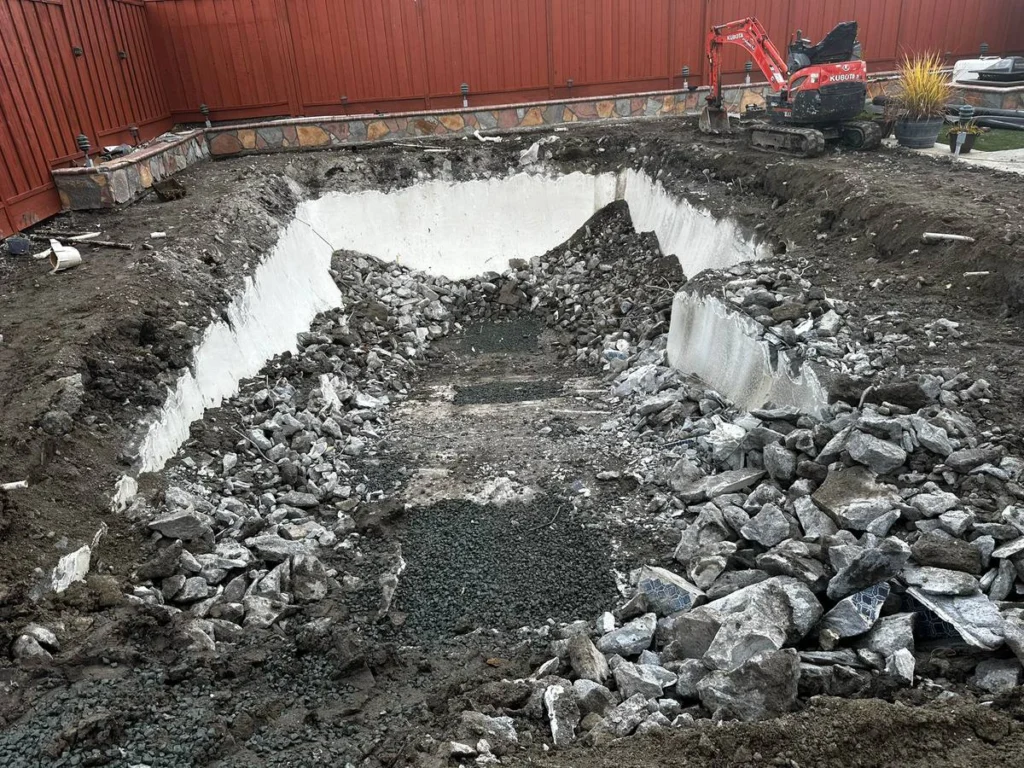
If you later want to build over a filled-in pool, expect the city to look at what is underground. That may mean removing the remaining shell at that point, which is usually more disruptive once a new lawn or patio is in place.
Whichever method you choose, keep every record: the permit, inspection sign-offs, any engineering report and photos of the work. They cost nothing to keep and can save time when you sell or remodel.
A partial fill-in usually costs less and takes less time than full demolition, because less concrete is broken and hauled and less fill is brought in. Full removal adds hauling, more fill material and often a soils engineer’s report. Access, pool size and type, and your city’s requirements can narrow or widen the gap.
We do not publish fixed prices, because two pools of the same size can need very different work. To compare quotes fairly, ask every contractor to price the same method and to list permits, utility capping, debris hauling, fill, compaction, any engineering report and final grading. Our pool demolition cost guide explains what drives the number.
Fiberglass and vinyl-lined pools are a separate case: the shell or liner is usually pulled out rather than left in place, so ask how your contractor handles yours. One Google reviewer had a vinyl pool and its deck removed and the space finished with artificial turf; another had a fiberglass pool removed and filled, with the permit and compaction report handled for them.
Most homeowners can decide in a few minutes by answering five questions honestly. If any answer points to building on the spot, or your city limits partial removal, full demolition is the safer choice. If every answer points to lawn or garden for the long term, a fill-in is usually the practical one.
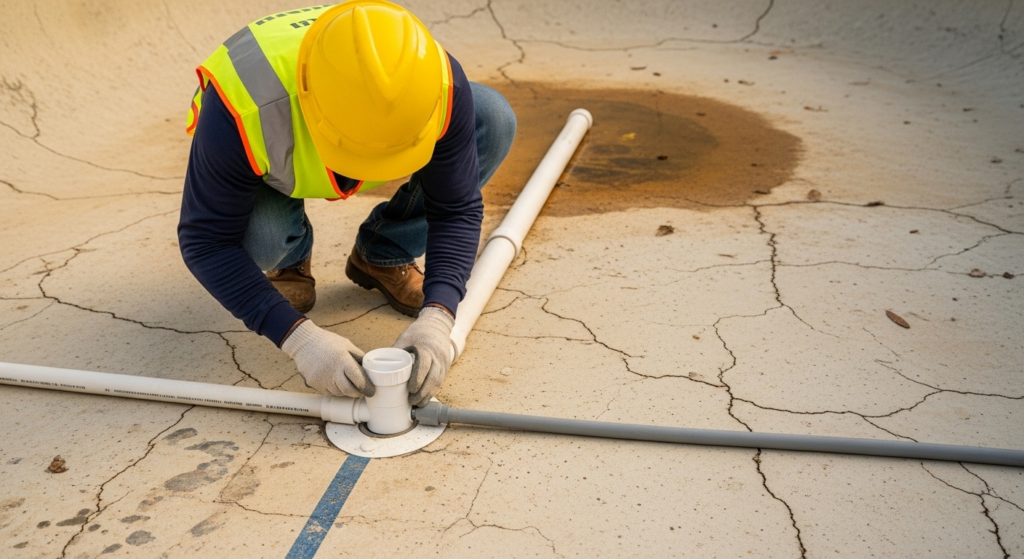
Neither is better in every case. A fill-in costs less and suits yards that will stay lawn, turf or garden. Full removal costs more but leaves no buried shell, so it suits ADUs, additions, decks and patios. Your city’s rules and future plans for the spot should decide which method you choose.
You can repair it, fill it in with a partial removal, or remove it completely. Either removal method needs a permit, draining, capped utilities, compacted fill and city inspections. Afterward, the space can become lawn, artificial turf, planting beds, a paver patio or, after full removal, a site for new construction.
It is heavy work that calls for excavators, breakers, trucks, permits and inspections, so it is not a DIY job. Difficulty depends mostly on access, pool size, the shell material and the slope of the lot. Narrow side yards and hillside lots take longer because more of the work happens with smaller equipment.
A permitted partial removal is usually the lowest-cost legal method: break out the top of the shell, open the floor for drainage, fill and compact. Simply dumping dirt into a pool without drainage openings or a permit can trap water, cause settling and create problems when you sell or apply for future permits.
Usually not with a structure. Many cities limit a partially removed pool area to landscaping, and Millbrae, for example, requires complete removal under a structure, driveway, patio or deck. If you want to build, full removal with engineered compaction and any required soils report is the reliable path. Confirm with your building department first.
In most California cities and counties, yes. Bay Area examples such as Contra Costa County, Danville, Millbrae and Mountain View all require a permit and inspections to demolish or fill in a pool. Rules differ by jurisdiction, so the CSLB advises checking with your local building department before work starts.
The easiest way to decide is to see both methods described for your own pool, access and city. We can quote from photos, offer a free site visit when access is unclear, and serve all nine Bay Area counties, including San Mateo County and Santa Clara County.
Cicarelli Contractors (CSLB #1109419) quotes both methods for pools in Contra Costa, Alameda, San Mateo and Santa Clara counties, and the estimate follows the rules of your city, which can differ from one town to the next, as Danville and Millbrae show.
Every estimate is free and written. Request your estimate and we will send it within 24 hours.