
Hard Demolition for an ADU or Home Addition in the Bay Area: What to Plan
What hard demolition an ADU or home addition needs in the Bay Area, the permits and notices that come first, and how the cleared…
Quick answer
House demolition cost in the Bay Area depends on the home’s size, stories and construction, hazardous materials such as asbestos or lead, permits and air district notice, utility disconnections, foundation and driveway removal, access, and hauling. Get written quotes that list every one of these items so you compare complete teardowns, not partial ones.
Related service: Demolition services
This guide is for Bay Area and California homeowners, buyers and builders planning to tear down an entire house, usually to rebuild. It explains what a complete teardown includes, which steps come before the excavator, and how to read a demolition quote.
If you only need concrete, walls or a pool removed, our guide to concrete demolition cost covers those smaller jobs. And if you are still deciding whether to tear down at all, start with house demolition vs. renovation.
A complete house demolition cost is the sum of several separate tasks: surveys for asbestos and lead, permits and the air district notice, utility shut-offs, the demolition itself, foundation and flatwork removal, hauling and disposal, and final grading. Quotes that look cheap often leave one or more of these out, so check each line.
| Component | What it covers | Ask the contractor |
|---|---|---|
| Hazardous material survey | Testing for asbestos, lead paint and similar materials before demolition | Is a survey included, and who handles abatement if needed? |
| Permits and notices | City or county demolition permit, Bay Area Air District notification | Who files, and are fees included? |
| Utility disconnection | Gas, electric, water and sewer shut off and capped | Who coordinates with the utilities? |
| Structure removal | Roof, walls, framing, interior contents left behind | Must the house be empty first? |
| Foundation and flatwork | Footings, slab or raised foundation, driveway, walkways, garage | Is the foundation included or quoted separately? |
| Hauling and disposal | Trucking, disposal and recycling fees | How many loads, and where does debris go? |
| Site finish | Backfill of basements or holes, rough or finished grading | What condition is the lot left in? |
Cicarelli Contractors does not publish house demolition prices, because the items above vary too much from lot to lot. Our house demolition service starts with a free, written estimate within 24 hours that lists these items so you can see exactly what is included.
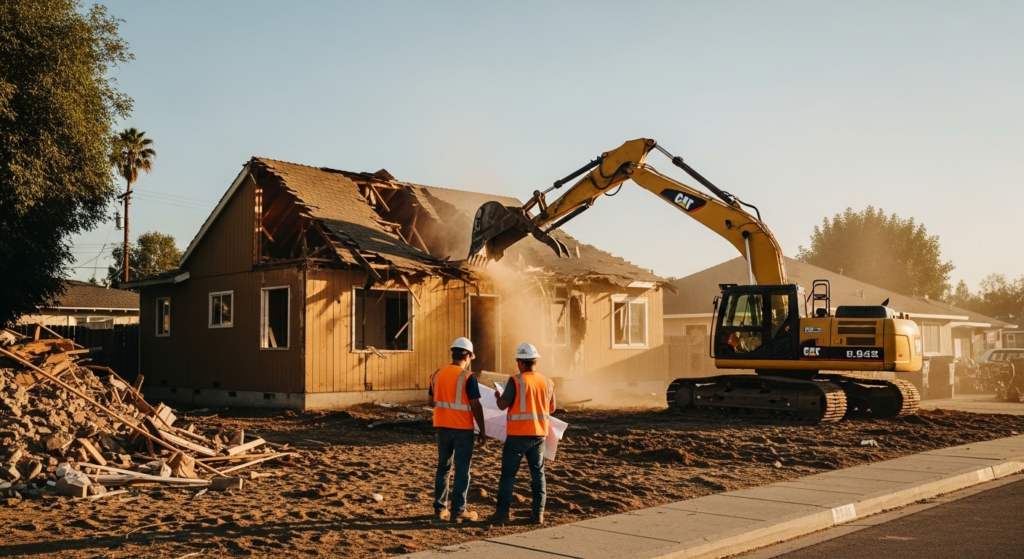
Larger homes create more debris, so they need more labor and more truckloads. A second story, a basement, a raised foundation or masonry walls each add work. Wood-frame houses on slabs are usually the simplest to remove, while homes with stucco, brick, plaster or a full basement take longer to break down and haul away.
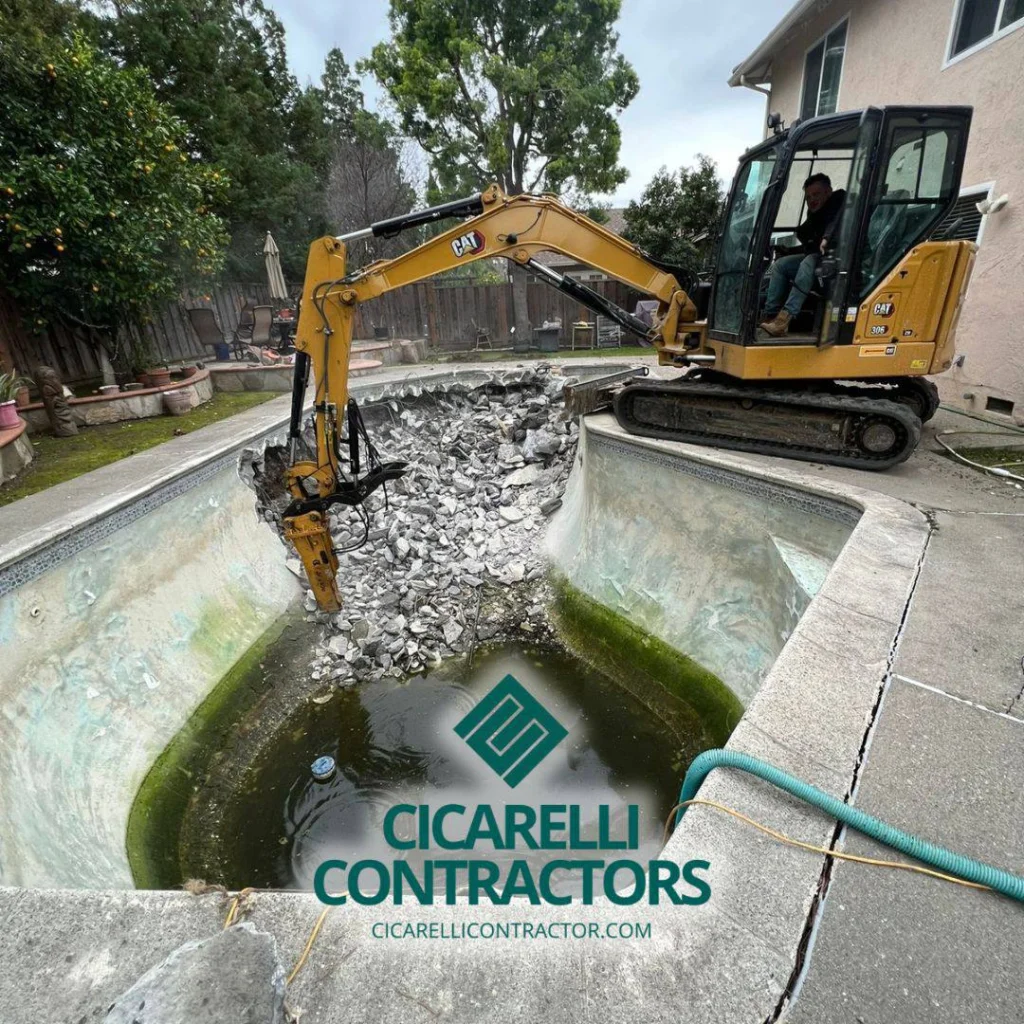
Attached elements count too. A detached garage, a long concrete driveway, retaining walls, a pool or an old shed are all separate pieces of hard demolition. List everything you want removed so every bidder prices the same scope.
Older homes can contain asbestos in roofing, siding, flooring, ceilings and pipe insulation, and lead in paint. Testing first matters because those materials have to be handled before the building comes down, and finding them mid-demolition stops the job. Survey results can change a house demolition cost more than any other single item.
Most of the nine-county region falls under the Bay Area Air District, but confirm which air district covers your parcel before you schedule.

Before a house comes down, you need a demolition permit from the city or county, the air district notice, and every utility shut off and capped. The permit process and timing vary by jurisdiction, and some cities require Planning approval as well as a building permit, so the paperwork can take longer than the demolition.
The CSLB explains that, under the California Building Standards Code, no building or structure may be removed or demolished without a separate permit, and it directs owners to their local building department. The City of Oakland, for instance, says all demolitions require Planning approval and a Building Permit before work begins, per its demolition permit page.
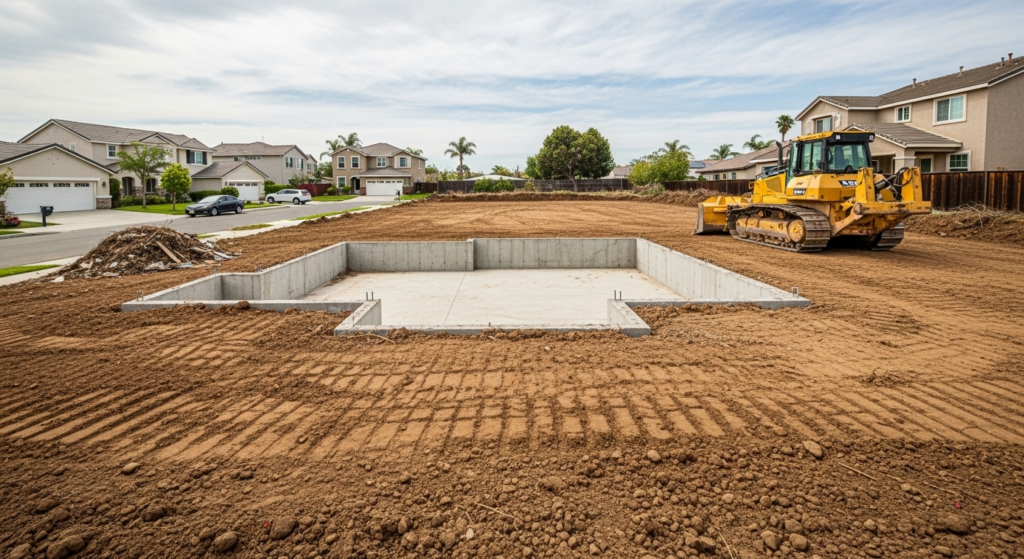
Ask whether the quote removes the foundation or only the structure above it. If you are rebuilding, the new foundation is usually engineered for the new house, so the old footings, slab, driveway and walkways typically come out too. Holes and basements must be backfilled and compacted, and the lot graded to the condition your builder needs.
That last step is where demolition hands off to construction. Our excavation and grading team can take the lot from rough cleared ground to a graded pad, and our ADU site preparation service covers lots where a backyard unit is part of the plan.
The physical teardown is often the shortest stage. Surveys, abatement, permits, the air district notice and utility disconnections usually take longer than knocking the house down and hauling it away. Access, the number of stories, the foundation type and how much concrete surrounds the house all affect the on-site time.
We do not promise timelines before seeing the site, but we do plan the sequence in writing. One Google reviewer noted that our team explained everything and finished in four days when others had quoted two weeks, though every site differs. Ask any contractor to put their schedule assumptions in the estimate.
Put the quotes side by side and check the same seven items in each: surveys, permits, air district notice, utilities, foundation and flatwork, hauling, and final grade. A lower total that excludes the foundation or abatement is not a lower price. Ask how unexpected finds, like buried tanks or extra slabs, will be priced.
California requires a written contract for home improvement work over $500, and CSLB guidance on home improvement contracts says it must state who will get the permits. Confirm the license, too: Cicarelli Contractors holds CSLB License #1109419 (B, General Building), which you can check on the CSLB license lookup.

There is no reliable single number, because a 2,000 square foot house can be one story on a slab or two stories over a basement, with or without asbestos, a long driveway or tight access. Those factors move the price more than square footage. A written, itemized quote based on photos or a site visit is the dependable answer.
The lowest real cost comes from a clear scope, not from skipped steps. Empty the house, get the hazardous material survey early, give the crew good equipment access, and compare itemized quotes with the same inclusions. Unpermitted demolition or skipping the air district notice can lead to fines that cost more than doing it properly.
It can be when the foundation or framing is failing, the layout cannot be fixed, or renovation costs approach the cost of building new. It is usually not worth it when the structure is sound and you mainly want updates. A structural assessment and two priced options, renovate and rebuild, make the decision clearer.
The on-site teardown is usually the shortest stage, and the full process takes longer. Surveys, any abatement, the demolition permit, the Bay Area Air District notice and utility disconnections come first. Access, stories, foundation type and surrounding concrete all affect how long the crew needs on site.
Yes, in practice. Furniture, appliances, household chemicals and personal items should be removed before demolition, because mixed debris is harder to dispose of and recycle. Ask your contractor what may stay, since some items can go with the debris while others, like paint, batteries or propane tanks, need separate handling.
Plan on one. Cal/OSHA’s demolition safety order requires certain materials to be surveyed for asbestos before demolition, and the Bay Area Air District must be notified before every demolition regardless of asbestos content. A survey tells you whether abatement is needed before the house can come down, which affects both cost and schedule.
Send photos of the house, the driveway and the access route, plus the approximate year it was built. We will reply with a free, written estimate within 24 hours that lists each component of the teardown, so you can compare it fairly with other bids. Request your free estimate.
Cicarelli Contractors (CSLB #1109419) prices teardowns from its Richmond base for homes across Contra Costa, Alameda, San Mateo and Santa Clara counties, and every quote lists the permit, the air district notification and the haul-off as separate lines.