
Outdoor Living Space ROI: Backyard Improvements That Add Value in the Bay Area
Which outdoor projects pay back at resale? National NAR data on patios, decks, kitchens and fire pits, plus the Bay Area factors that change…
Quick answer
The best pool deck pavers are light-colored, textured units that stay grippy when wet, resist pool chemicals and sit on a well-compacted, well-drained base. For most Bay Area pools, concrete pavers offer the best mix of traction, repairability and value, while travertine and textured porcelain suit homeowners who want a natural-stone or modern look.
Related service: Outdoor living services
Choosing a pool deck surface is a safety decision as much as a style one. The deck takes bare feet, splashing water, chlorine or salt, sun and the slow soil movement common across the Bay Area, from clay soils in the East Bay to fill-heavy lots on the Peninsula.
This guide is by Athalyson Bernardo, owner of Cicarelli Contractors in Richmond, CA. Our crews remove old pool decks and build new pool deck pavers across nine Bay Area counties, so the advice below comes from what holds up on real jobs.
The best pavers for a pool deck balance five things: wet traction, surface temperature, chemical resistance, repairability and maintenance. No single material wins every category. Concrete pavers lead on value and repair, travertine on barefoot comfort, porcelain on low upkeep, and brick or natural stone on character. Color and finish matter as much as material.
Use this comparison as a starting point. Ratings are general and depend on the specific product, finish and installation.
| Material | Wet traction | Heat underfoot | Maintenance | Repair |
|---|---|---|---|---|
| Concrete pavers | Good with a textured finish | Moderate; lighter colors stay cooler | Low: sweep, top up joint sand, optional sealer | Lift and replace single units |
| Travertine | Good with a tumbled finish | Usually comfortable in light shades | Moderate: periodic sealing | Replace single units; color match can vary |
| Porcelain | Varies; needs an exterior slip rating | Depends on color | Very low; no sealing in most cases | Replace single units; needs precise base |
| Clay brick | Good with a textured face | Can run hot in full sun | Moderate: joints, algae in shade | Replace single units |
| Natural stone (flagstone) | Good on cleft surfaces | Depends on stone and color | Moderate: sealing, joint care | Irregular shapes are harder to match |
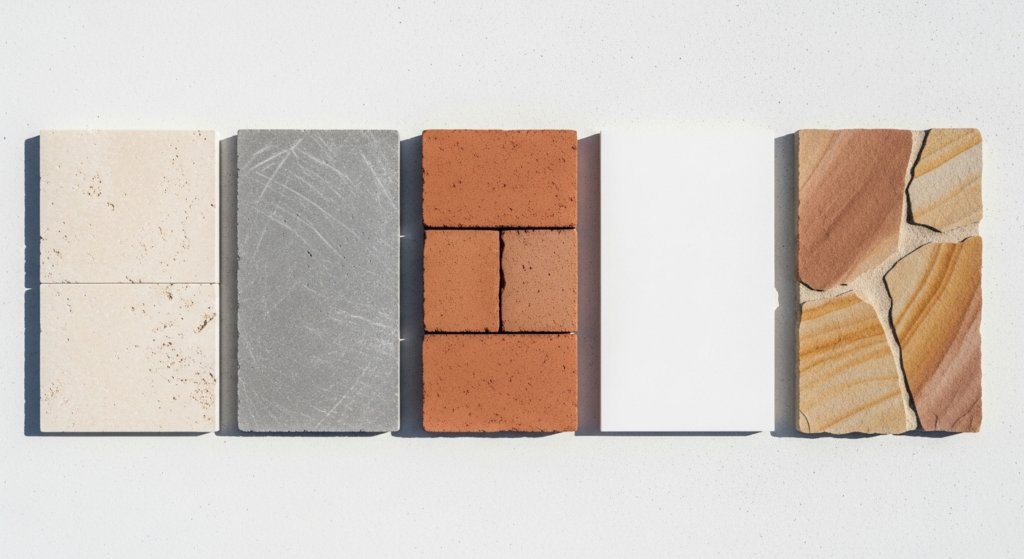
Concrete pool deck pavers are a strong choice because each unit is separate. Joints let the surface flex with minor ground movement instead of cracking across the whole deck, and a damaged or stained paver can be lifted and replaced. Textured finishes give dependable traction, and light colors help keep the surface comfortable for bare feet.
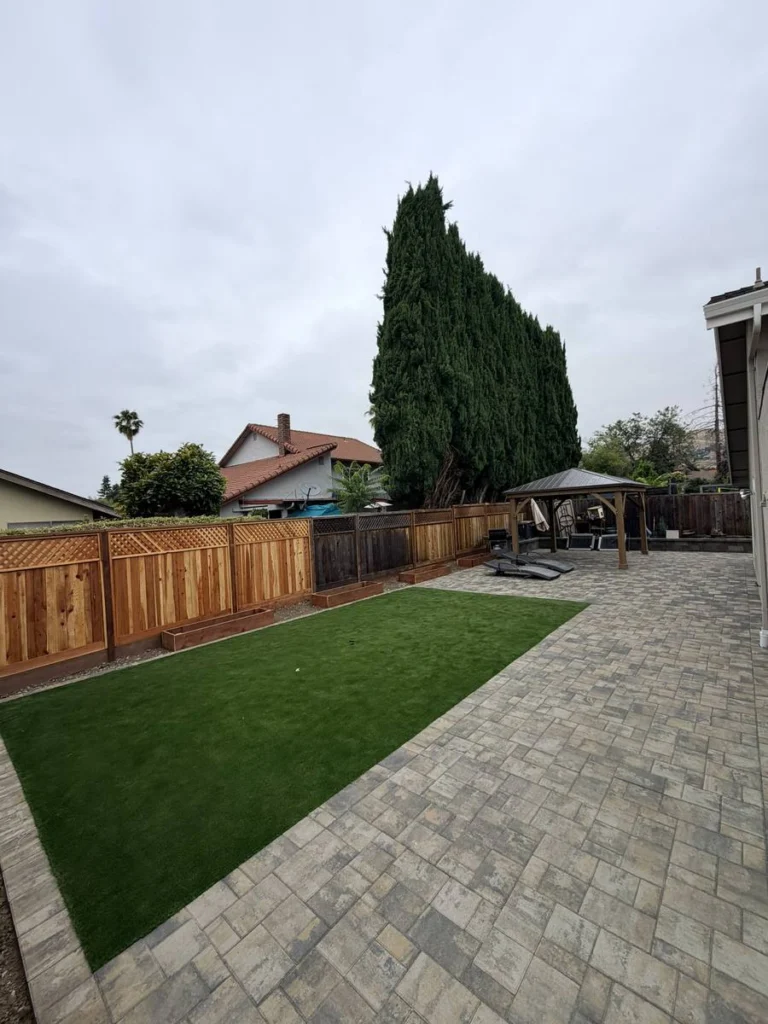
Cicarelli installs Belgard pavers, which carry Belgard’s lifetime transferable limited product warranty. We also install Carvestone, which comes with our 1-year workmanship warranty plus a 7-year limited residential warranty against chipping and delamination. That Carvestone warranty is non-transferable, valid only after full payment, and excludes cracking, color, sealer loss, joint sealant failure and drainage. Details are on our warranty and maintenance page.
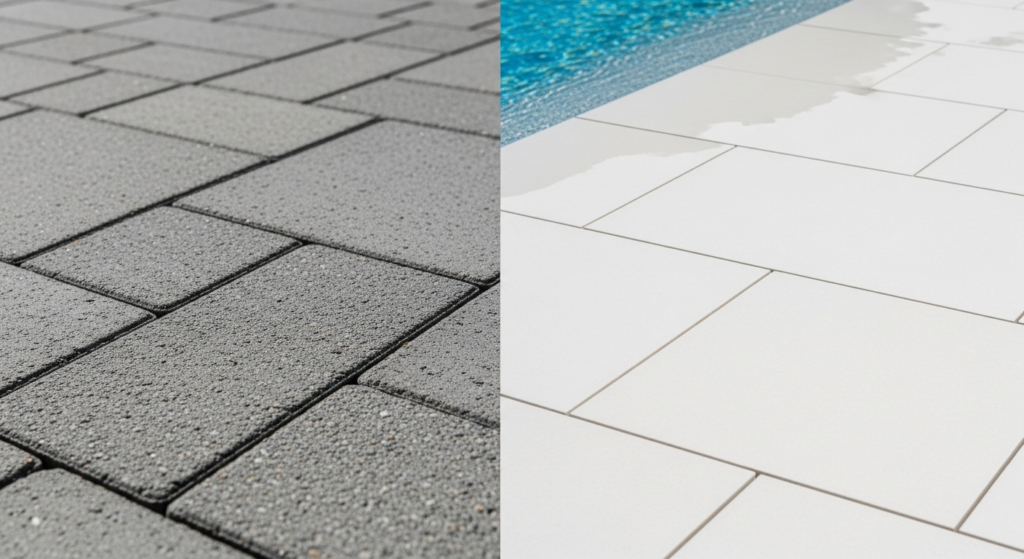
Travertine is better for barefoot comfort and a warm, natural look, especially in light tumbled finishes, but it needs periodic sealing. Porcelain is better for low maintenance and a crisp modern style, but only exterior-rated, slip-resistant porcelain belongs around water, and it needs a very flat, carefully built base to avoid lippage and cracking.
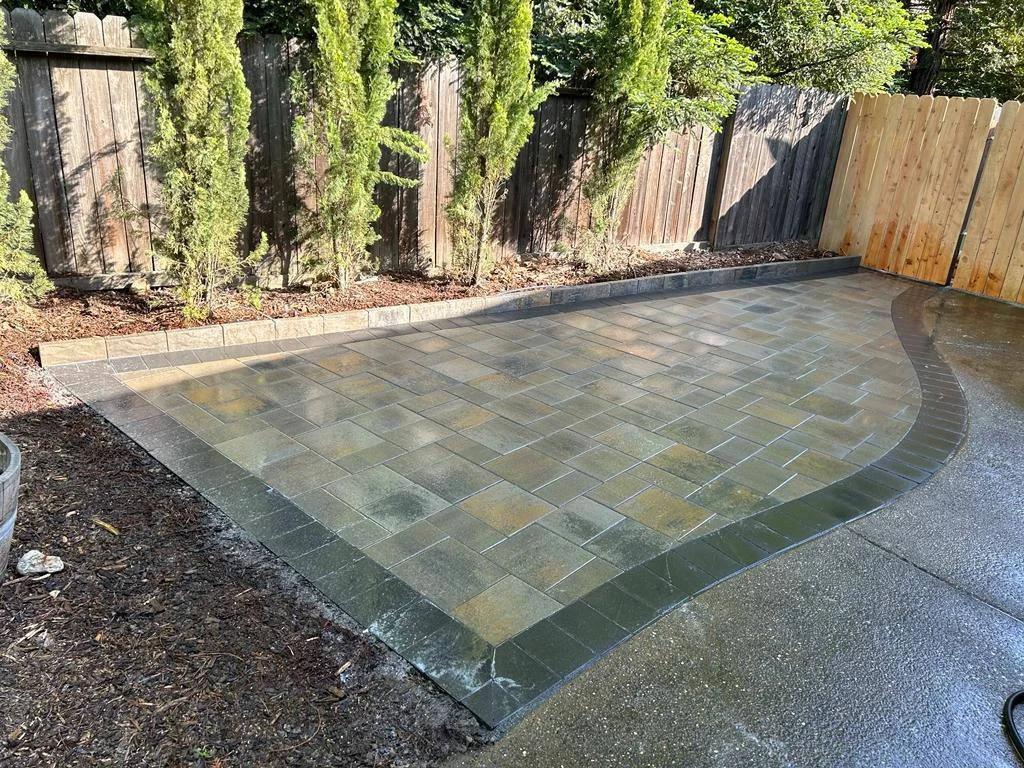
Questions to ask before committing to either:
For a broader look at the trade-offs between slabs and pavers, see our post on concrete vs. pavers in the Bay Area.
A safe paver pool deck combines a textured, slip-resistant surface, a light color that stays comfortable in sun, tight and stable joints, and a deck that slopes slightly away from the pool so water drains instead of puddling. Polished stone and smooth tile have no place on a pool deck, however good they look in a showroom.
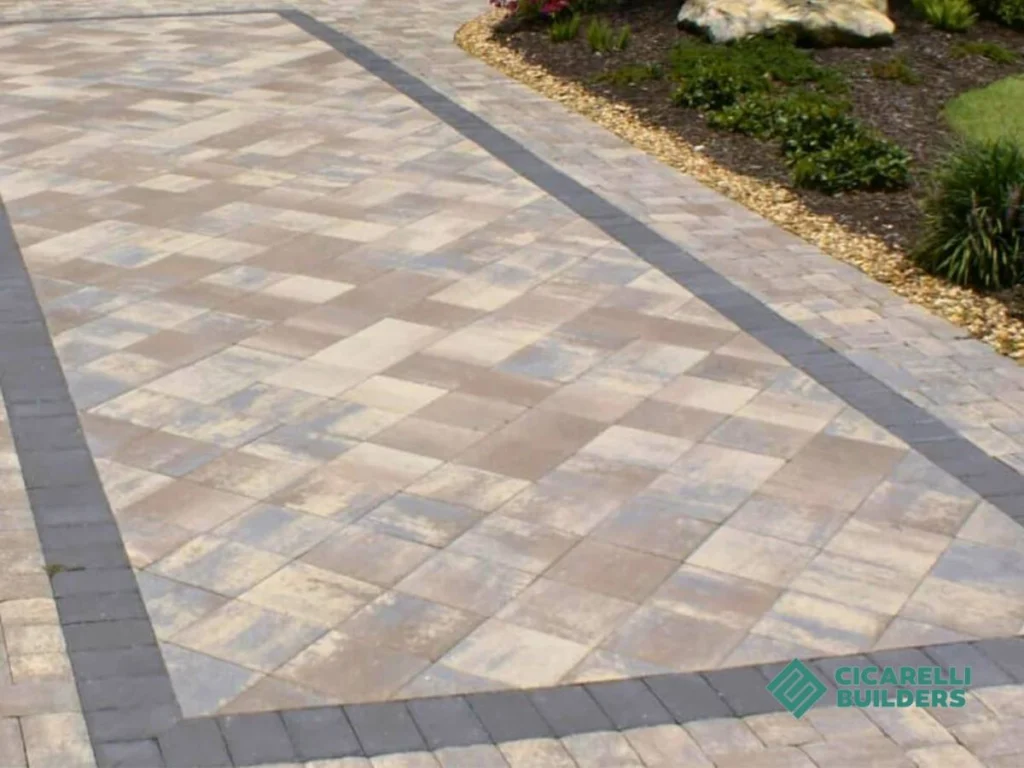
Four practical checks we walk through with homeowners:
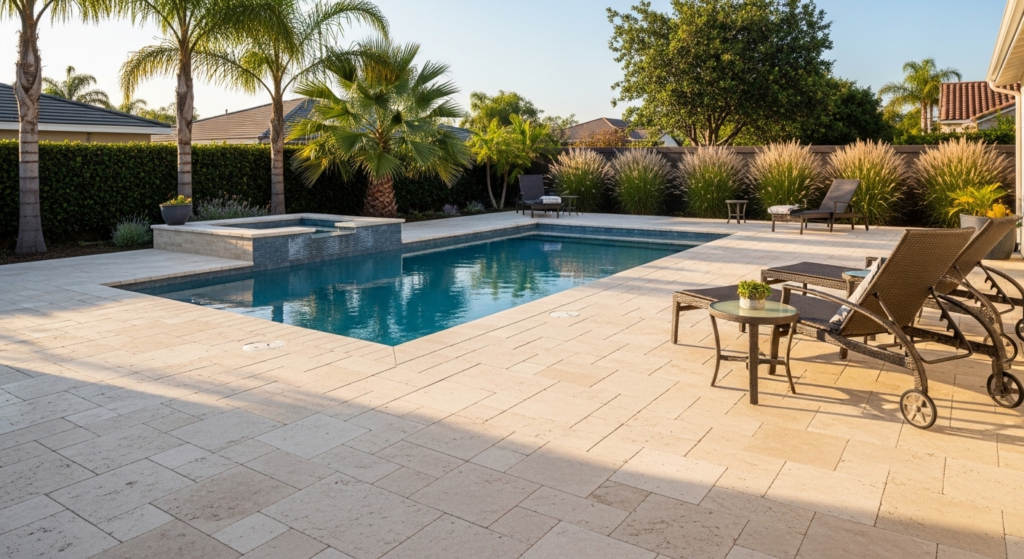
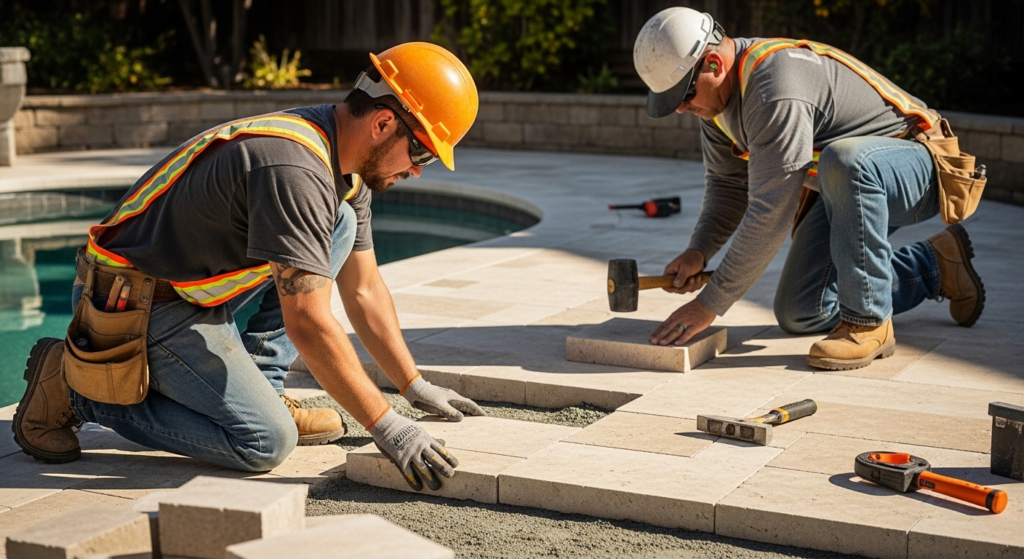
A paver pool deck is installed on an engineered base. The crew removes the old deck, excavates to firm ground, compacts crushed base rock in layers, sets a bedding layer, lays the pavers and coping with a slight slope away from the pool, locks the edges and fills the joints. The base does most of the work.
Sometimes. Thin pavers can be bonded over a concrete deck that is sound, flat and draining correctly, but overlaying hides problems rather than fixing them. If the slab is cracked, heaving, sinking or sending water toward the pool or house, removing it and building a proper paver base is the more reliable long-term choice.
An overlay also raises the deck height, which can affect the coping, door thresholds and drains. Ask any contractor to check these heights before quoting an overlay. Because our crew handles both demolition and the new surface, we can price removal and overlay side by side.
If the pool itself is the problem, removing it may make more sense than resurfacing. Our guide on pool demolition vs. fill-in explains the options.
Maintaining a paver pool deck is mostly routine: sweep or rinse regularly, clean stains and algae early, top up joint sand when joints look low, and reseal on the schedule the product calls for. Reset any paver that rocks or settles before it becomes a trip hazard. Avoid harsh cleaners that the manufacturer does not approve.
The Concrete Masonry and Hardscapes Association (CMHA) publishes an operation and maintenance guide for interlocking concrete pavement that covers cleaning, joint care and how to remove and reinstate pavers. It is a useful reference for any homeowner with a paver deck.
Get every warranty and maintenance expectation in writing. The Contractors State License Board recommends that warranties be part of your written home improvement contract.
Light-colored, textured concrete pavers are the best fit for most pool decks because they grip when wet, resist pool water and can be replaced one at a time. Tumbled travertine is a good choice for barefoot comfort, and exterior-rated porcelain suits modern designs. Avoid polished or smooth finishes anywhere near the water.
Cost depends on deck size, whether an old deck must be removed, base preparation, drainage, coping and the paver line you choose. Access for equipment and the pattern also matter. Cicarelli Contractors does not publish set prices; send photos and measurements for a free written estimate within 24 hours of receiving them.
You can bond thin pavers over a concrete deck only if the slab is sound, flat and drains correctly. Overlays raise the deck height, which affects coping, drains and door thresholds. If the slab is cracked, sinking or holding water, removing it and building a compacted paver base is usually the more durable choice.
Joints are typically filled with a joint sand specified by the paver manufacturer, often a polymeric sand that hardens to resist washout and weeds. Around pools, follow the manufacturer’s instructions closely, because constant splashing and hosing can wash out the wrong product. Top up joints whenever they look low.
Without a compacted base and bedding layer, pavers settle unevenly, joints open up, water pools and edges creep outward. On a pool deck that means trip hazards and standing water within a few seasons. Most paver failures we see trace back to a thin base, poor compaction or missing edge restraints.
All paving gets warm in direct sun, but color and material make a big difference. Light creams, sands and pale grays stay noticeably more comfortable than dark charcoal or red. In warmer inland areas such as Contra Costa and Santa Clara counties, choose a light, textured paver and add shade where people walk barefoot.
A pool deck lasts when the material suits the site and the base is built right. Send us photos of your pool area, the approximate deck size and the look you like, and our team will recommend options and price them line by line. Request your free, written estimate and hear back within 24 hours.