
Building an ADU on a Former Pool Site in the Bay Area: What the Ground Needs
Planning an ADU where your pool is or was? Here is what the ground needs: full removal, engineered fill, a compaction report and the…
Quick answer
Pool removal in San Jose and the rest of Santa Clara County starts with a demolition permit from the city where the home sits, or from the county for unincorporated areas. A licensed contractor then drains the pool legally, breaks out or removes the shell, backfills and compacts the hole, and passes the required inspections.
Related service: Pool removal services
Santa Clara County is a patchwork of cities plus unincorporated areas, and each building department writes its own pool demolition rules. A process that works in Mountain View may not match what a San Jose, Campbell or Los Gatos inspector expects.
This guide is for South Bay homeowners planning pool removal. It explains who issues the permit, what one Santa Clara County city actually requires, how to drain the pool legally, and how to choose between partial and full removal.
The permit comes from the building department of the city where your home is located. San Jose homeowners apply to the City of San Jose, Sunnyvale homeowners to Sunnyvale, and so on. If the home is in an unincorporated area, the County of Santa Clara handles the permit. Check your address before anyone quotes the job.
The county itself does not set one rule for every residential pool. That is why the CSLB tells homeowners to check permit requirements with the local building department before work begins.
| Where the home is | Who issues the permit | What to confirm |
|---|---|---|
| Inside San Jose city limits | City of San Jose building division | Permit type, required plans, inspections, any compaction report |
| Another incorporated city (Santa Clara, Sunnyvale, Mountain View, Campbell, Los Gatos, Milpitas and others) | That city’s building department | The city’s own pool demolition handout or checklist |
| Unincorporated Santa Clara County | County of Santa Clara planning and development | Building and grading permit requirements for the parcel |

Mountain View publishes a clear example. It requires a permit before work starts, plans showing the pool, fill material and distances to structures, a compaction report from a licensed geotechnical or soils engineer at final inspection, capped gas, water and sewer lines, and removal of all pool electrical equipment.
According to the City of Mountain View pool demolition page, if the shell stays in place the plans must show demolition at least 12 inches below finish grade and at least 20% of the pool bottom punched out. The city lists a $200 permit fee, including inspection, and a typical 5 to 8 business days to receive the permit.
Other cities set different depths, drainage openings and inspection steps. Treat Mountain View as an example of the level of detail to expect, not as the rule for San Jose or your city. Your contractor should get the current requirements from your building department in writing.
Drain the pool to the sanitary sewer through a cleanout when possible, or let dechlorinated water soak into your own lawn or landscaping. Never drain pool water into the street, gutter or storm drain. Ask your contractor to plan the draining before demolition day.
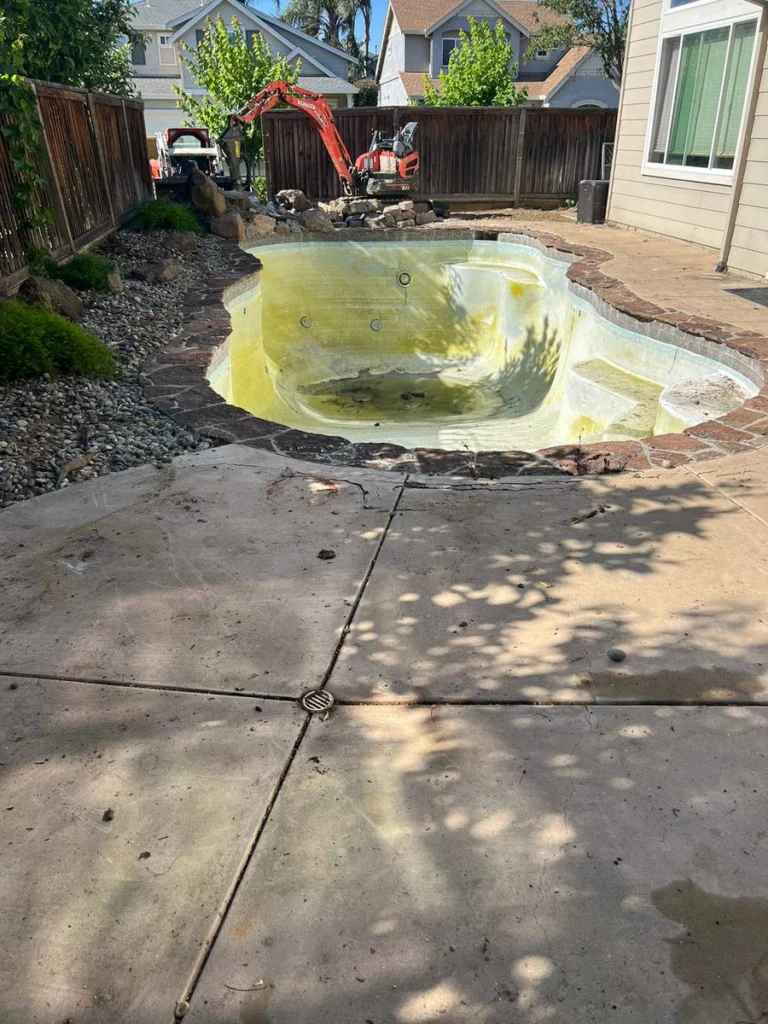
The West Valley Clean Water Program, which covers Campbell, Los Gatos, Monte Sereno and Saratoga, calls the sanitary sewer the preferred option. It suggests letting the water sit in the sun for 5 to 10 days without adding chlorine, or using a dechlorinating product, and testing the water before you drain it.
Choose partial removal when the area will become lawn, garden or turf and your city allows it. Choose full removal when you may build an ADU, addition, garage or patio slab there later, or when you want the cleanest record for a future buyer. Decide this before demolition, because changing it later costs more.
Partial removal breaks out the top of the shell, opens the bottom for drainage and fills the rest in place. Full removal hauls out the whole shell, then backfills in compacted layers. If an ADU is on your list, read our guide to building an ADU on a former pool site first.

A typical project follows the same sequence used across the Bay Area: site visit and plan, permit, utility marking, draining, demolition, inspection, backfill and compaction, final inspection, then the new surface. The exact inspections and paperwork depend on your city, so confirm them with your building department first.
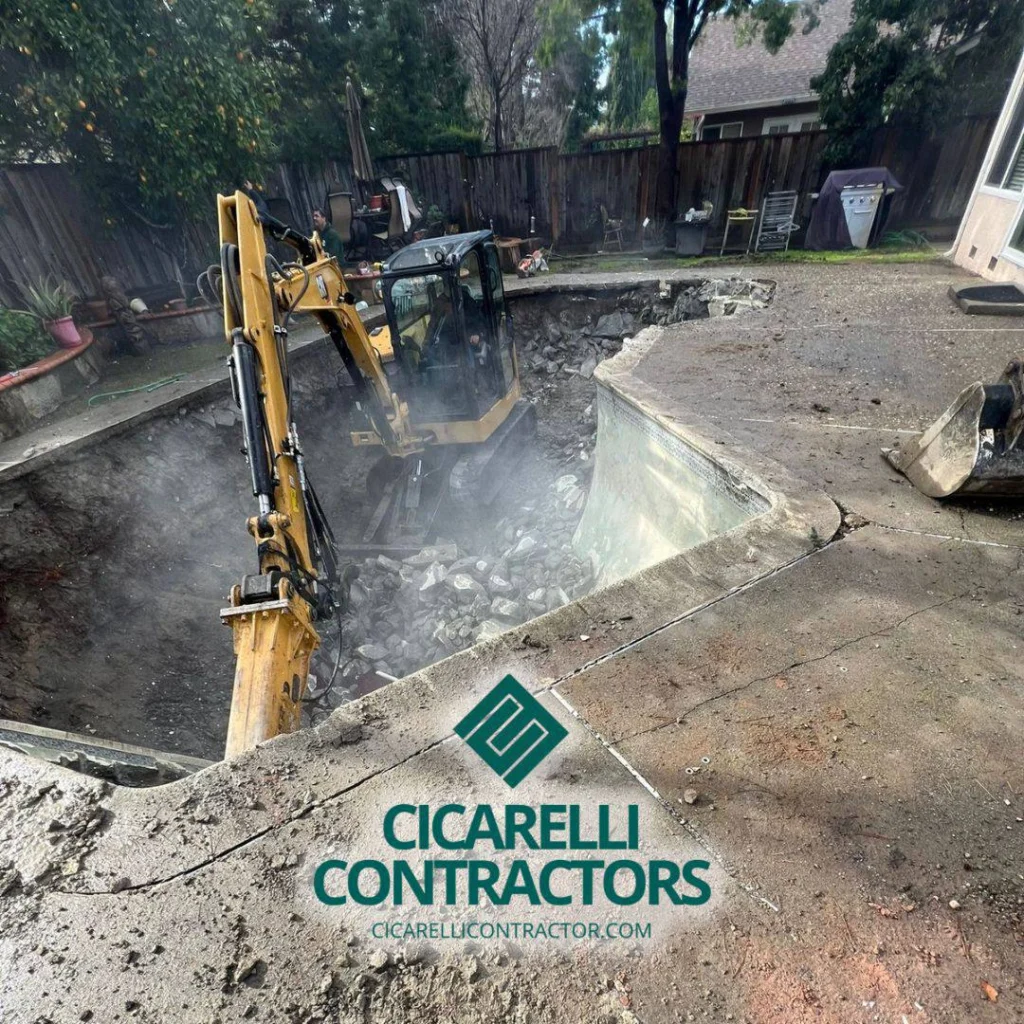
On our jobs, we pull the permit, schedule the city inspections, and provide the engineering compaction report on full removals when the city requires it. See what each stage looks like in what to expect during pool removal.

Plan for two clocks: permit review and field work. Permit review depends on your city; Mountain View, for example, lists 5 to 8 business days to receive a pool demolition permit. Field work depends on pool size, access, method and inspection scheduling. A small partial removal moves faster than a full removal with hauling.
Tight side yards, slopes and soft soil slow things down. One Google reviewer had a hillside pool with difficult access, and our crew moved fill by wheelbarrow in 90°F+ heat. Another reviewer said we finished in 4 days when other contractors had quoted 2 weeks. Every yard is different, so ask for a schedule that names each inspection.

The cost of pool removal in San Jose depends on the removal method, pool size and material, access for equipment, hauling distance, fill volume, permit and engineering requirements, and what surface goes in afterward. A full removal with a compaction report costs more than a partial fill-in, but it keeps more options open for the yard.
Compare bids on scope, not just the total. Check that each one includes the permit, draining, utility capping, debris hauling, fill, compaction and final grading. Our pool demolition cost guide walks through these factors. We give a free, written estimate within 24 hours, and we can often quote from photos.
Plan on it. Pool demolition is permitted work in Santa Clara County cities such as Mountain View, and San Jose homeowners should confirm the current permit, plans and inspections with the City of San Jose building division before work starts. A licensed contractor should pull the permit and schedule the inspections for you as part of the job.
It is heavy construction, not a weekend project. Removing an in-ground pool involves a permit, legal draining, capping utility lines, breaking concrete or gunite with heavy equipment, hauling debris, and compacting fill in layers. Tight access, slopes and the removal method affect how hard it is, so a site visit or clear photos help a contractor plan it.
In some areas, yes, if the water is dechlorinated and stays on your property. The West Valley Clean Water Program allows dechlorinated pool water on grass, turf or other areas of your property, but prefers the sanitary sewer. Never drain into the street or a storm drain, and check your own city’s rules before draining.
Yes, if the final layer is good topsoil. The fill under it is compacted for stability, which roots do not like, so the contractor should finish with a layer of planting soil and grade it to drain away from the house. Many homeowners choose sod, seed, artificial turf or pavers for the new area instead.
Under California Business and Professions Code section 7195, a home inspection report for a home with a pool or spa must identify which of seven drowning prevention safety features it has, and state if it has fewer than two. Removing the pool takes that item out of the inspection report and out of a buyer’s to-do list.
There is no single price, because cost depends on method, pool size, material, access, hauling, fill and permit requirements. Full removal with engineered compaction costs more than a partial fill-in. Get written bids that list the same scope, and compare what each includes. Cicarelli Contractors gives a free, written estimate within 24 hours.
Before you call anyone, know your city, the pool material, and what you want the area to become. Those three answers decide the permit path, the removal method and most of the cost.
Cicarelli Contractors (CSLB #1109419) removes concrete, gunite, fiberglass and vinyl pools throughout Santa Clara County and eight other Bay Area counties. Send us photos of your pool and yard, and get a free, written estimate within 24 hours.